



Clear Crystal Bucket
A clear crystal bucket brings heavy cut glass and cool metal mounts together to hold ice or wine with genuine period weight.
Clear Crystal Bucket
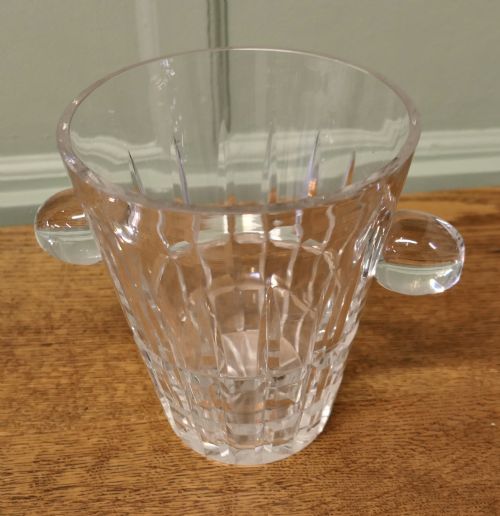
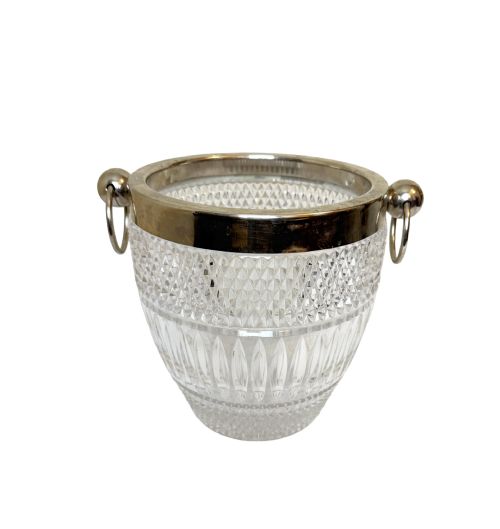
A clear crystal bucket is a heavy serving vessel designed for ice, wine, or champagne, drawing on forms from the Regency period through to the 1940s. These pieces frequently combine thick, deeply faceted glass with mounts of silver plate, brass, or gilt bronze.
The most common examples on this page date from the early twentieth century, spanning Art Deco, Edwardian, and George V styles alongside earlier nineteenth-century and Regency specimens. Formats range from personal champagne coolers to larger wine coolers and biscuit barrels.
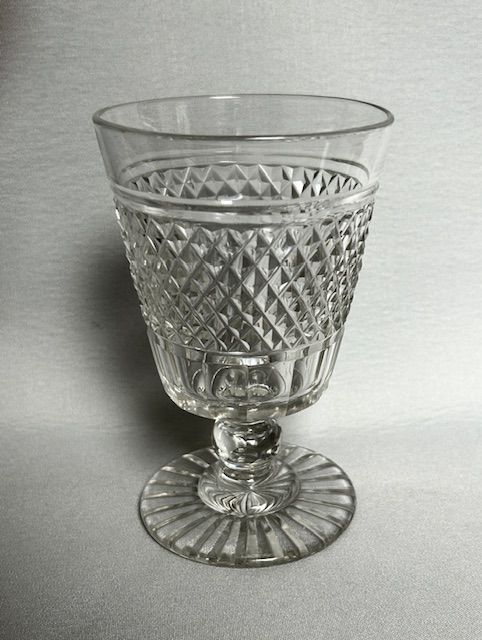
Makers often shaped these objects as straight-sided or tapering cylinders, sometimes pairing hand-blown lead crystal with swing handles and talon tongs. Buyers encounter both plain glass bodies and intricate hobnail or hand-cut geometric patterns.
Materials and construction methods
Glassmakers utilised lead crystal and heavy cut glass, shaping vessels through blowing and hand-cutting to achieve deep facets that refract light. These glass bodies demand thick walls to support the intense pressure of wheel-cutting.
Metalworkers added structure through silver plate, brass, and gilt bronze mounts, securing collars, rims, and swing handles around the glass. Secure mounting required precise fitting to handle the substantial weight of ice and liquid.
Listings feature periods spanning from Regency and the nineteenth century through to the 1940s, utilising glass, silver plate, and gilt bronze.
Assessing quality in period vessels
Quality rests in the depth and crispness of the glass cutting, where sharper facets create clearer light refraction across the surface. Heavier lead crystal bodies naturally command greater substance and durability in daily use.
The integration of metal mounts defines the upper tier of execution, particularly when silver-plate or gilt bronze elements fit snugly against the contours of the glass. Original matching hardware, such as paired tongs, elevates the integrity of the piece.
The Clear Crystal Bucket Glossary
- Hobnail cut
- A raised faceted pattern resembling the hobnails on sturdy boots. This texture provides a secure grip and scatters light across the thick glass body.
- Lead crystal
- Glass containing metallic oxide to increase weight, clarity, and brilliance. It allows artisans to cut deeper facets without compromising the structural stability of the vessel.
- Silver plate
- A thin layer of silver fused to a base metal foundation. It supplies a bright metallic finish for rims, handles, and collars.
- Gilt bronze
- Bronze treated with a gold or gold-coloured finish. This material appears on mounts for decorative enrichment.
- Champagne cooler
- A deep vessel sized to chill bottled wine or champagne in ice. These pieces form a significant subset of the barware found in this category.
Clear Crystal Bucket: Frequently Asked Questions
What is a clear crystal bucket used for?
These vessels serve primarily as ice buckets or wine and champagne coolers for table service. They keep beverages chilled or hold ice cubes within reach during dining.
Secondary forms like biscuit barrels handle dry provisions while maintaining the same decorative presence on a sideboard.
How do I date a crystal bucket?
Dating relies on stylistic clues like Regency hobnail cutting, Art Nouveau curves, or Art Deco geometry. Metal mounts and handles also point to specific manufacturing decades.
Heavier lead crystal construction and silver plate hallmarks further narrow down the production era.
Are these buckets safe for modern ice?
Solid glass walls easily withstand standard ice cubes and cold temperatures. The thick lead crystal material was built for heavy hospitality use.
Care should be taken with metal mounts during washing to preserve the silver plate or gilt bronze finishes.
How do I distinguish cut glass from lead crystal?
Lead crystal generally feels noticeably heavier and produces a resonant ring when tapped gently. It also displays higher clarity and sharper refractive edges in the cut facets.
Standard cut glass tends to be lighter with slightly softer refraction properties.