

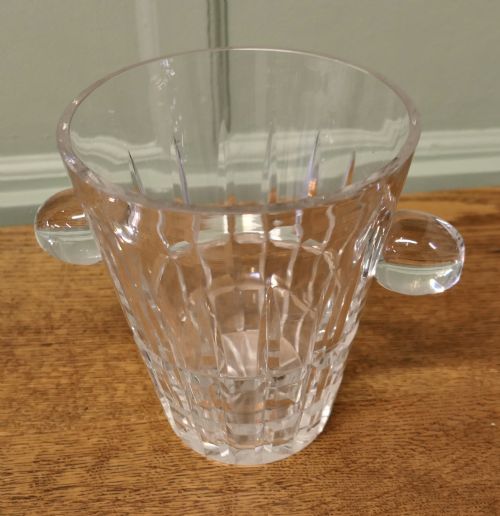
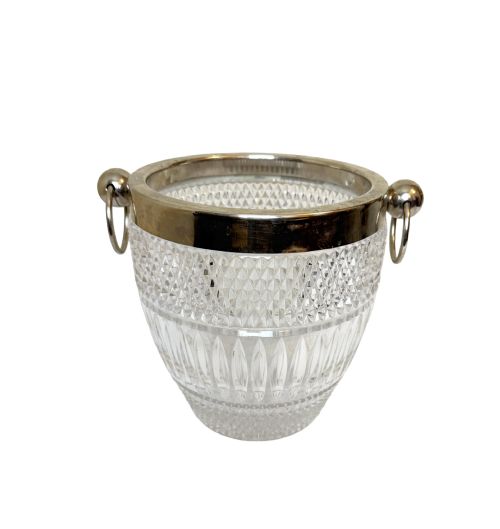


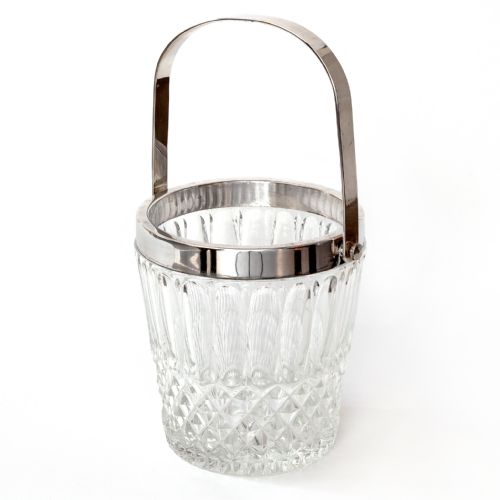


Glass Champagne Ice Bucket
These glass champagne ice bucket pieces are heavy vessels designed to chill wine, bringing period sparkle to a table.
Glass Champagne Ice Bucket
A glass champagne ice bucket is a functional serving vessel designed to hold ice and bottles for chilling at the table. These pieces combine transparent or faceted glass bodies with metal mounts in silver-plate, silverplate, silver-plate, brass, or gilt bronze.
The selections span distinct historical eras, including the nineteenth century, Regency, Edwardian, Art Nouveau, and Art Deco periods. Forms range from personal coolers to large hand-blown vessels described as wine coolers or champagne coolers.
French and English origins dominate the available items, featuring heavy lead crystal, cut glass, and hand cut French crystal. Buyers frequently encounter variants paired with silverplate handles or mounts alongside simpler glass bodies.
How they were made
Makers shaped these vessels through hand blowing and heavy cutting techniques, producing thick walls capable of enduring thermal shock and heavy ice. Cut crystal and lead crystal pieces feature deep geometric or floral facets that catch the light.
Metal components such as silver-plate, silverplate, brass, and gilt bronze mounts were fitted securely to the glass rims and bases. Some specimens incorporated specialised finishes like frosted and clear glass or crackle glass textures.
Glass Champagne Ice Bucket Retail Price Guide 2026
Typical asking prices for glass champagne ice bucket among the pieces listed under this phrase on Sellingantiques today, from the lower quarter to the upper quarter. They describe what is for sale here now, not the wider market.
Listings feature items spanning the nineteenth century through the 1940s, utilising materials from simple cut glass to heavy lead crystal and silver-plate.
What varies in quality
The thickness and clarity of the glass establish the baseline standard, with heavy lead crystal and hand blown pieces offering superior heft. Crispness in the hand cutting separates standard production from finer work.
The quality and integrity of the metal mounts, whether gilt bronze or silver-plate, define the refinement of the piece. Matching the proportion of the metal hardware to the heavy glass body governs the visual balance.
Rene Lalique
The Glass Champagne Ice Bucket Glossary
- Lead crystal
- Glass containing metal oxide that increases weight, brilliance, and workability for deep cutting. This material gives vintage ice buckets their characteristic heavy feel.
- Gilt bronze
- Copper alloy treated with a gold wash or mercury gilding to produce a rich metallic surface. It appears on mounts for nineteenth century coolers.
- Silverplate
- Base metal coated with a thin layer of silver through electroplating or older techniques. It is commonly found on rims and swing handles of twentieth century examples.
- Crackle glass
- Glass deliberately fractured during the cooling process and then reheated to fuse the internal web of lines. This technique creates a textured surface seen in modernist pieces.
- Art Deco
- Design movement of the early twentieth century favouring geometric lines, stylised motifs, and symmetry. Pieces from this period often feature bold, clean cuts.
Glass Champagne Ice Bucket: Frequently Asked Questions
What is a glass champagne ice bucket used for?
These vessels are designed to hold ice and water to chill wine and champagne bottles during dining or entertaining. Their robust construction allows them to withstand the weight of ice and frequent handling.
Historically, they served as decorative centerpieces on dining tables or sideboards in grand homes. Today, buyers utilise them for modern hosting or as decorative display pieces.
How do I tell an Art Deco bucket from Regency style?
Art Deco pieces from the early twentieth century typically feature bold geometric cuts, streamlined forms, and sometimes contrasting crackle glass or heavy silver-plate mounts. They reflect the modern industrial aesthetics of the 1920s and 1930s.
Regency examples, dating from the early nineteenth century, lean towards classical proportions, refined cut crystal, and traditional shapes. Examining the depth of the cutting and the overall silhouette helps distinguish between the two eras.
Are these buckets heavy?
Many of these pieces are described as extremely heavy due to the thick lead crystal and solid glass used in their construction. This substantial weight helps maintain temperature and provides stability when filled with bottles.
Metal mounts in silver-plate or gilt bronze add further heft to the finished vessels. Buyers should expect a solid, weighty feel when handling authentic period examples.
How do I care for antique glass and silver-plate?
Wash glass components gently by hand using warm water and mild detergent to avoid thermal shock or scratching. Pat the crystal dry with a soft cloth to preserve its clarity.
Polish silver-plate mounts sparingly with a dedicated cloth, avoiding abrasive cleaners that might strip the silver layer. Keep metal dry to prevent tarnishing and corrosion over time.