




Claw Foot Writing Desk
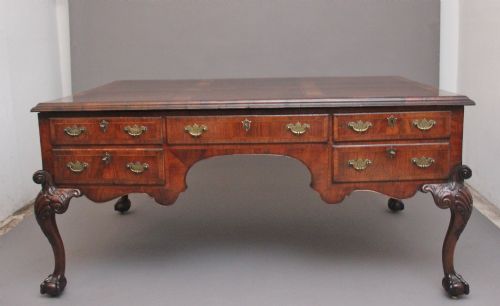
A claw foot writing desk brings substantial timber and carved paw supports to a room, offering a sturdy surface for daily correspondence.
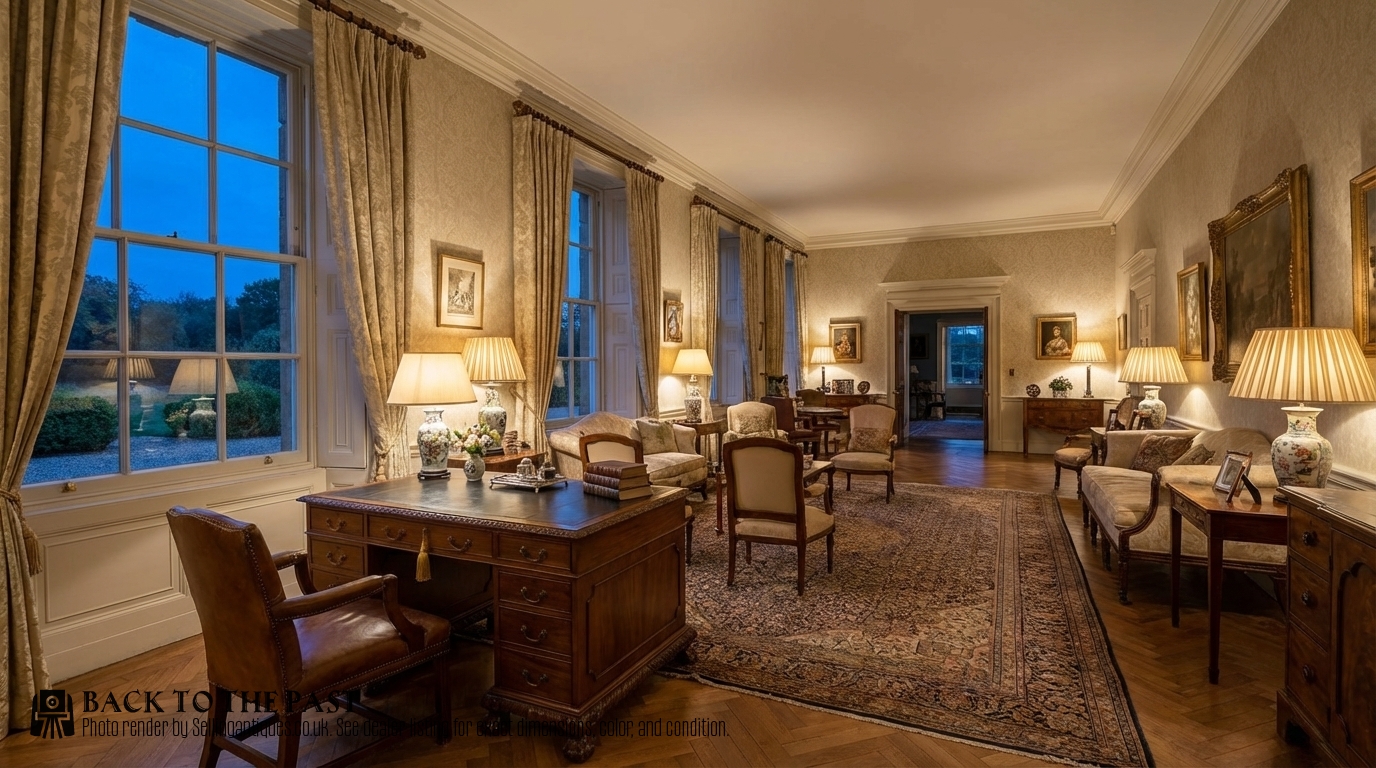
Claw Foot Writing Desk
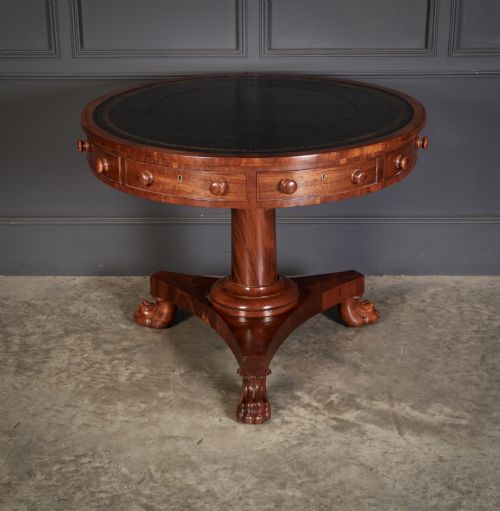
A claw foot writing desk encompasses a variety of substantial writing and library furniture, from pedestal formats to bureau desks and bureau bookcases. These pieces originate across the eighteenth and nineteenth centuries, alongside later revivals.
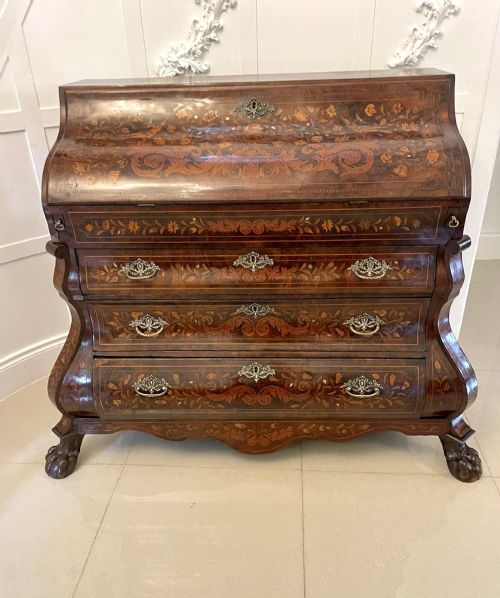
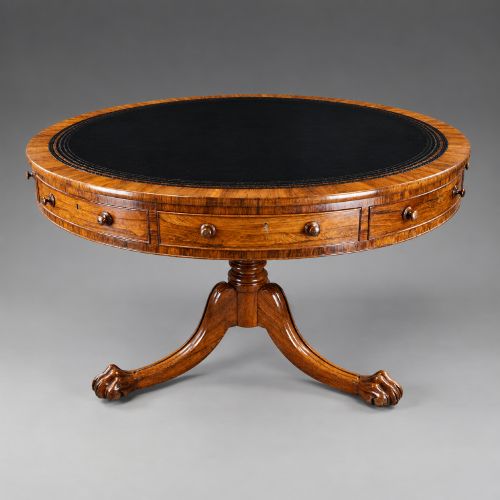
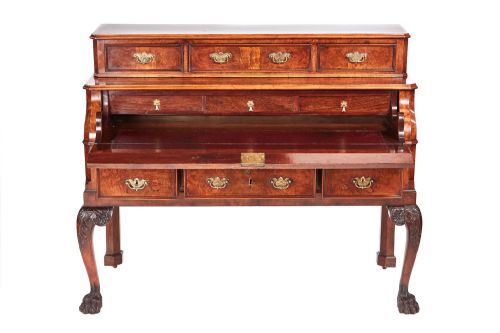
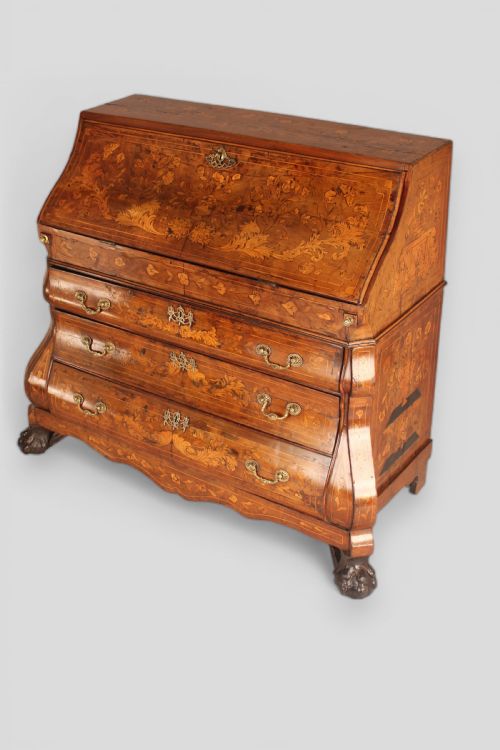
The most frequent iterations on this page deploy substantial timbers like mahogany and walnut, frequently incorporating drawers, fall-front writing surfaces, or leather inserts. Formats range from freestanding library tables to bombé shaped bureau cabinets.
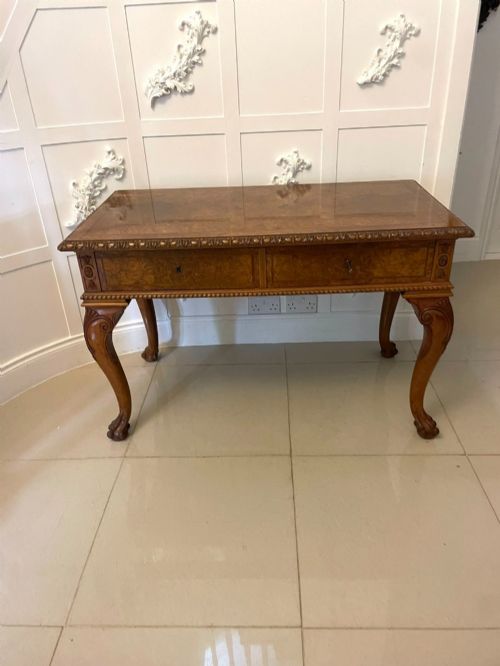
Regional variations span English styles such as Chippendale and Regency to Dutch Rococo and Baroque marquetry pieces. Each variant provides a dedicated writing space supported by distinct foot forms, including carved paw and claw motifs.
Assessing quality
The depth of carving on the paw feet and the precision of the floral marquetry inlay separate standard productions from exceptional examples. Cabinetmakers who invested time in hand-carved details and balanced veneer matching achieved superior visual harmony.
The choice of primary timber and secondary framing woods dictates the structural integrity of each desk. Dense growth rings in solid mahogany or carefully selected burr walnut veneers indicate higher material standards during production.
Listings feature mahogany, walnut, rosewood, oak, and fruitwood inlay across eighteenth and nineteenth-century periods.
Harrods
The Claw Foot Writing Desk Glossary
- Bombe
- A swelling or bulging outward profile seen on the lower sections of certain desks and chests. This curved contour requires advanced woodworking skill to veneer successfully.
- Marquetry
- The art of applying decorative pieces of veneer to a structure to form intricate patterns or pictures. Floral motifs are common in eighteenth-century Dutch pieces.
- Pedestal desk
- A heavy writing table supported by two pedestals or sets of drawers resting on the floor. These forms provide substantial storage flanking a central kneehole.
- Secretaire
- A piece of furniture containing a built-in writing drawer or fold-down writing flap. This dual-purpose design conceals pigeonholes and small compartments behind a decorative exterior.
Claw Foot Writing Desk: Frequently Asked Questions
How do I care for the leather top?
Apply a neutral leather cream sparingly with a soft cloth to maintain suppleness and prevent cracking over time. Avoid excessive moisture and direct sunlight to protect the surface.
Dust regularly with a dry cloth and ensure any spills are blotted immediately rather than rubbed.
Are these desks suitable for daily work?
Many historical desks offer sturdy writing surfaces and ample drawer space for modern correspondence or laptop use. Consider the kneehole clearance and writing height before daily use.
Protective blotters can safeguard antique leather or polished wood surfaces from daily wear.
What distinguishes Regency from Georgian pieces?
Georgian furniture typically spans the eighteenth century, favouring solid mahogany construction, classical proportions, and restrained carved details. Regency pieces reflect early nineteenth-century influences with classical revival motifs and rosewood veneers.
Examining the secondary timbers and hardware styles helps clarify the production era.