




Claw Foot Dining Table
A claw foot dining table brings substance to a room, grounding the space with solid timber and carved supports.
Claw Foot Dining Table
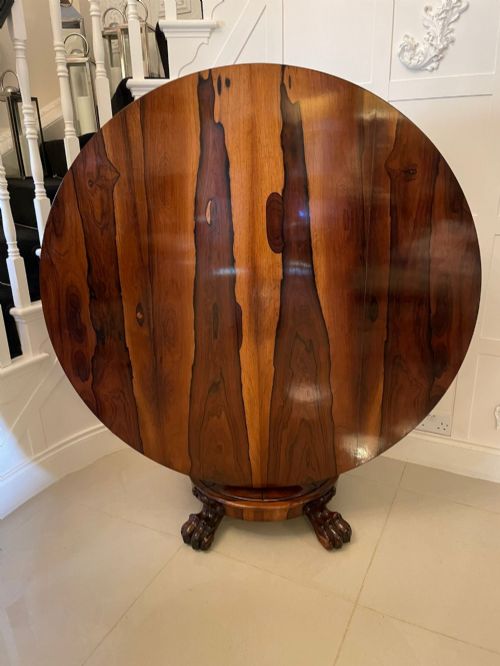
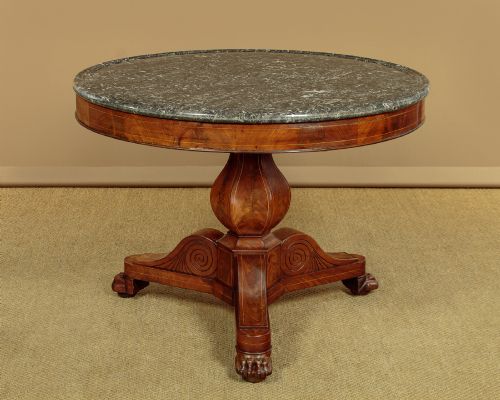
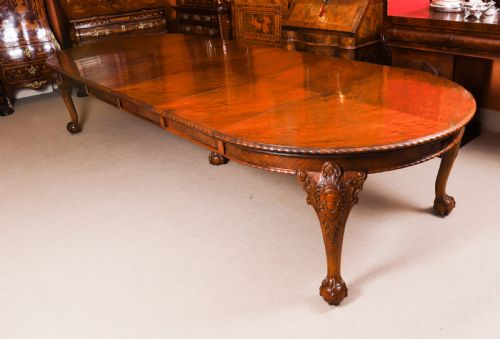
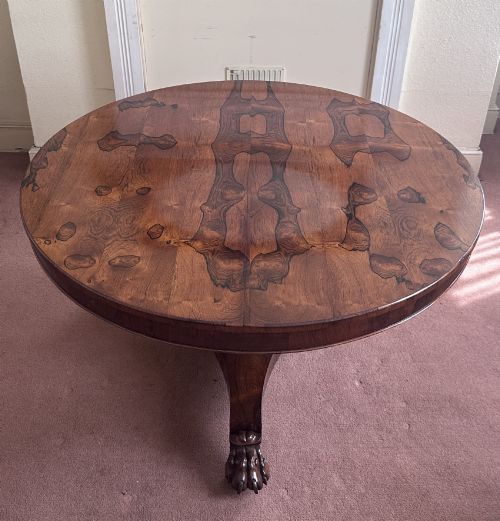
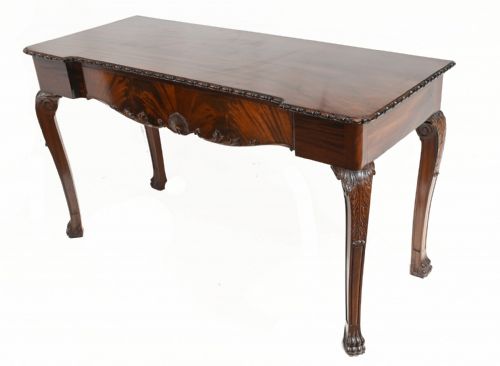
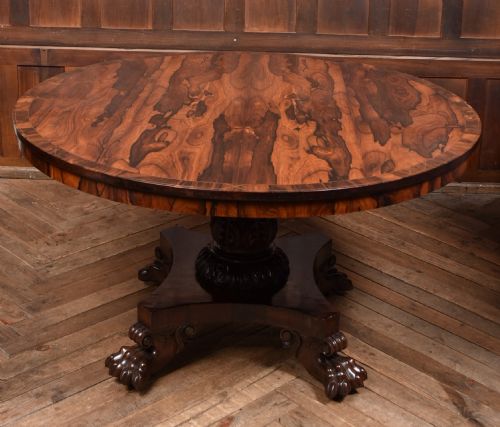
A claw foot dining table centres on heavy timber construction, frequently supported by carved pedestals, cabriole legs, or pillar bases that terminate in animal paws or ball-and-claw feet. These pieces range from substantial extending formats designed for large gatherings to compact pedestal and breakfast tables suited to smaller spaces.
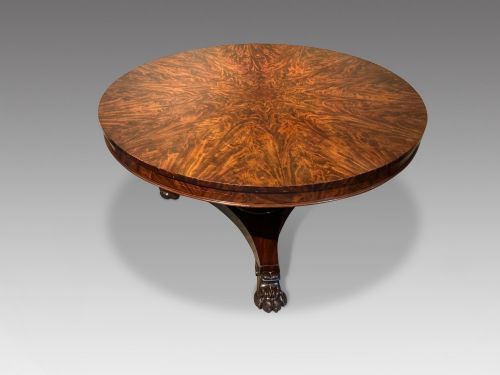
The evidence shows these tables span multiple eras, drawing heavily on Georgian, Regency, William IV, and Victorian designs alongside later revivals. Buyers encounter solid mahogany, rosewood, oak, and walnut, often finished with flame mahogany veneer or segmented top patterns.
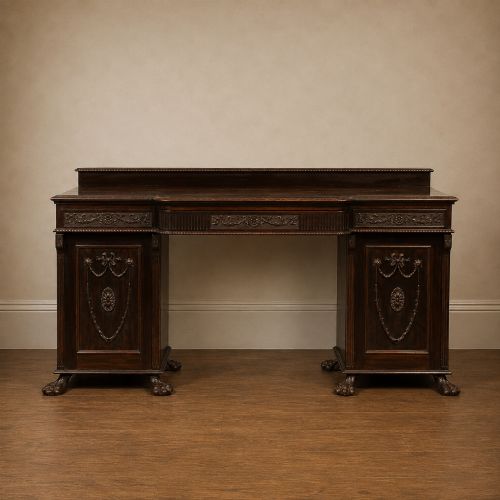
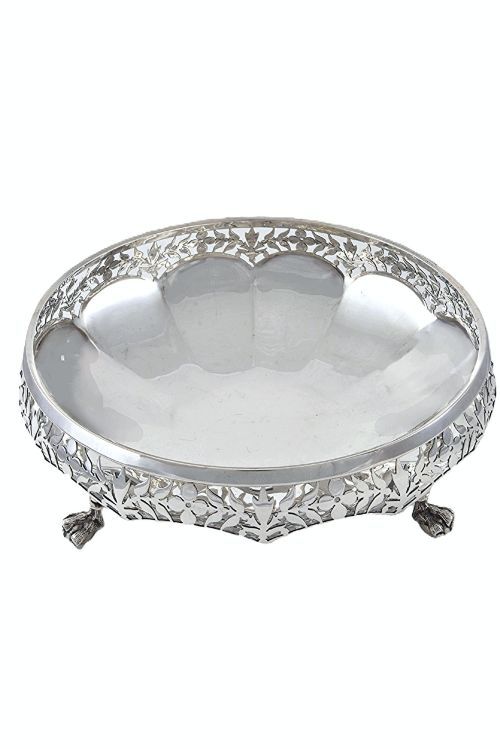
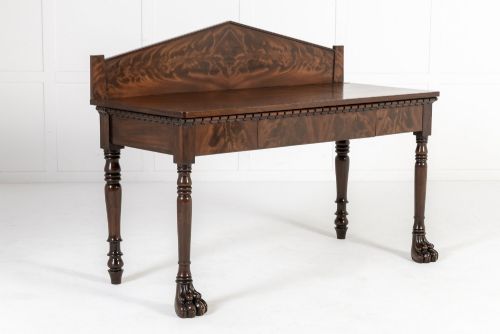
Beyond standard dining formats, the selection includes related serving pieces, sideboards, and centre tables that share the characteristic carved feet and heavy timber build. These variations allow buyers to match a specific period aesthetic while maintaining the defining structural feature of the foot.
How they were made
Cabinet makers utilised dense hardwoods like mahogany, rosewood, oak, and walnut to build these tables, often applying flame mahogany or burr walnut veneer across the tops to create decorative grain patterns. Solid timber provided the structural integrity needed for large extending mechanisms and heavy pedestal bases.
Carving formed a central part of the construction, with artisans shaping cabriole legs and pillar supports by hand to create the detailed animal paws and ball-and-claw motifs. Brass elements frequently appeared on castors or mounts, adding functional detail to the heavy wooden frames.
Listings feature mahogany, rosewood, oak, and walnut, spanning periods from the 18th century through the Edwardian era.
What varies in quality
The depth and crispness of the carving on the feet and legs separate standard production from finer workshop output, where artisans rendered the fur, talons, and knuckles with anatomical precision. Timber selection also dictates grade, with choice cuts of flame mahogany, burr walnut, and rosewood creating more visually complex surfaces than plain grain boards.
Structural engineering defines the upper tier, particularly in extending mechanisms and tilt-top mechanisms that operate smoothly despite the weight of dense hardwoods. Maker attribution, such as work originating from established firms like Gillows or Maple & Co, further distinguishes pieces through documented construction standards.
Maple & Co·Gillows
The Claw Foot Dining Table Glossary
- Cabriole leg
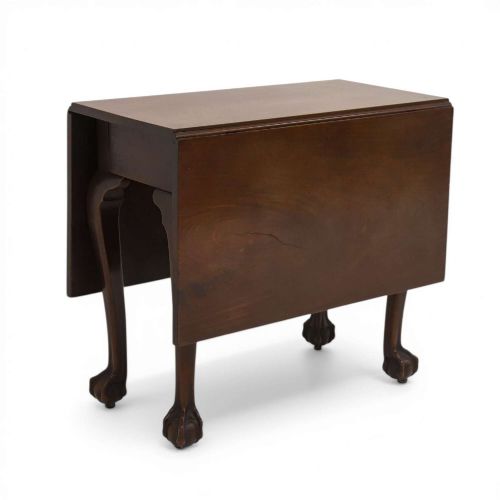
- A furniture leg that curves out at the knee and tapers inward to an ankle, finishing in a carved foot. This form derives from Chinese furniture and became a staple of 18th-century design.
- Claw-and-ball foot
- A carved furniture foot depicting a bird's talon or animal claw grasping a spherical ball. The motif originates from Eastern art and appeared widely on Georgian seating and tables.
- Flame mahogany veneer
- A thin slice of mahogany timber cut from the fork of the tree where branches join the trunk. This cut produces a characteristic fiery, undulating grain pattern used on high-end table tops.
- Tilt-top table
- A table featuring a mechanism that allows the top to hinge vertically when not in use. This design enabled tables to stand against walls to save space in period rooms.
- Pedestal table
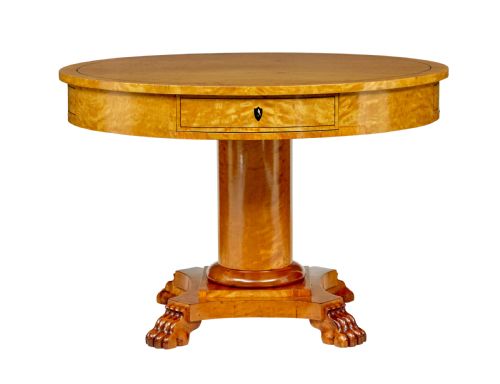
- A table supported by a central pillar or column rather than four corner legs. These columns often rest on tripartite or quadrupartite bases with carved feet.
Claw Foot Dining Table: Frequently Asked Questions
How do I date a claw foot table?
Dating relies on identifying the prevailing style, timber choice, and construction methods used in the frame. Georgian and Regency examples often feature solid mahogany with hand-carved details, while later Victorian and Edwardian pieces incorporate machine-assisted elements and revival styling.
Secondary woods used in the interior framing and the type of fixings also offer clues to the decade of manufacture. Comparing the piece against documented workshop output helps narrow the timeline further.
Are these tables suitable for daily dining?
Solid hardwood construction makes these tables durable enough for regular daily use, provided the timber is maintained with appropriate care. Extending versions offer flexibility for family meals and larger gatherings.
Care should be taken with antique polished surfaces, using heat mats and coasters to protect the timber and veneer from moisture and temperature damage.
What is the difference between a centre table and a dining table?
Centre tables are designed to stand free in the middle of a room, often finished with decorative details on all four sides and sometimes built to a smaller scale than dedicated dining furniture. Dining tables prioritize surface area and leg clearance for seating multiple people.
Many larger centre tables in the evidence double as dining surfaces due to their substantial dimensions and sturdy pedestal or pillar supports.