

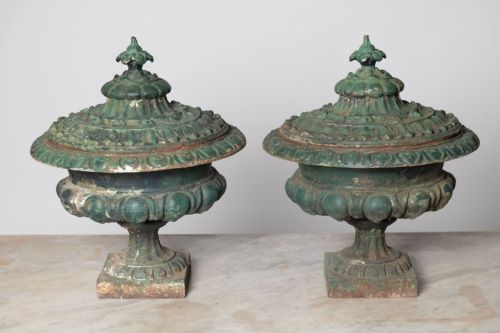


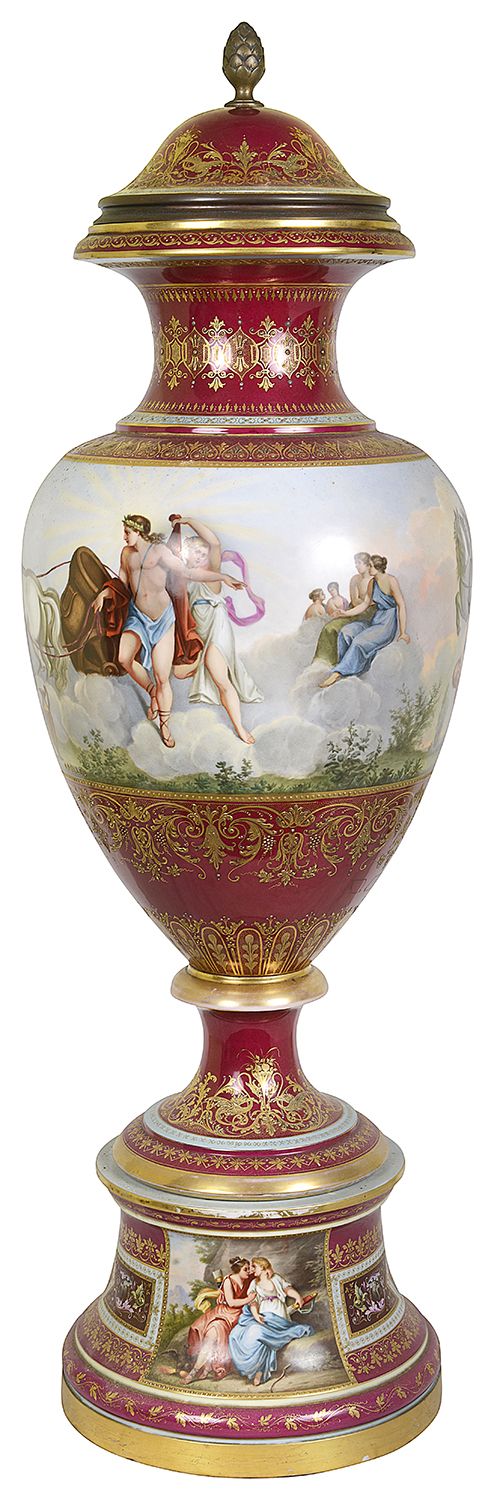
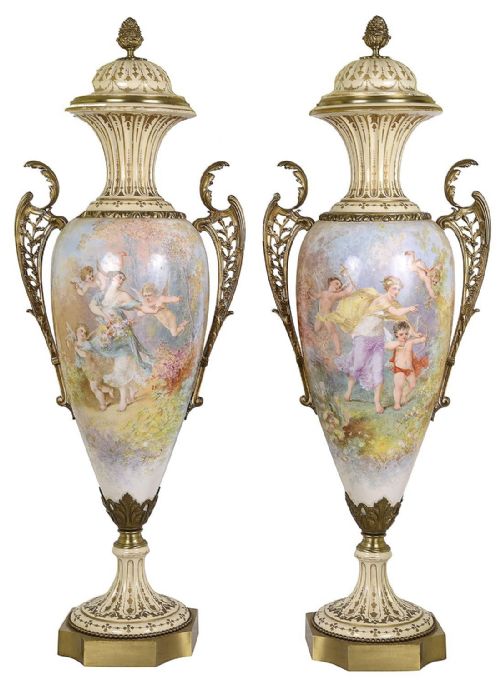
Classical Urn with Lid
A classical urn with lid is a commanding decorative vessel rooted in antiquity, prized for bringing sculptural symmetry and neoclassical dignity to an interior scheme.
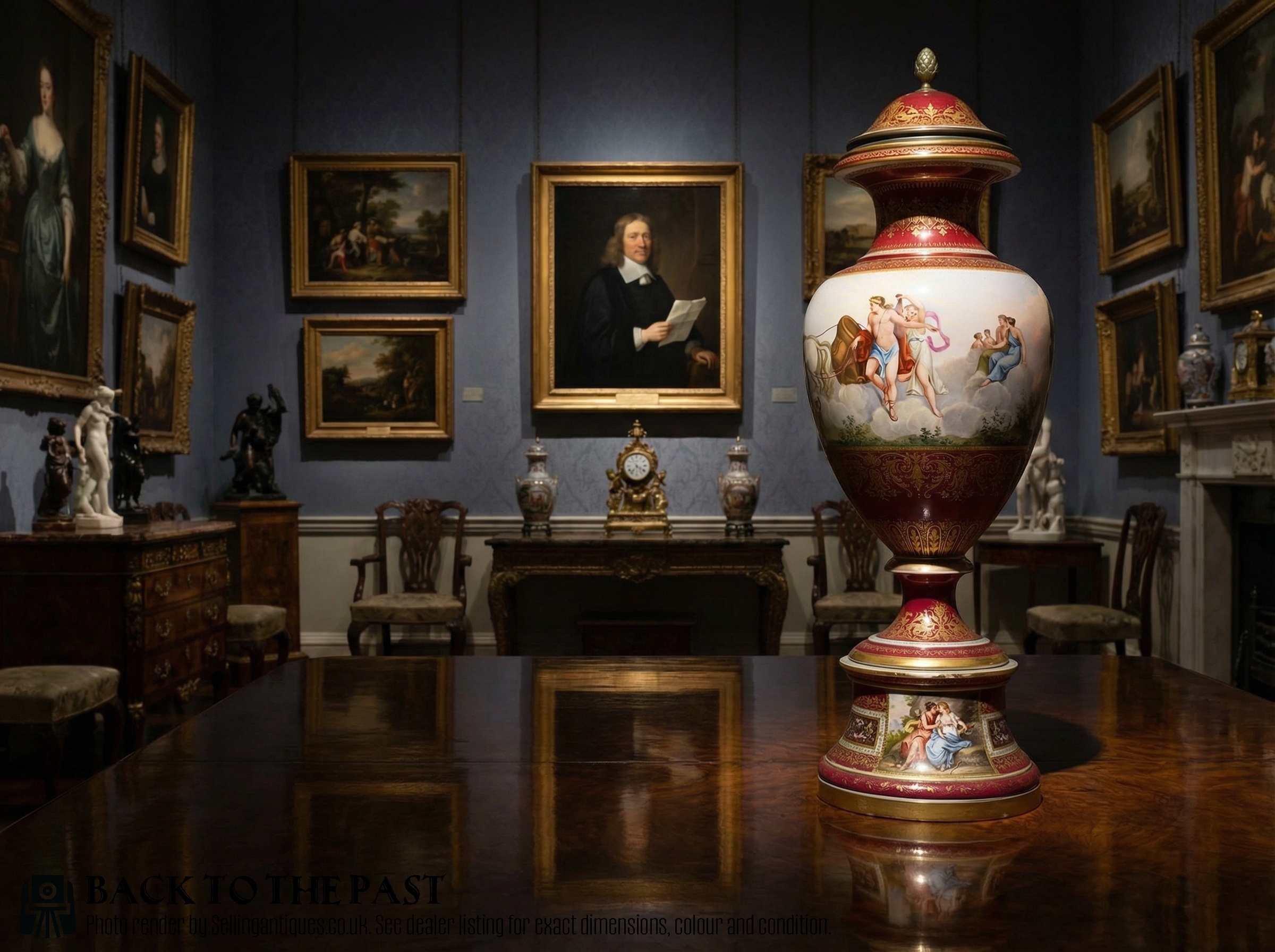
Classical Urn with Lid
When you search for a classical urn with lid, you encounter substantial decorative vessels that echo the forms of ancient Greece and Rome. These pieces serve primarily as mantel ornaments, garnitures, or focal points on side tables.
The selections available here span from the eighteenth century through the Edwardian period, encompassing grand pairs and solitary display pieces. You will most frequently meet porcelain pairs from European factories and bronze or spelter examples shaped by nineteenth-century revivalists.
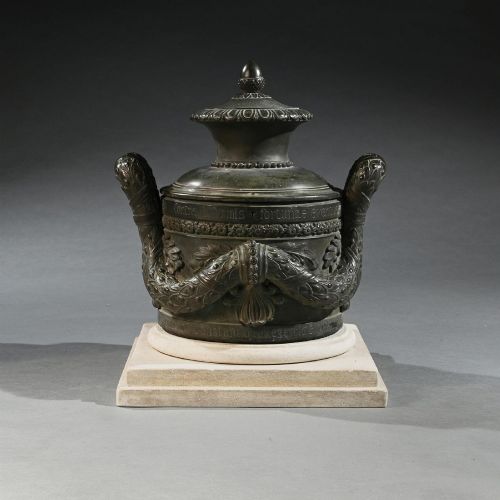
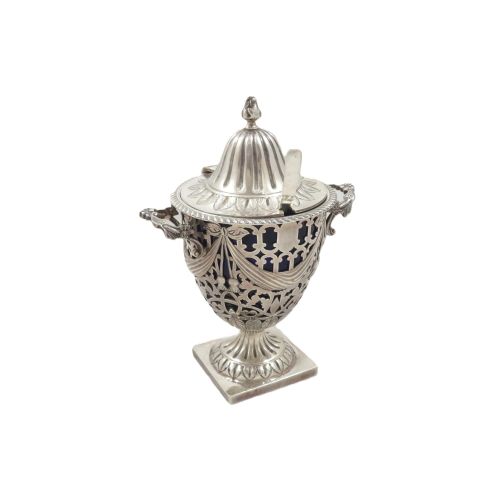
Object types vary from designated garden and decorative urns to lidded sugar bowls and amphora vases with covers. Materials range widely across porcelain, bronze, cast iron, lead, stone, alabaster, and sterling silver.
How they were made
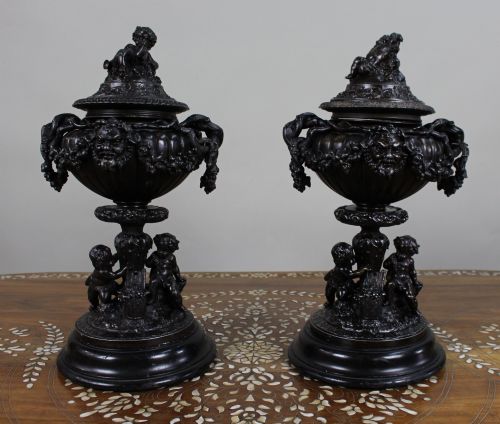
Metal vessels in this category utilise bronze, cast iron, lead, and bronzed spelter, often shaped through casting techniques to achieve crisp architectural details like Bacchic masks and putti. Silversmiths construct smaller vessels, such as sugar baskets, from sterling silver and apply gold leaf for gilt finishes.
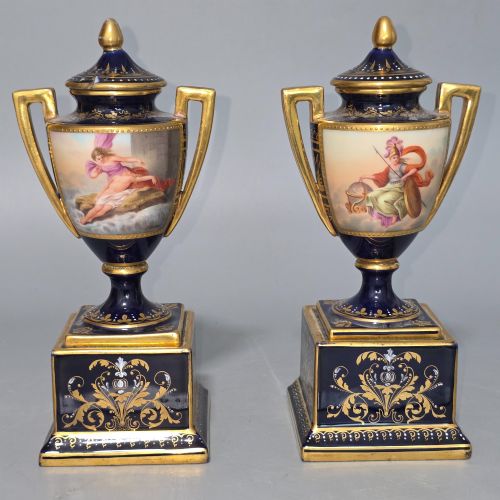
Ceramic examples rely on porcelain bodies fired in prominent European manufactories, subsequently hand-painted and glazed. Stonework and alabaster pieces involve skilled carving and turning of raw stone to produce smooth surfaces suited to Grand Tour souvenirs.
Some nineteenth-century French artisans incorporated cheerful putti and mischievous Bacchic masks directly onto the bellies of heavy bronze vessels.
What varies in quality
The distinction between standard production and superior work lies in the crispness of the casting or the finesse of the hand-painted porcelain decoration. Finer metal castings retain sharp relief in figural elements like putti and mask handles, whereas lesser pieces show softened details.
Integrity of materials and the presence of original lids heavily influence the standing of a piece. Original matching covers and signed factory marks elevate the status of ceramic and metal vessels alike.
Auguste Cain·F. Koller·George Nathan and Ridley Hayes
The Classical Urn with Lid Glossary
- Neoclassical
- A style reviving the architectural and decorative motifs of ancient Greece and Rome. It emphasises symmetry, straight lines, and classical restraint.
- Spelter
- A zinc alloy commonly used as a substitute for bronze in nineteenth-century decorative objects. It is frequently bronzed or painted to simulate heavier metal.
- Amphora
- A tall ancient vessel form with two handles and a narrow neck, adapted by nineteenth-century porcelain makers for decorative display. These often rest on integrated ceramic plinths.
- Gilt
- Covered thinly with gold leaf or gold paint. This technique highlights the metallic surfaces of silver or bronze vessels.
- Garniture
- A set of three or more matching decorative vases or urns designed to be displayed together on a mantelpiece or sideboard. They typically feature a taller central piece flanked by smaller matching vessels.
Classical Urn with Lid: Frequently Asked Questions
What is a classical urn with lid used for?
These vessels were created primarily as ornamental display pieces to anchor architectural schemes in formal rooms. They functioned as mantel garnitures, decorative garnishes for sideboards, or substantial centerpieces.
Smaller silver examples served specific domestic roles, such as sugar baskets or tea caddies. Their primary purpose remained visual display and the evocation of classical antiquity.
How do I style a lidded urn at home?
Place a matched pair symmetrically on a mantelpiece, console table, or heavy sideboard to create a formal focal point. Ensure the surrounding space remains relatively uncluttered to let the sculptural silhouette stand out.
Larger stone or iron versions suit entryways or sunrooms, while delicate porcelain pairs demand indoor display protected from heavy traffic. Avoid overcrowding them with smaller items that obscure their form.
How can I tell the period of an urn?
Examine the materials, casting quality, and manufacturing marks to determine the era of production. Nineteenth-century pieces often reflect specific revivals, such as French Neoclassical or Rococo Revival.
Factory marks on porcelain bases and the specific patination on bronze or spelter provide further chronological clues. Grand Tour alabaster pieces typically date to the early nineteenth century as travellers collected souvenirs.
Are these urns waterproof?
Most decorative metal and porcelain urns are not designed to hold water for fresh floral arrangements. Their construction focuses on sculptural form and decorative surface finishes rather than functional containment.
Using them for live plants can damage interior glazes or accelerate corrosion in metal pieces. Stick to dry display or utilise internal liners if you wish to use them for foliage.