



Classical Revival Desk
A classical revival desk brings solemn architectural proportion and refined mahogany or satinwood surfaces into a study.
Classical Revival Desk
A classical revival desk borrows its vocabulary from ancient Roman and Greek architecture, appearing primarily in Victorian and Edwardian iterations on this page. These pieces include writing desks, Carlton house desks, and architectural bureaux constructed during the nineteenth and early twentieth centuries.
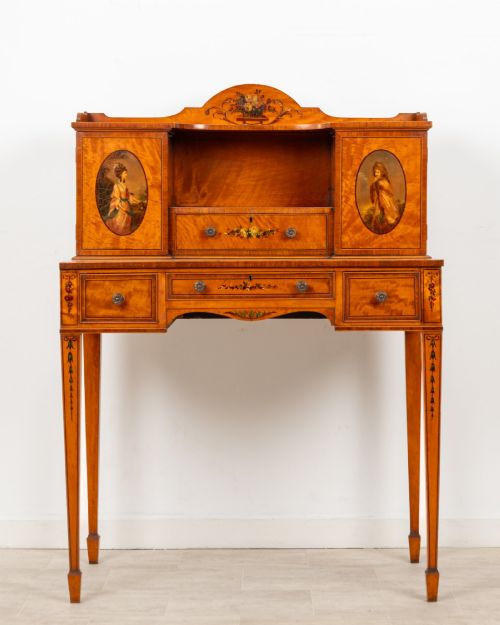
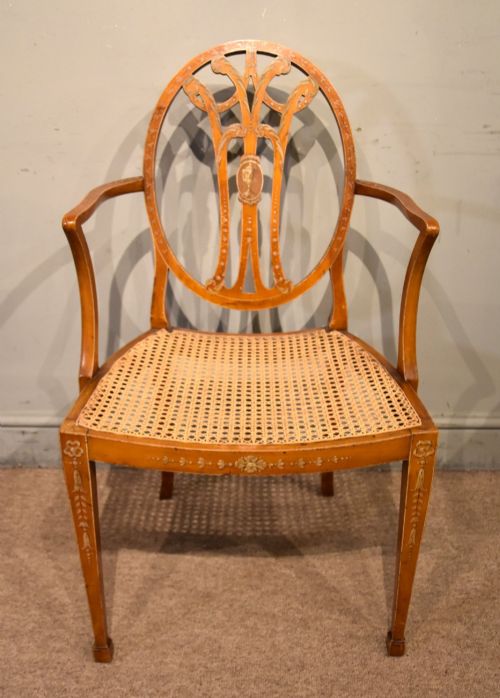
The materials deployed in these desks include satinwood and mahogany, often enhanced by marquetry inlay or hand-painted details. Such furnishings serve as formal writing surfaces while displaying the classical motifs favoured by makers like Edwards & Roberts.
Materials and construction
Makers built these desks using solid mahogany and satinwood veneers, applying marquetry inlay and hand-painted motifs to create decorative surfaces. Structural elements relied on traditional joinery methods suited to heavy timbers and intricate writing compartments.
Brass fittings and applied ormolu sometimes complemented the timber construction, particularly on pieces influenced by Sheraton or Neoclassical taste. The integration of painted panels and inlaid borders required specialist cabinet-making skills.
The furniture selection includes Sheraton revival marquetry inlaid cylinder bureaux alongside painted satinwood writing desks.
Markers of quality
The standard of a classical revival desk rests upon the crispness of its marquetry inlay and the fineness of any hand-painted decoration. Superior examples demonstrate meticulous timber selection and balanced proportions across drawers, writing flaps, and superstructure compartments.
Makers' signatures or stamps elevate a piece, distinguishing workshop production from standard commercial output. The depth and precision of structural joinery determine how well the desk endures daily use.
Edwards & Roberts·Harrison Brothers & Howson
The Classical Revival Desk Glossary
- Satinwood
- A lustrous hardwood native to Ceylon and India, prized for its golden yellow sheen and smooth grain. It frequently forms the primary veneer on Edwardian painted furniture.
- Marquetry
- The art of applying small pieces of veneer to a structure to form decorative patterns or pictures. This technique defines the surface ornamentation on many nineteenth-century desks.
- Carlton House desk
- A form of writing desk featuring a fitted superstructure of small drawers and pigeonholes curving around the back and sides of the writing surface. It represents a sophisticated writing cabinet configuration.
- Ormolu
- Gilded bronze or brass applied as mounts and decorative hardware on furniture and clocks. It provides metallic contrast against dark mahogany or polished satinwood.
Classical Revival Desk: Frequently Asked Questions
What is a classical revival desk?
A classical revival desk is a nineteenth or early twentieth-century writing table or bureau incorporating architectural motifs from antiquity.
These pieces draw on Georgian or Neoclassical precedents, utilising satinwood, mahogany, and marquetry inlay.
How do I identify an Edwardian desk?
Edwardian desks often feature lighter timbers such as satinwood, accompanied by hand-painted floral motifs or delicate inlaid banding.
They tend to show refined proportions influenced by Sheraton revival styles rather than the heavier mass of earlier Victorian furniture.
Where were these desks used?
These desks served as private writing surfaces in libraries, drawing rooms, and studies of period homes.
Their finished backs and detailed superstructures allowed them to sit away from the wall in the centre of a room.
How do I care for satinwood?
Satinwood requires protection from direct sunlight and excessive moisture to prevent the polished timber from fading or cracking.
Gentle dusting with a soft, dry cloth preserves the smooth finish and painted details.