


Classical Religious Artwork
Classical religious artwork brings devotional subjects and historical iconography into interiors through centuries of painted and printed interpretations.
Classical Religious Artwork
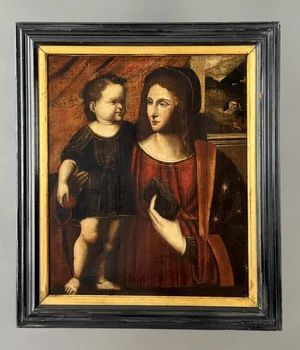
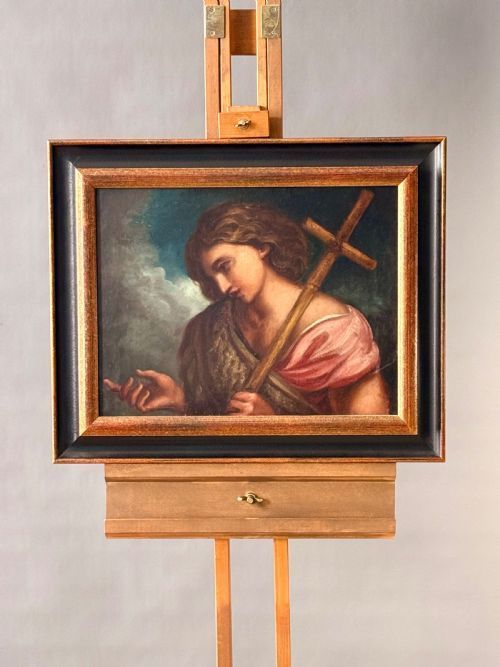
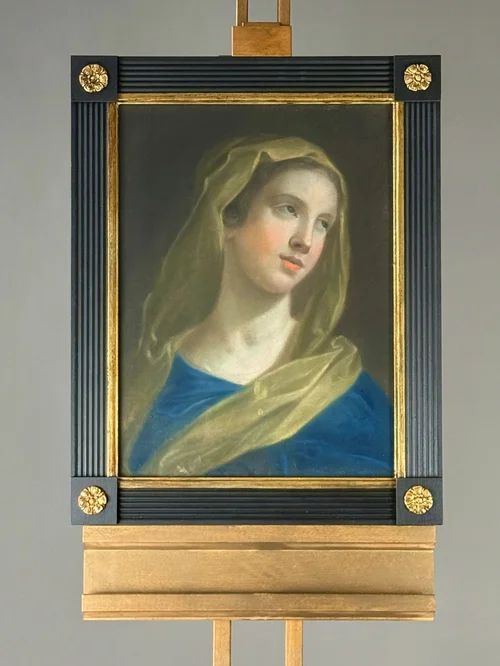
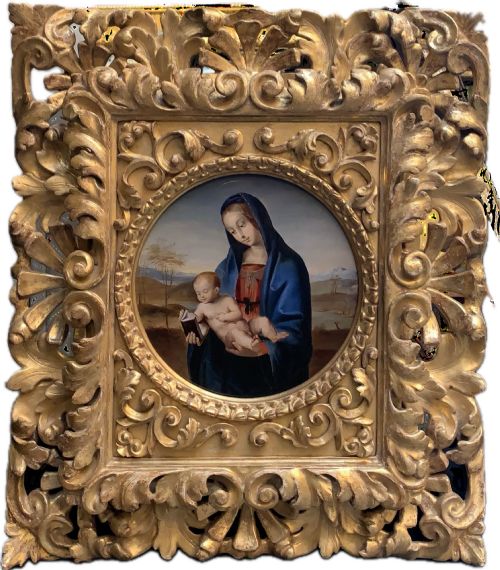
Classical religious artwork comprises oil paintings, pastels, engravings, and framed prints focused on sacred narratives and figures. Buyers examine depictions of the Madonna and Child, saints, and biblical histories derived from major European masters. The selection draws heavily from Italian and Venetian schools alongside later revival interpretations.
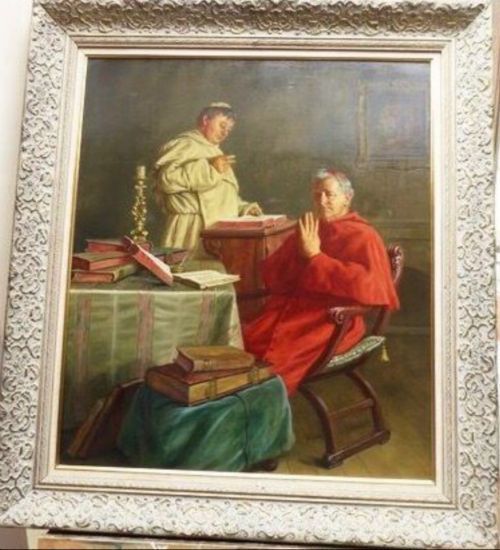
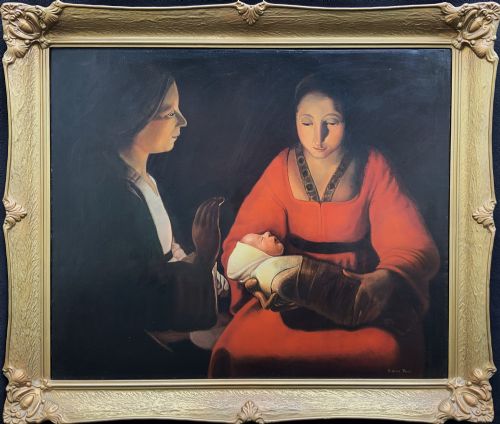
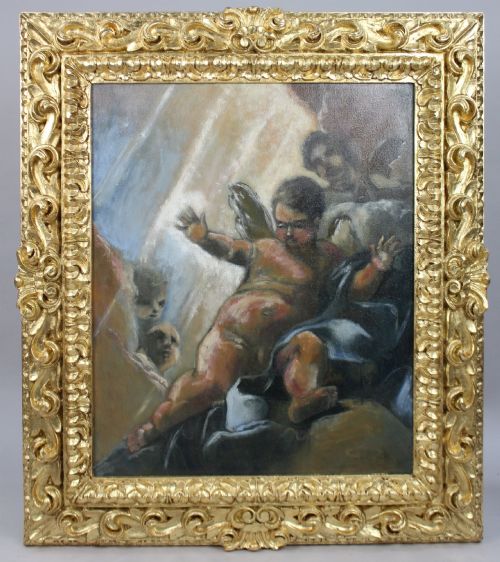
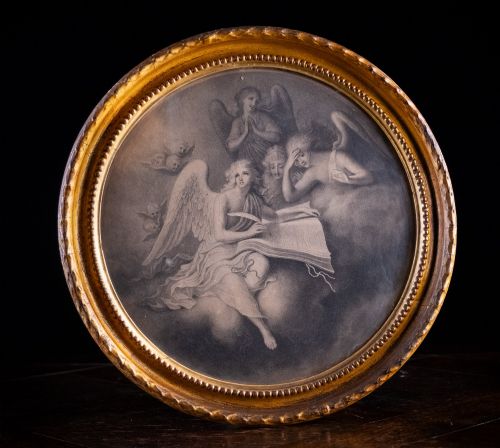
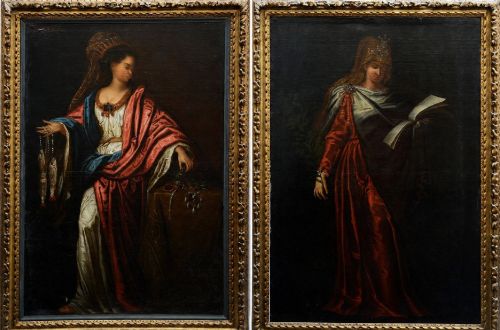
Most examples found on this page date from the seventeenth, eighteenth, and nineteenth centuries, with occasional pieces from the mid-twentieth century. These range from substantial oil paintings on canvas set in carved giltwood frames to delicate paper engravings. Subjects frequently follow compositions by Raphael, Correggio, and other Renaissance and Baroque painters.
Works appear either as original period productions, studio pieces, or later copies and prints after renowned compositions. The forms divide cleanly between painted canvas and panel works and graphic works on paper. Each object reflects the enduring appeal of devotional imagery adapted for domestic display across successive centuries.
How they were made
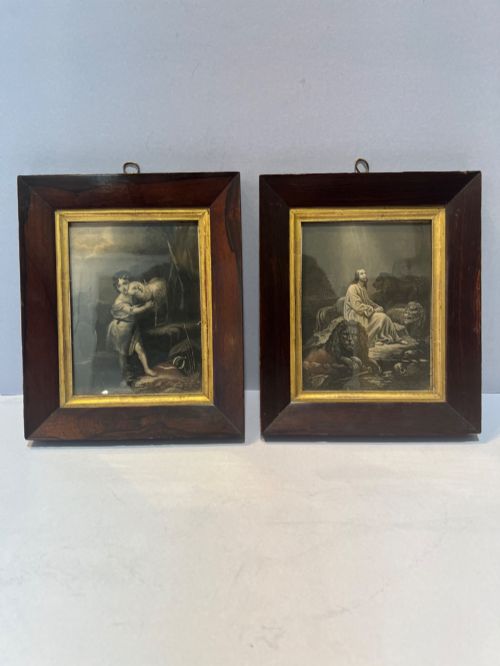
Painters utilised oil on canvas or wood panels, applying pigments to prepared grounds often framed in carved and gilded wood. Engravers worked metal plates to produce detailed prints on paper, sometimes incorporating gold leaf accents. Pastels were also employed on paper or canvas surfaces to achieve softer tonal gradations in portraiture.
Techniques relied on traditional European workshop methods, passing compositions down through studios and followers who copied master works. Framing played an integral part, utilising heavy giltwood constructions that matched the grandeur of the religious subjects. Materials remained consistent within specific periods, moving from early wood panels to standard stretched canvases and engraved paper.
Listings feature oil on canvas, giltwood, and paper across periods spanning the seventeenth century through to nineteen sixty.
What varies in quality
Quality separates through the execution of brushwork, anatomical proportion, and the depth achieved in chiaroscuro and colour. Fine studio pieces or skilled followers capture the expressive nuance of original masters, whereas weaker examples reveal stiff lines or flat rendering. The fidelity of a copy to its source material marks a clear distinction between standard decorative output and accomplished fine art.
The physical housing contributes significantly to the overall standard, particularly the craftsmanship found in period carved giltwood frames. Materials such as high-grade oil paints, heavy canvas, and superior paper stock influence longevity and visual impact. Original age and the directness of the connection to a documented school or circle elevate certain works above generic adaptations.
Benedetto Luti·Bernardino Luini·Raphael·Antonio Allegri Correggio·Scipione Pulzone·Gian Lorenzo Bertolotto·Antonio Tempesta·Pietro D'asaro·Pompeo Batoni·Girolamo Dai Libri·Bartolomé Murillo·Eugene Hindle·Reynard Le Vieux
The Classical Religious Artwork Glossary
- Oil on Canvas
- A painting medium where pigments are suspended in drying oils and applied to a woven fabric support. This technique became standard for European painting from the Renaissance onward.
- Giltwood
- Wood that has been treated with a thin layer of gold leaf or gold powder. It is frequently seen on ornate frames enclosing historical paintings.
- Engraving
- A printmaking process where an image is cut into a metal plate with a burin. The resulting lines hold ink to transfer the design onto paper.
- Baroque
- An artistic style originating in Rome around sixteen hundred, characterised by dramatic movement and deep light contrast. It informed much of the religious art produced over the next two centuries.
- Neoclassical
- A style drawing inspiration from the classical art and culture of ancient Greece and Rome. It emerged in the mid-eighteenth century as a reaction against the excess of rococo.
Classical Religious Artwork: Frequently Asked Questions
What is classical religious artwork?
Classical religious artwork consists of paintings, engravings, and prints depicting sacred subjects from Christian tradition. These pieces often replicate or adapt famous compositions by Renaissance and Baroque masters.
Items range from seventeenth-century oil paintings to nineteenth-century engravings and mid-twentieth-century prints. They serve as historical examples of devotional imagery collected for aesthetic and spiritual value.
How were these artworks displayed historically?
Historically, these pieces hung in domestic chapels, private studies, and formal reception rooms as focal points for contemplation. Elaborate giltwood frames elevated their status within wealthy interiors.
Many works were created specifically to aid personal prayer or to project the piety and sophistication of the owner. Their scale varied from intimate devotional panels to large wall paintings.
How do I care for an antique oil painting?
Antique oil paintings require stable environmental conditions away from direct sunlight and dramatic humidity shifts. Dusting should be undertaken gently with a soft, dry brush by someone experienced.
Avoid using water or cleaning solutions on the paint surface or canvas. Professional conservation is recommended for any structural repairs or cleaning of darkened varnish.
How can I tell the period of a framed print?
Dating a framed print involves examining the paper quality, printing technique, and framing materials. Engravings often display plate marks and watermarks specific to certain eras.
Backings, fixings, and the style of the giltwood frame also offer clues to the age of the object. Comparing the subject matter to known dated editions helps narrow the timeframe.