



Classical Relief Frieze Mirror
A classical relief frieze mirror brings stately proportions and mythological narrative into a room, offering both depth and a distinct architectural focus.
Classical Relief Frieze Mirror
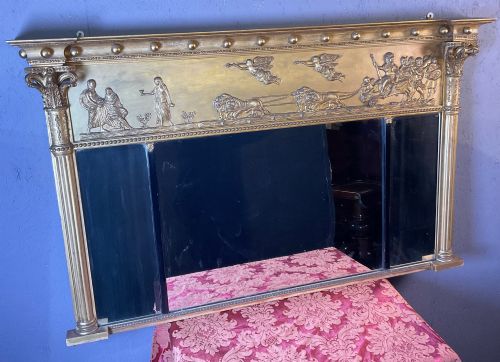
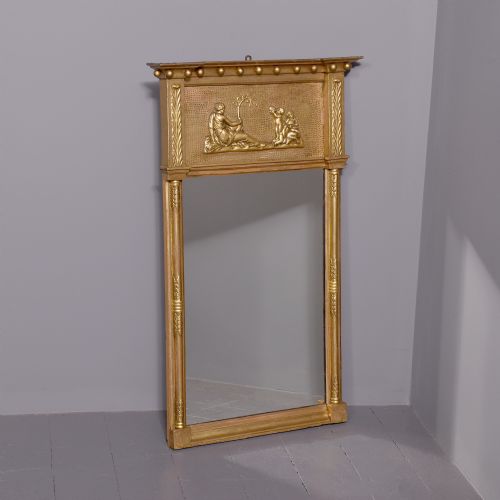
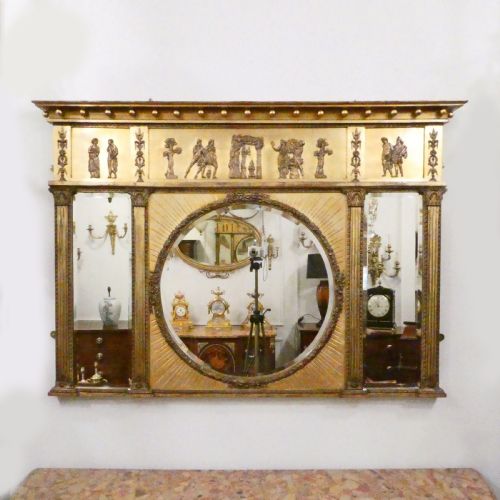
When you search for a classical relief frieze mirror, you encounter imposing architectural overmantels and pier glasses designed to command a wall. These pieces draw heavily on neoclassical vocabularies, pairing large rectangular glass plates with low-relief sculptural friezes running along the upper border or cornice.
The versions you meet most frequently on this page belong to the nineteenth century, specifically spanning the Regency era and its later Victorian revivals. They appear as both single-plate wall mirrors and wider triptych configurations, often intended to hang above a fireplace mantel or between tall windows.
Materials and construction
Giltwood and gesso form the primary structural and decorative skin of these frames, applied over a dense wooden core. Artisans built up the low-relief friezes using moulded composition or carved plaster, capturing figures and narrative scenes before applying gold leaf across the surface.
The reflective components consist of silvered mirror glass, occasionally divided into triptych sections or multiple plates within a single frame to suit the grand horizontal spans required for overmantel placement.
Current listings feature nineteenth-century pieces spanning the Regency period, the year 1880, and the broader Victorian era.
Assessing quality
The distinction between standard examples and superior pieces rests on the crispness and ambition of the sculptural relief itself. A frieze depicting a specific narrative or mythological scene, such as a chariot procession, demonstrates a higher level of artisan skill than a purely ornamental linear moulding.
Depth of gilding and the preservation of the original gesso underlayers also divide the range, as deeply layered gold leaf retains sharper highlights and a richer warmth across the decades.
The Classical Relief Frieze Mirror Glossary
- Frieze
- A broad horizontal band of sculpted or painted decoration situated just below the cornice of a mirror frame.
- Gesso
- A plaster-like mixture applied to wood frames to provide a smooth, mouldable base for subsequent gilding.
- Triptych
- A mirror plate divided vertically into three distinct sections, often separated by slender colonettes or moulding bars.
- Pier glass
- A tall, narrow mirror designed specifically to hang on the wall space between two windows.
Classical Relief Frieze Mirror: Frequently Asked Questions
Where should I hang a classical relief frieze mirror?
These mirrors suit large principal reception rooms, particularly positioned directly above a fireplace mantel where their horizontal proportions anchor the room.
Alternatively, narrower pier variants fit well into wall spaces between tall windows to reflect natural light.
How do I tell a Regency original from a Victorian revival?
Regency pieces typically date from the early nineteenth century and display sparser, crisper neoclassical motifs with distinct architectural restraint.
Victorian revivals from later in the century often feature heavier proportions and denser composition ornament.
How were the relief scenes created?
The sculptural figures on the frieze were frequently formed from composition, a pliable mixture of whiting, resin, and glue pressed into moulds.
Once dry, these moulded reliefs were fixed to the wooden frame before the entire surface received its gesso and gold leaf.