





Classical Regency Cabinet
A classical regency cabinet brings architectural order to a room, offering refined storage through balanced proportions and classical details.
Classical Regency Cabinet
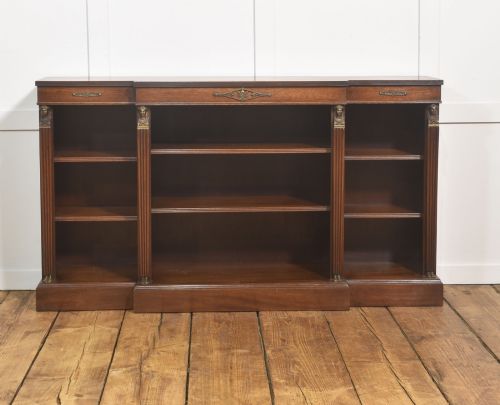
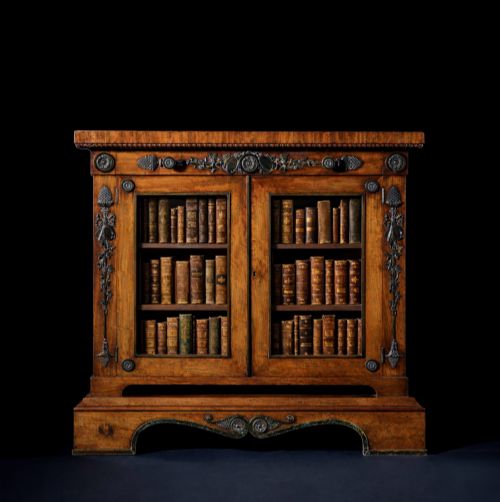
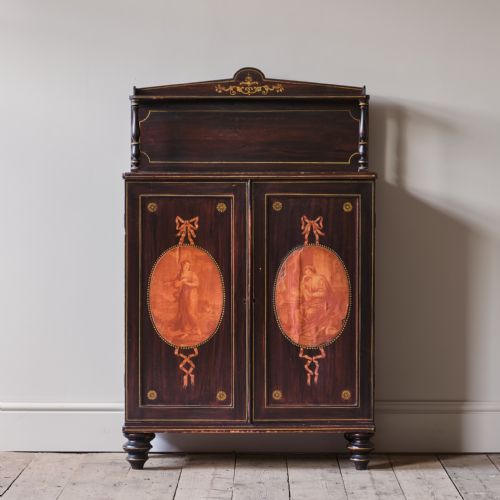
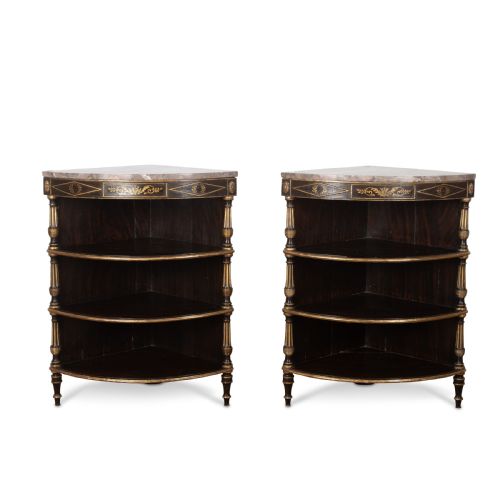
When you search for a classical regency cabinet, you encounter pieces designed around architectural symmetry, often drawing on French Empire and neoclassical design vocabularies. The forms range from side cabinets and bookcases to chiffoniers, pedestal cupboards, and display cabinets.
The versions most commonly met on this page date from the Regency period itself as well as later revival eras like the nineteenth century and early twentieth century. These storage pieces typically utilise timber carcases arranged with clean lines, columns, or pilasters.
Makers and cabinetmakers of the period took inspiration from classical antiquity, incorporating brass mounts, marble tops, and detailed wood inlay. The resulting furniture balances display with concealed storage, suiting both formal reception rooms and private studies.
What varies in quality
Quality rests primarily on the choice of timber and the precision of the cabinetmaker's construction. Superior examples employ dense, well-figured mahogany or richly grained rosewood matched evenly across primary surfaces, while lesser pieces rely on simpler secondary timbers.
The refinement of the decorative mounts and inlay distinguishes higher-grade pieces from standard production. Crisp brass casting, neat wood inlay, and well-executed architectural mouldings indicate skilled workshops adhering closely to classical proportions.
The integrity of the original carcase, interior fittings, and surface finish determines the standing of a piece. Retaining period elements like original glass, functional locks, and untouched polish preserves the intended character of the design.
Listings here feature classical regency cabinets spanning the Regency period through to nineteenth-century revivals and twentieth-century interpretations.
The Classical Regency Cabinet Glossary
- Breakfront
- A piece of furniture whose central section projects forward from the flanking wings. This configuration creates visual depth and architectural interest.
- Chiffonier
- A low cabinet or sideboard, often featuring a raised shelf or small superstructure at the back. It evolved during the nineteenth century for convenient storage and display.
- Ormolu
- Gilded bronze used for decorative mounts and accents on furniture. The technique creates a bright gold appearance that contrasts against dark timber.
- Pedestal cabinet
- A freestanding piece built around a central column or cupboard base, often hexagonal or square in plan. These standalone units functioned as bedside or side tables.
- Parcel gilt
- Partially gilded decoration applied to carved wooden elements or mouldings. It highlights specific architectural details against a painted or polished ground.
Classical Regency Cabinet: Frequently Asked Questions
What is a classical regency cabinet?
A classical regency cabinet is a storage piece defined by architectural symmetry, classical proportions, and restrained ornamentation. These items draw heavily on ancient Greek and Roman design principles.
They appear in various forms including side cabinets, bookcases, and pedestal cupboards, serving both decorative and practical functions in domestic interiors.
How do I identify a Regency period piece?
Identifying a piece from the Regency period involves examining the timber selection, construction methods, and decorative vocabulary. Look for dense mahogany or rosewood combined with classical motifs like columns and brass mounts.
Later revivals from the nineteenth and twentieth centuries often emulate these exact characteristics, requiring careful study of secondary woods and construction wear to determine age.
Where were these cabinets placed in a home?
These cabinets found placement in principal reception rooms, dining areas, and private libraries. Side cabinets and sideboards stood against dining room walls for serving, while bookcases lined studies.
Smaller pedestal cabinets and corner cabinets served bedrooms and drawing rooms, holding books, wash basins, or decorative objects.
How should I care for a mahogany cabinet?
Caring for antique mahogany involves maintaining stable environmental conditions away from direct sunlight and strong heat sources. Excessive temperature fluctuations cause timber to warp and split.
Apply traditional wax polish sparingly to nourish the wood and protect the surface finish without building up heavy, dull layers over time.