
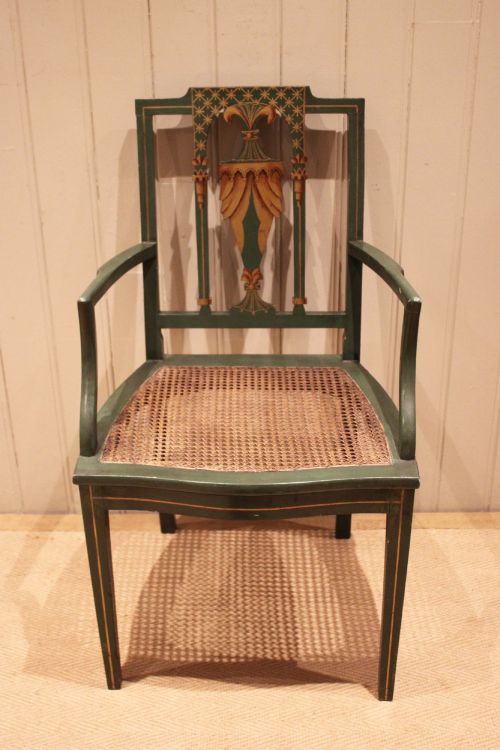




Classical Painted Desk
A classical painted desk brings refined surface ornament and practical writing space into a room, uniting period joinery with delicate hand-applied pigment.
Classical Painted Desk
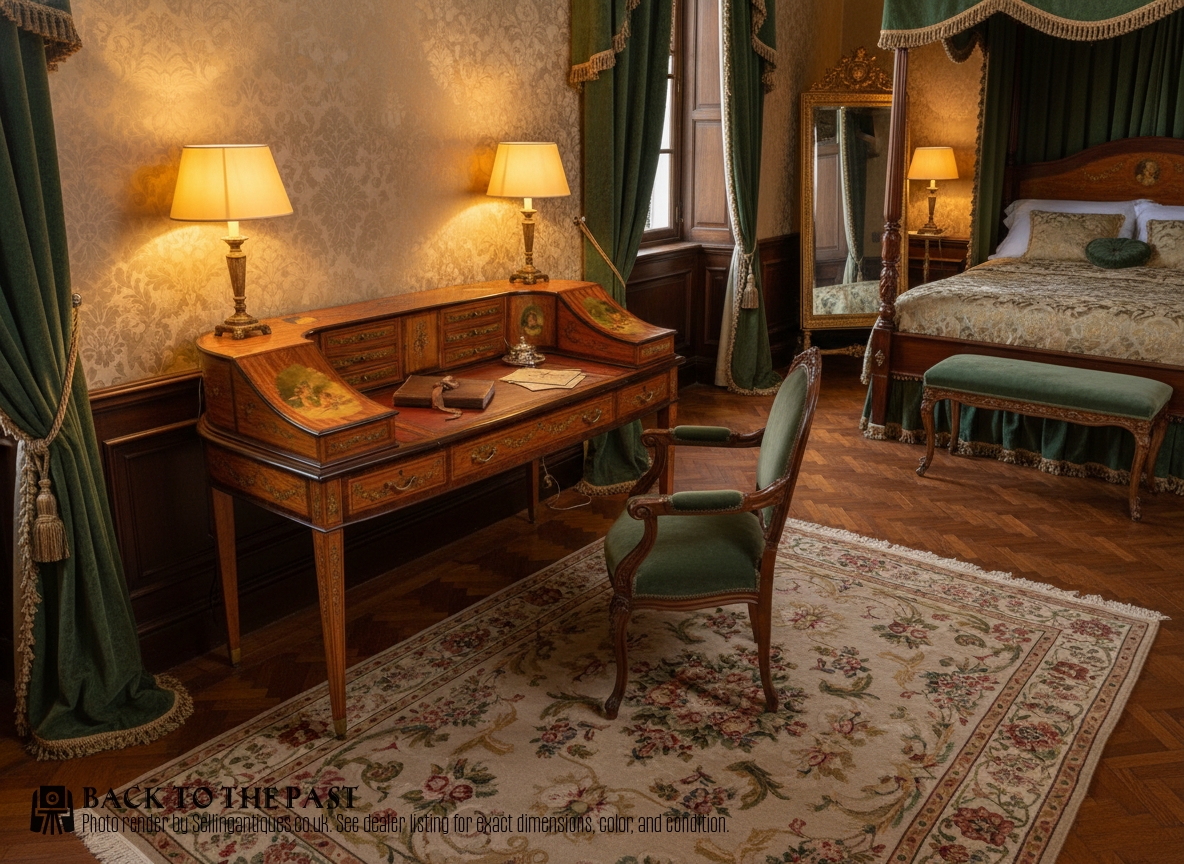
When you search for a classical painted desk, you encounter writing furniture that draws on Edwardian and Victorian revivals, combining traditional timber construction with decorative painted surfaces. The pieces span writing desks, bureau forms, and specialised writing furniture produced from the mid nineteenth century into the early twentieth century.
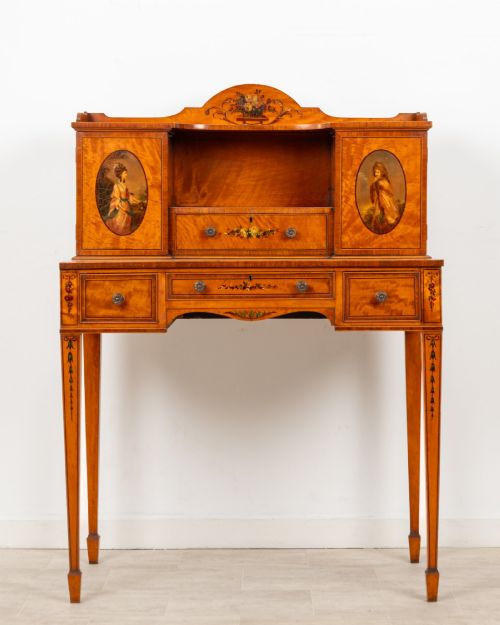
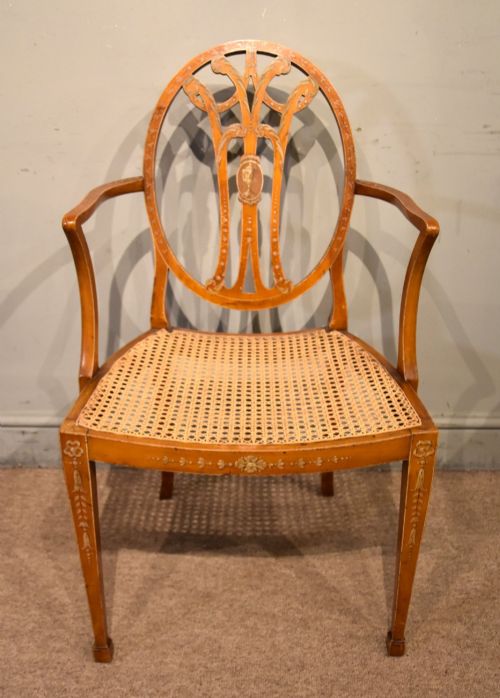
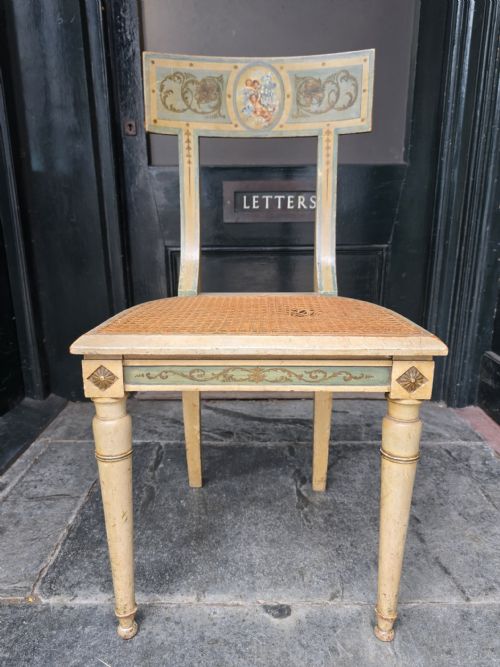
Satinwood emerges as a primary timber choice for these painted writing pieces, often ornamented with delicate hand-painted motifs. Alongside dedicated writing desks, the selection includes related forms like dressing tables with original decorative paintwork, demonstrating how painted decoration was applied across various domestic furnishings of the period.
How they were made
Cabinet makers utilised fine timbers like satinwood as a smooth ground for decorative work, applying hand-painted details directly onto the prepared wood surface. Brass and ormolu mounts frequently accented the structure, providing functional hardware and decorative contrast to the painted panels.
The integration of painted decoration required skilled artisan application, sealing the timber before building up polychrome details by hand. This technique allowed makers to achieve the sophisticated neoclassical and revival motifs characteristic of the period without relying solely on marquetry or veneer.
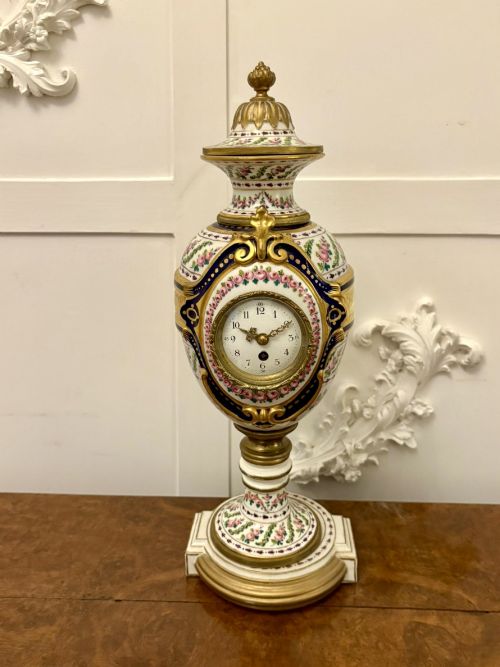
Object types range from writing desks and bureau forms to decorative side tables, table lamps, and porcelain urns.
What varies in quality
The distinction between ordinary and superior examples lies in the preservation of the original decorative paintwork and the crispness of the hand-painted details. Pieces retaining their untouched surface ornament demonstrate greater artistic intent and authenticity than later or heavily restored equivalents.
Construction standards also set pieces apart, visible in the choice of cabinet timbers like satinwood and the refinement of subsidiary elements like brass fittings. A well-preserved piece maintains both the structural integrity of its joinery and the vitality of its painted ornament.
Samuel Alcock·L & F Moreau
The Classical Painted Desk Glossary
- Satinwood
- A lustrous hardwood native to Ceylon and India, prized for its pale yellow colour and natural sheen. It served as an ideal canvas for hand-painted decoration on Edwardian and Victorian furniture.
- Ormolu
- Gilded bronze used for decorative mounts and hardware on fine furniture and decorative objects. The technique involves applying a gold amalgam to bronze before heating.
- Neoclassical
- A style drawing inspiration from the classical art and architecture of ancient Greece and Rome. It emphasises symmetry, restrained ornament, and classical motifs.
- Bureau
- A slope-fronted writing desk enclosing a fitted interior of small drawers and pigeonholes. These pieces often feature decorated surfaces and fitted writing compartments.
Classical Painted Desk: Frequently Asked Questions
What is a classical painted desk?
A classical painted desk is a writing surface constructed from timbers like satinwood and embellished with hand-applied decorative painting. These pieces draw on historical design styles including Edwardian and Victorian revivals.
Such furniture combines functional writing compartments with elaborate surface decoration, making them both practical work spaces and decorative focal points in a room.
How do I care for a painted desk?
Care for a painted desk involves keeping it away from direct sunlight and maintaining stable room humidity to protect the delicate surface ornament. Gentle dusting with a dry, soft cloth preserves the original pigment without abrasion.
Avoid using modern chemical polishes or water on the painted areas, as moisture can lift or damage historic decorative paintwork.
How old is a Victorian painted desk?
A Victorian painted desk typically dates from the reign of Queen Victoria, spanning the mid to late nineteenth century. Pieces from this era often incorporate revival styles such as neoclassical motifs and elaborate hand-painted details.
Construction methods, timber selection, and wear patterns help confirm the nineteenth-century origin of these writing pieces.
What distinguishes Edwardian painted furniture?
Edwardian painted furniture, produced in the early twentieth century, frequently utilises satinwood as a fine ground for delicate hand-painted floral or classical motifs. These pieces often reflect lighter proportions than their heavy Victorian predecessors.
The integration of refined painting techniques with traditional cabinet making defines the output of this period.