


Classical Ornamental Urns
Classical ornamental urns bring architectural proportion and antique gravitas to a room, drawing on ancient forms shaped by nineteenth-century tastes.
Classical Ornamental Urns
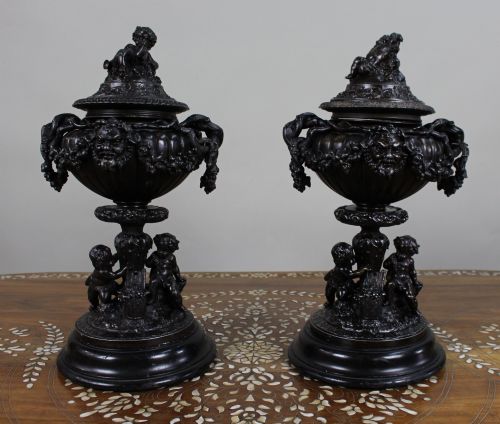
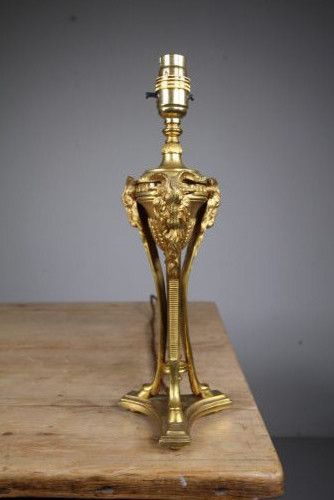
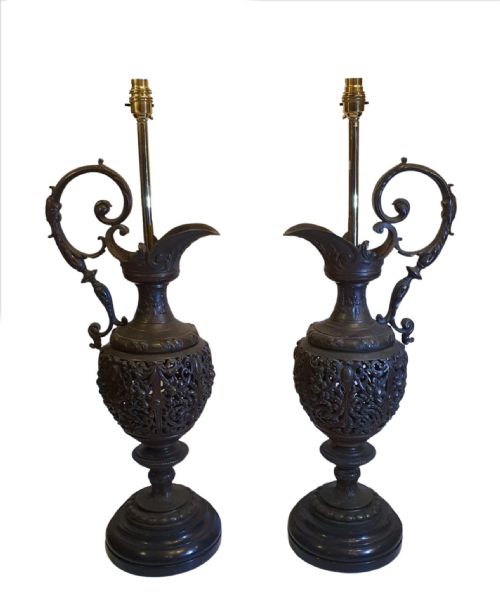
Classical ornamental urns encompass decorative vessels, table lamps, garden planters, and tazzas modelled after ancient Greek and Roman designs. Buyers searching for classical ornamental urns encounter works primarily from the nineteenth century, including Victorian pieces, Grand Tour souvenirs, and French Empire or Neoclassical revivals.
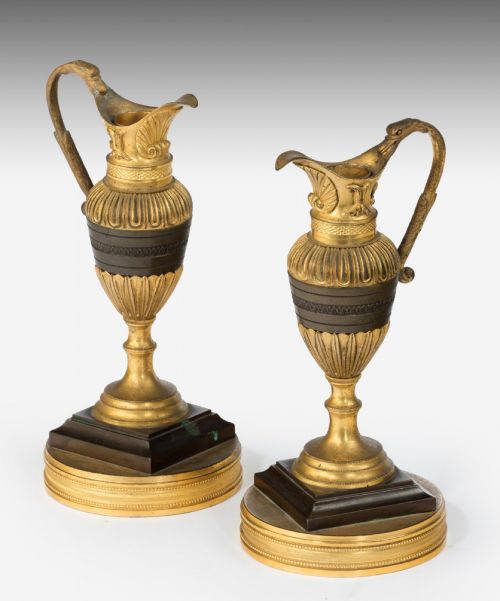
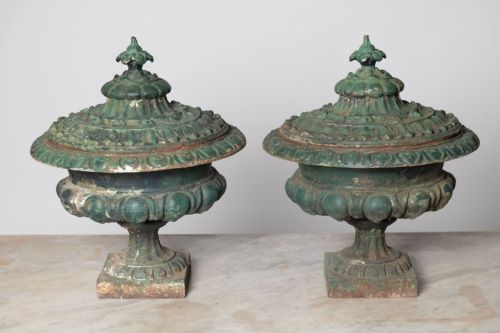
The forms range from heavy cast iron campana garden urns and terracotta planters to delicate porcelain ewers and gilt bronze cassolettes. Many examples appear in matched pairs, utilising classic silhouettes like the krater and the campana shape.
Origins span English, French, and Italian workshops, reflecting nineteenth-century enthusiasm for classical antiquity. Domestic pieces often function as decorative objects or converted table lamps, whilst robust terracotta and cast iron versions serve outdoor spaces.
How they were made
Maker's workshops cast metals such as bronze, brass, ormolu, and cast iron, frequently applying gilt or patinated finishes to highlight sculptural details. Bronze and ormolu mounts require meticulous chasing and assembly by hand, joining metal components securely to stone plinths.
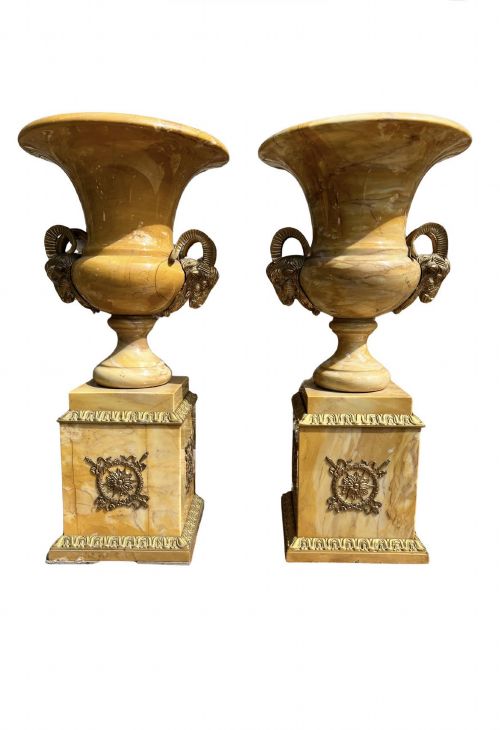
Marble and terracotta versions involve turning or hand-carving natural stone and fired clay, often incorporating detailed handles shaped as rams' heads or classical masks. Porcelain pieces rely on slip casting followed by hand-painted decoration and enamel work, sometimes accented with gilding.
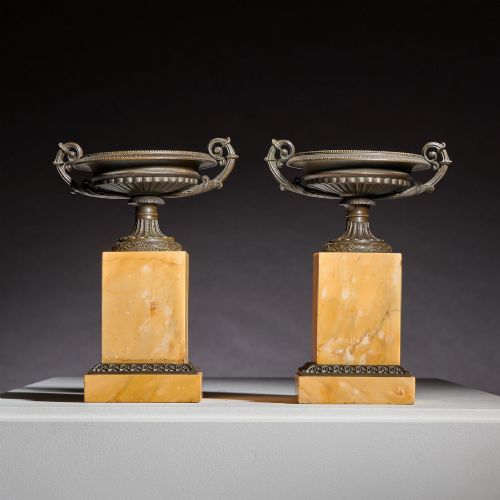
The listings show materials spanning bronze, ormolu, Siena marble, hand-painted porcelain, cast iron, and terracotta.
What varies in quality
Quality rests in the crispness of the casting and the depth of the chasing, particularly on bronze, ormolu, and cast iron surfaces where finer details reveal skilled hand-tooling. Inferior examples exhibit soft contours and repetitive machine finishing that obscure the sharpness of masks and foliate mounts.
The selection of materials marks another distinction, separating finely figured Siena marble bases and heavy fire-gilded bronze from simpler brass or spelter alternatives. Intact original components, such as matching lids and uncompromised marble plinths, elevate the integrity of the piece.
The Classical Ornamental Urns Glossary
- Campana urn
- An inverted bell-shaped vessel with a flared rim and footed base, frequently cast in iron or bronze for gardens or interiors. This classic shape derives directly from ancient Roman wine-mixing vessels.
- Cassolette
- A decorative vase or urn with a removable or reversible lid, designed to function as a perfume burner or a solid vase. These dual-purpose objects are often mounted in gilt bronze and marble.
- Grand Tour
- A nineteenth-century travel tradition where wealthy collectors acquired bronzes, marbles, and small antiquities across Italy and France. Souvenirs from these journeys typically replicate famous classical monuments and sculptures.
- Ormolu
- Finely ground high-carat gold applied to a bronze base using a mercury amalgamation technique, popular in French decorative arts. This finish provides a warm, durable metallic lustre distinct from standard modern plating.
- Tazza
- A shallow saucer-like ornamental cup or vase raised on a stem and foot, often carved from marble or cast in bronze. These pieces frequently appear in pairs on classical tables and mantelpieces.
Classical Ornamental Urns: Frequently Asked Questions
Where should I place a classical ornamental urn?
These pieces suit mantelpieces, console tables, and architectural niches where their vertical form creates a balanced focal point.
Larger cast iron or terracotta versions function effectively as garden planters or patio ornaments.
How do I care for bronze and marble urns?
Dust metal surfaces gently with a dry microfibre cloth and avoid harsh chemical cleaners that strip patinas or gilding.
Marble requires occasional wiping with a damp cloth followed by immediate drying to protect the polished stone.
Are these urns waterproof for plants?
Terracotta and cast iron garden urns tolerate soil and moisture well, though indoor bronze and porcelain vessels lack drainage holes.
Interior metal and ceramic pieces work best with internal liners if used for fresh floral arrangements.
How can I tell a Grand Tour piece apart?
Grand Tour bronzes and marbles usually date from the nineteenth century and reflect Italian or French craftsmanship intended for travelling collectors.
They often replicate specific ancient Roman antiquities and feature high-quality patination or Siena marble bases.