


Classical Mantel Urns
Classical mantel urns are decorative vessels shaped by neoclassical taste, bringing architectural symmetry and bronze and marble weight to a room.
Classical Mantel Urns
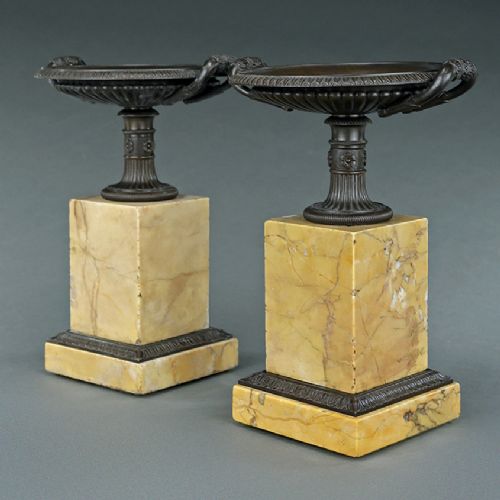
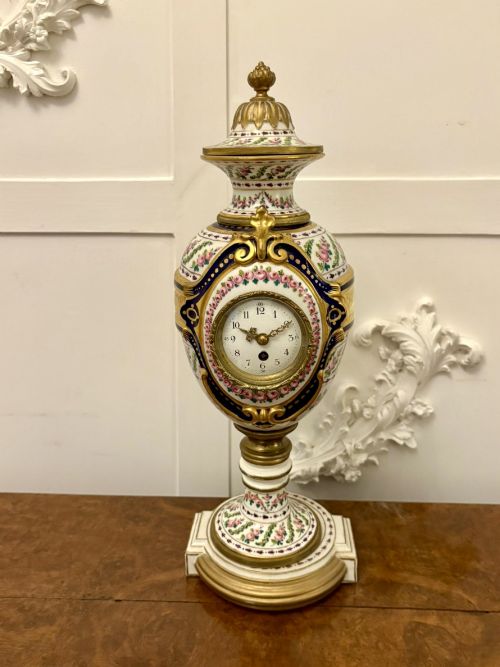
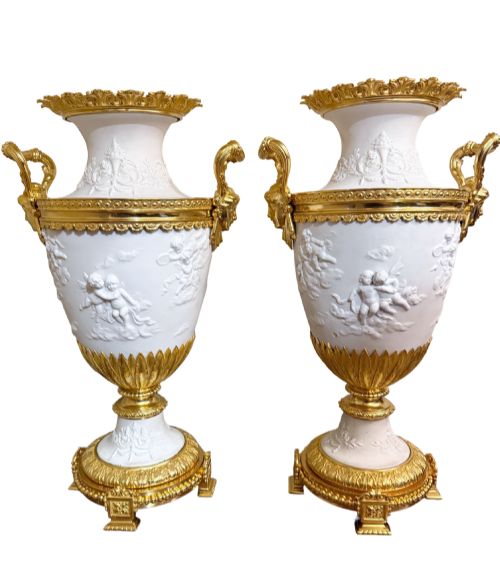
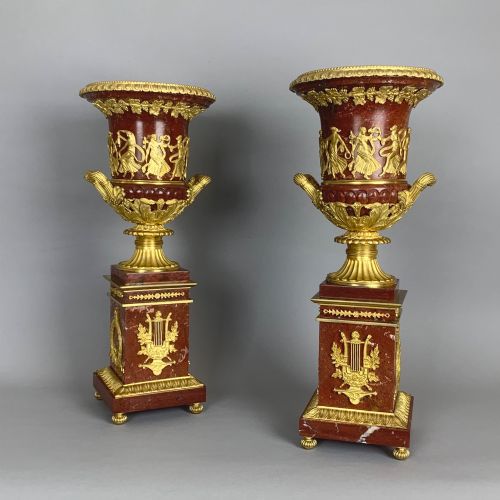
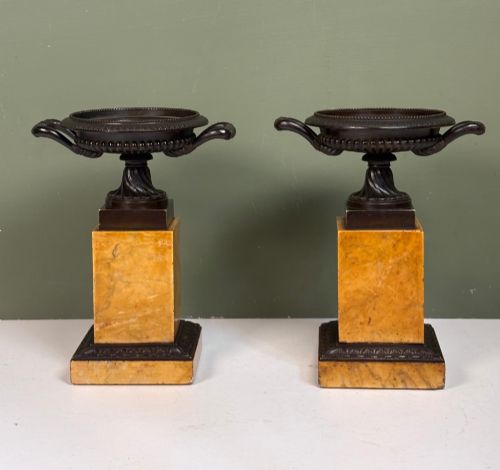
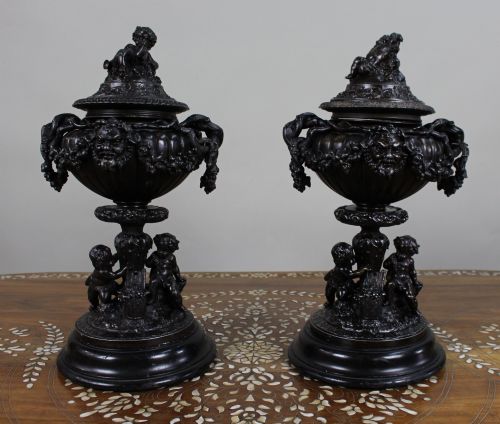
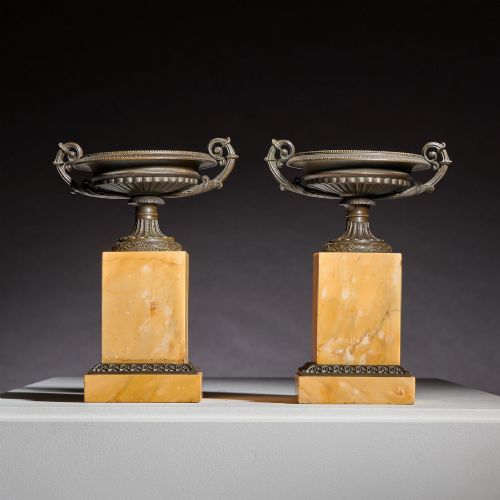
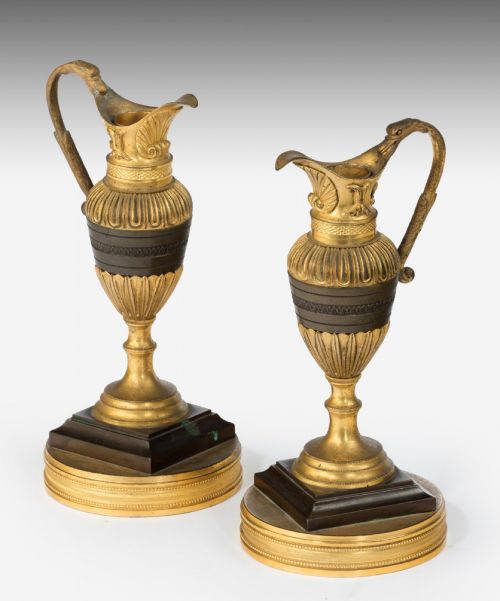
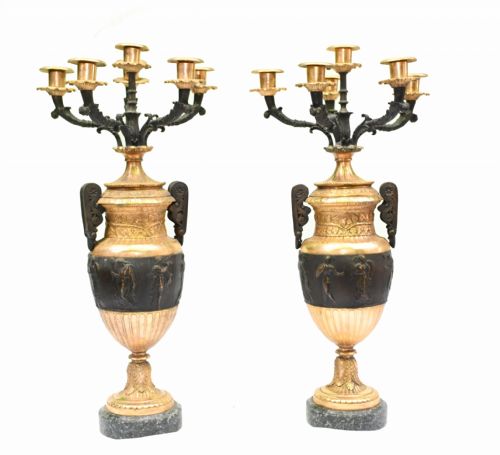
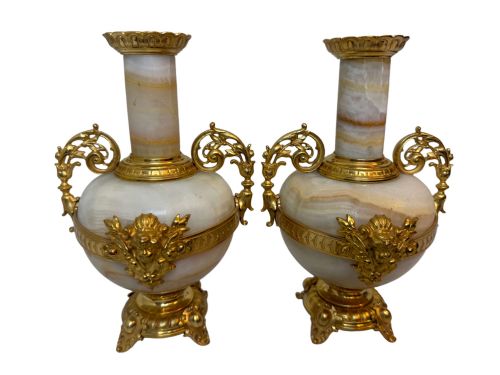
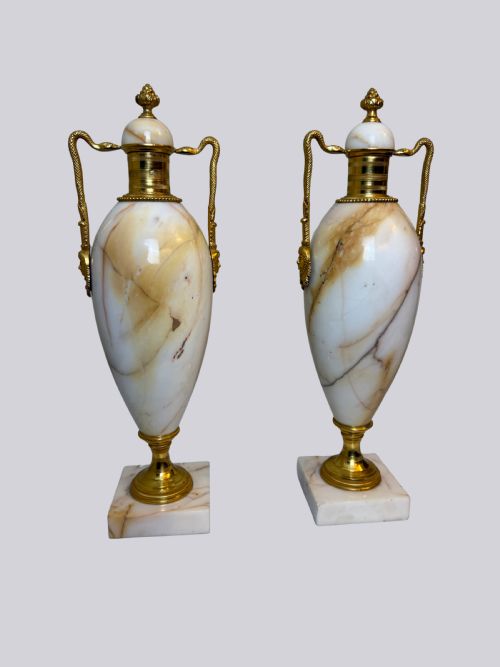
When you search for classical mantel urns, you encounter ornamental vessels and tazzas modelled on antique archaeological finds, originating mostly from the nineteenth century across French and Italian workshops. These pieces appear frequently as paired decorative objects, clock garnitures, or ewers designed to stand symmetrically upon a mantelpiece or library shelf.
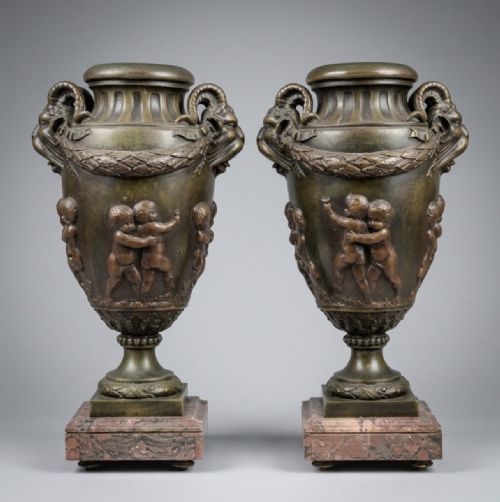
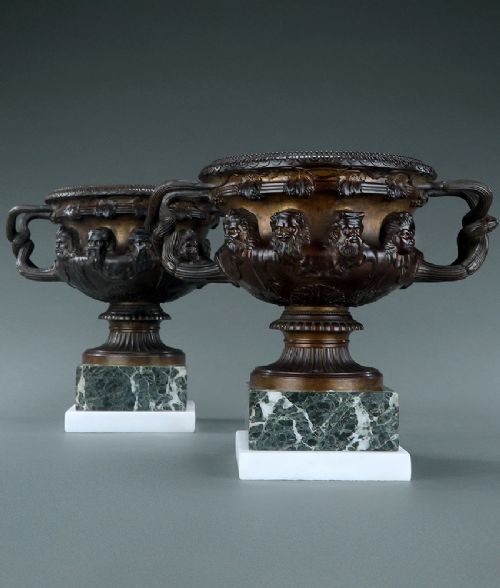
The materials span heavy stones such as sienna, white onyx, and breccia marble combined with cast metals including bronze, ormolu, and gilt bronze. Many examples reflect the Grand Tour tradition, translating ancient Roman and Greek forms into domestic display items for nineteenth-century interiors.
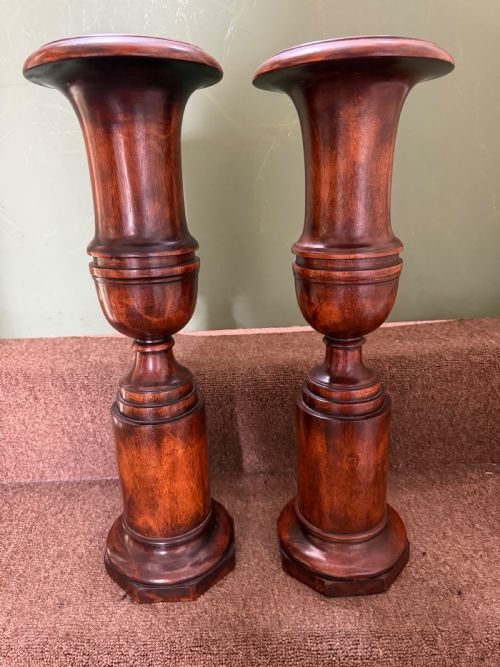
Forms follow established antique shapes such as campana urns, krater vases, and shallow tazzas, often raised on stepped plinth bases. Makers applied classical motifs such as bacchic masks, putti, and acanthus leaves to establish a scholarly, architectural presence in the home.
How classical mantel urns were made
Foundries produced the metallic components of classical mantel urns using traditional lost-wax or sand-casting methods in bronze, spelter, or brass. Craftsmen then refined these cast surfaces by hand, applying Mercury or electroplated gilding to create ormolu highlights alongside darkened patinated bronze sections.
Stonemasons turned marble on lathes and shaped bases by hand, selecting varieties such as Siena and white onyx for their rich veining and dense weight. These stone bodies were subsequently fitted with cast metal mounts, handles, and collars secured by threaded pins and screws.
Some mantel urns double as secret cassolettes, designed to hold scented perfumes rather than ashes.
What varies in quality
The division between standard and superior pieces rests upon the crispness of the metal chasing and the selection of materials. Finer examples display deeply undercut cast ornament and hand-chased details on the bronze and ormolu, whereas lesser pieces rely on softer, shallower casting from worn moulds.
Stone selection equally defines the upper tier of production, where solid blocks of figured marble or banded onyx show careful matching and polishing. Lesser works utilise simpler cast metals or painted finishes that imitate the weight and depth of genuine patinated bronze and natural stone.
Thomas Hope·Selim Bright·Pons De Paul
The Classical Mantel Urns Glossary
- Ormolu
- Gilded bronze produced through the application of a gold and mercury amalgam or modern electroplating onto a cast brass or bronze base. This technique yields a bright metallic surface that contrasts against dark patinated bronze.
- Campana urn
- A bell-shaped vessel with a flaring rim and a pedestal foot, derived from ancient Roman pottery and stone prototypes. These forms dominate neoclassical and Regency decorative metalwork.
- Tazza
- A shallow saucer-like ornamental cup mounted on a stem and foot, designed for display on a table or mantel. Nineteenth-century examples often incorporate classical handles and marble plinths.
- Garniture
- A set of three or more matching decorative objects, typically comprising a central clock flanked by matching urns or candelabras. They were manufactured to create a symmetrical display on a chimney piece.
- Grand Tour
- The nineteenth-century practice where wealthy travellers collected antiquities and high-quality reproductions across France and Italy. Objects from this tradition frequently employ classical marble and bronze.
Classical Mantel Urns: Frequently Asked Questions
What is a classical mantel urn?
A classical mantel urn is an ornamental vessel cast in bronze, ormolu, or carved from marble, designed to sit on a mantelpiece in pairs or as part of a clock garniture.
These decorative objects draw directly from ancient Greek and Roman pottery and architectural forms, reflecting nineteenth-century revival styles.
Where did these urns come from?
The majority of these pieces originate from French and Italian workshops active during the nineteenth century, responding to a widespread demand for classical interior decoration.
Many reflect the aesthetic of the Grand Tour, where artisans in Paris and Rome produced miniature bronze and marble antiquities for domestic display.
How were mantel urns used?
Mantel urns served as purely decorative ornaments placed symmetrically upon fireplace mantels, often flanking a central clock or mirror.
They added architectural weight and a scholarly atmosphere to nineteenth-century drawing rooms and libraries.
How do I identify nineteenth-century bronze?
Nineteenth-century bronze and ormolu pieces display a characteristic hand-finished surface with deep patination and distinct tooling marks from the metal chaser.
Examining the construction reveals traditional assembly methods, including threaded pins and heavy marble or slate bases without modern synthetic adhesives.