



Classical Mantel Mirror
A classical mantel mirror brings architectural depth and reflected light to a room, anchoring the hearth with period proportion.
Classical Mantel Mirror
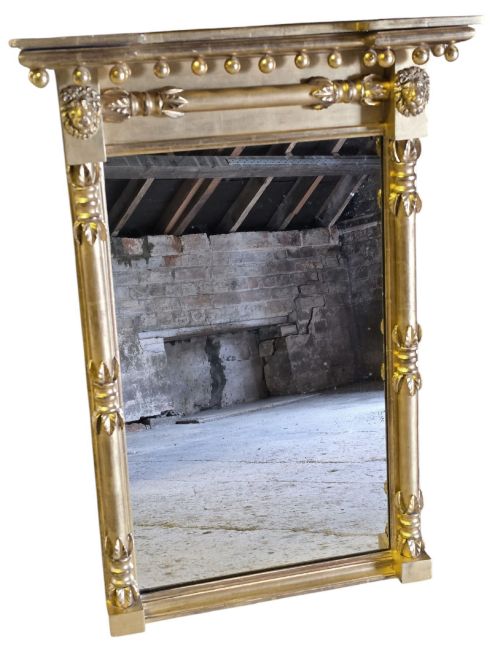
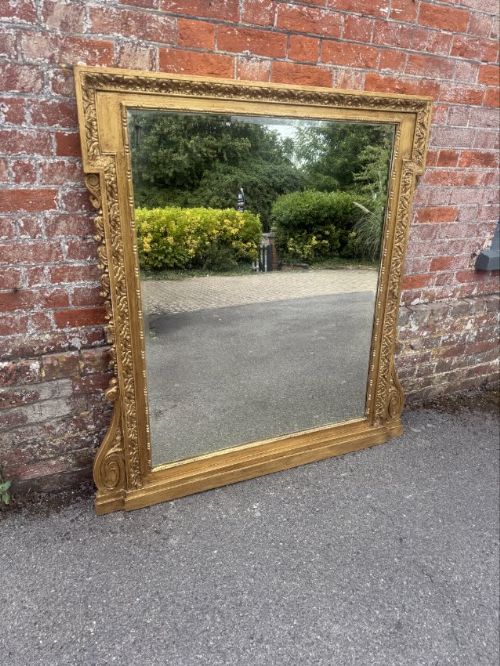
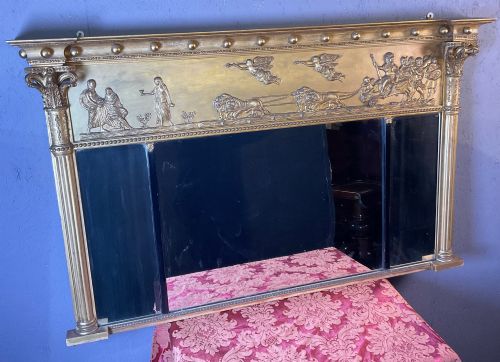
A classical mantel mirror is typically designed to sit above a fireplace hearth, fulfilling both a decorative and practical role in period interiors. The pieces gathered here draw heavily on Regency, Victorian, and Neoclassical design vocabularies, spanning the nineteenth century.
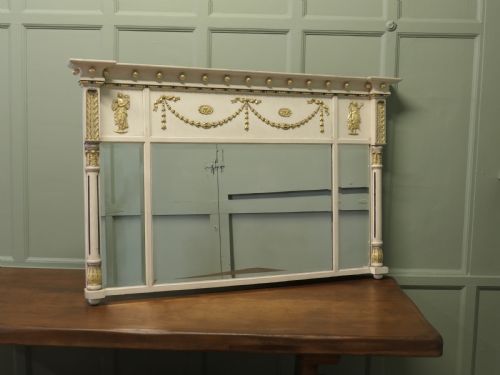
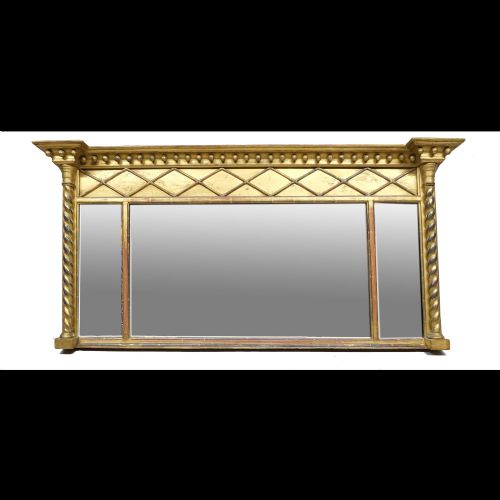
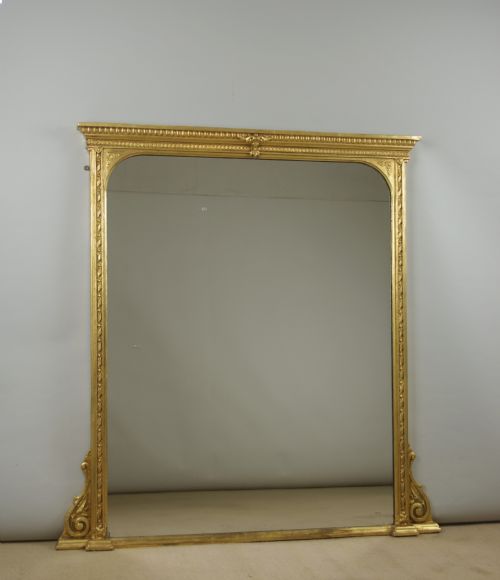
The most common form encountered on this page is the overmantel mirror, often constructed with wide horizontal proportions suited for placement across a chimney breast. These examples frequently incorporate gilded surfaces, arched crests, and classical motifs derived from historical precedents.
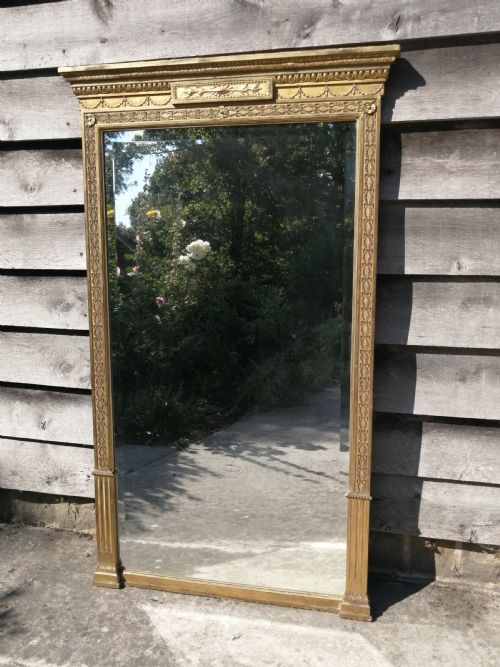
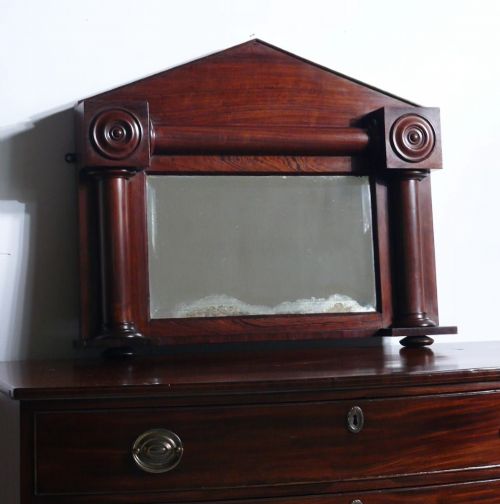
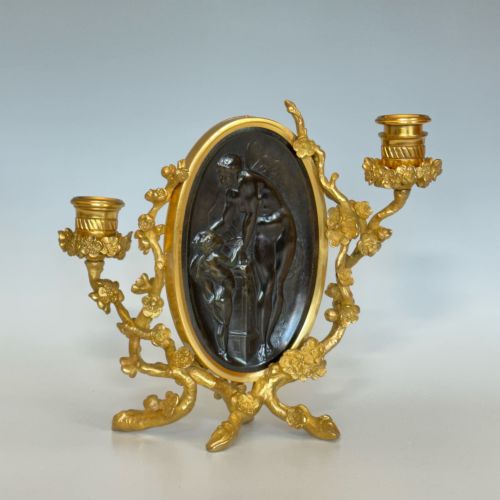
Beyond standard overmantel formats, the selection occasionally includes pier mirrors, triptych plates, and table mirrors originating from English, French, and Italian workshops. Each form utilises traditional mounting methods intended for domestic display in grand reception rooms and parlours.
How They Were Made
Carved wood and gesso form the foundational structure for the majority of these frames, providing a stable base for intricate ornamentation. Artisans applied layers of composition and gesso over timber substrates before laying gold leaf or paint.
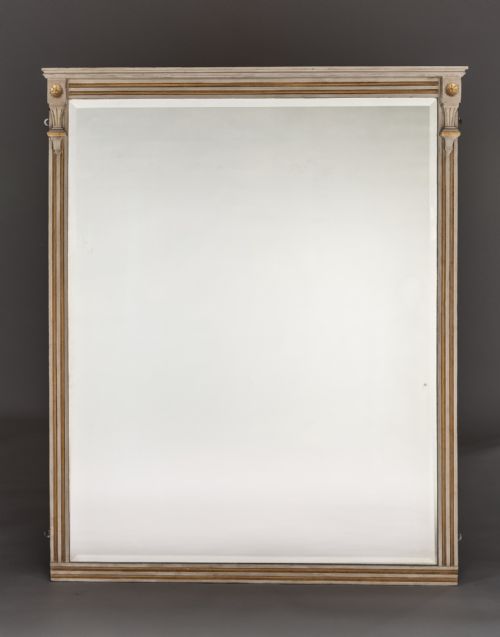
Gilding techniques involved applying thin sheets of gold leaf to a prepared bole surface, which was then burnished to achieve a bright reflective finish. Painted and parcel-gilt variations relied on contrasting pigments combined with selective gilding to highlight architectural mouldings and relief panels.
What Varies in Quality
The crispness of the carved or moulded ornamentation dictates visual hierarchy, distinguishing pieces with sharp relief from softer, worn examples. High-grade items exhibit finely detailed classical motifs such as acanthus leaves, columns, and figures without loss of definition in the gesso layers.
The condition and retention of the original mirror plate heavily influence character, particularly where foxing, silvering loss, or crackle finishes demonstrate age. Original glass plates with bevelling and honest signs of oxidation carry distinct aesthetic merit compared to modern replacements.
Thiebaut Freres
The Classical Mantel Mirror Glossary
- Gesso
- A plaster-like mixture applied to wooden frames as a smooth base for gilding or painting. It allows craftsmen to carve intricate relief details before the application of gold leaf.
- Overmantel
- A large mirror specifically designed to hang on the wall directly above a fireplace mantelpiece. These pieces often feature wide horizontal dimensions to match the width of the hearth below.
- Triptych plate
- A mirror glass divided into three distinct vertical sections within a single frame. This format was especially popular during the Regency period to break up wide reflections.
- Giltwood
- Timber that has been coated with a thin layer of gold leaf. It provides a warm, reflective surface that catches natural light within a room.
- Pier mirror
- A tall, narrow mirror designed to be hung on the wall space between two windows. They make efficient use of limited wall areas to enhance light distribution.
Classical Mantel Mirror: Frequently Asked Questions
Where should a mantel mirror be hung?
These mirrors are traditionally positioned centrally on the wall directly above a fireplace mantelpiece to reflect light and anchor the hearth.
They can also be hung on large expanses of blank wall in reception rooms to create a similar architectural focal point.
How do I identify a Regency period mirror?
Regency pieces often display restrained classical motifs, such as reeded columns, ball-detail cornices, and tripartite glass plates.
They lean towards architectural symmetry and balanced proportions distinct from later Victorian ornamentation.
What is the difference between gesso and carved wood?
Carved wood involves shaping the timber substrate directly, while gesso is a plaster mixture applied over the wood to build up raised decorative details.
Many nineteenth-century frames combine both techniques, using a wooden core finished with moulded gesso ornaments.
Are original mirror plates common?
Surviving nineteenth-century pieces occasionally retain their original glass plates, which often display characteristic foxing, minor imperfections, or wavy distortions.
Original plates contribute historical authenticity to the piece, whereas replaced glass typically appears uniformly clear.