
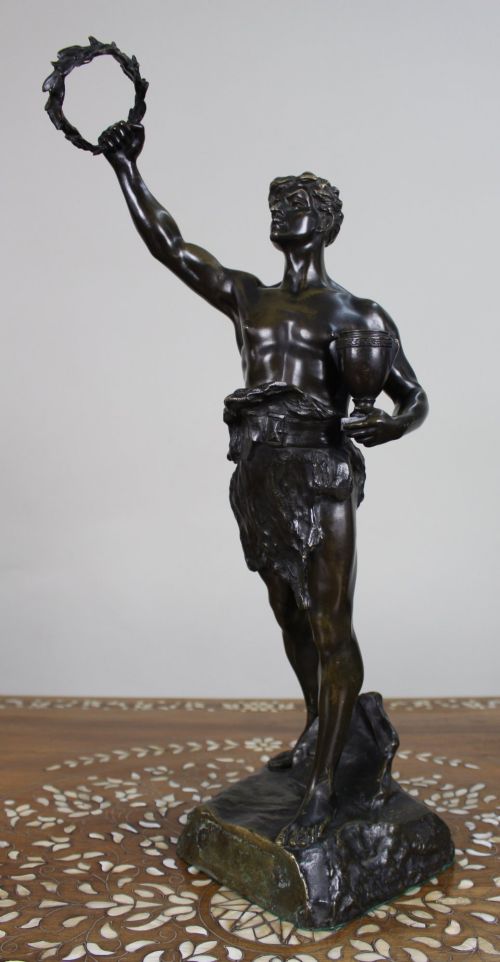
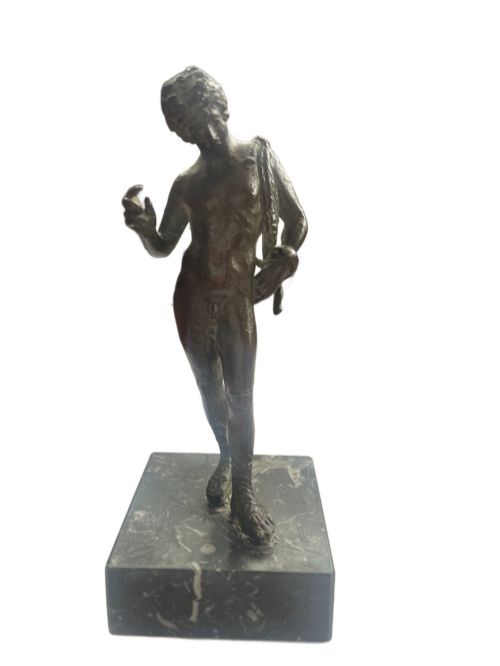
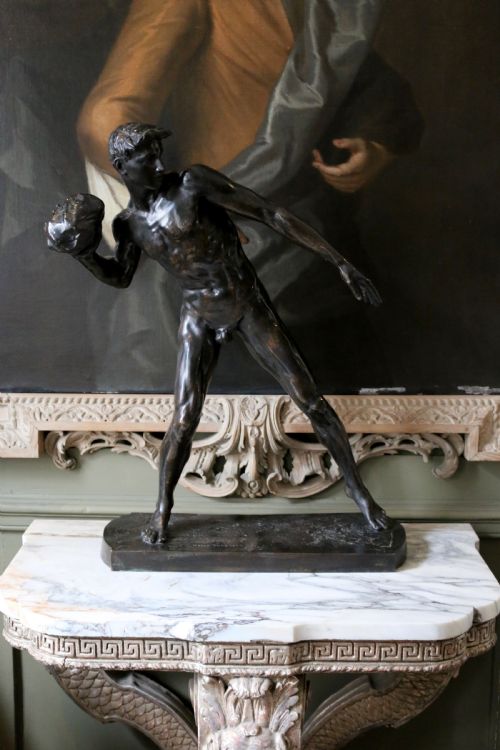

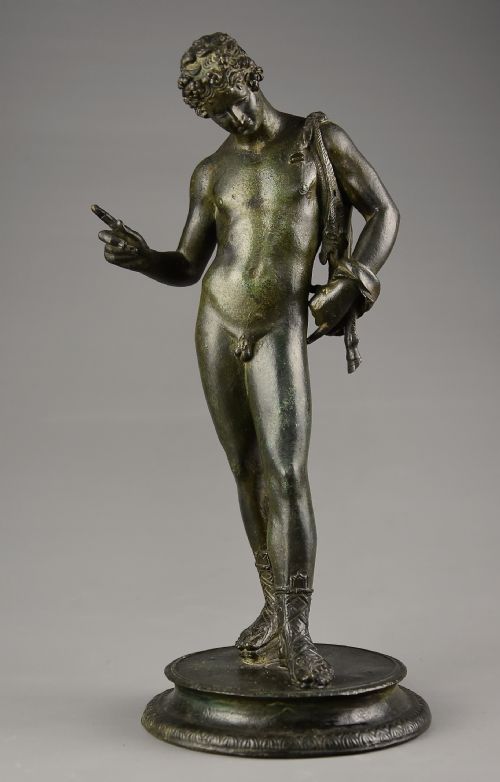


Classical Male Bronze Statuette
A classical male bronze statuette brings the sculpture of antiquity directly onto a desk or cabinet, captured in solid metal.
Classical Male Bronze Statuette
A classical male bronze statuette represents figures from mythology and ancient history, including Narcissus, Dionysus, Neptune, and athletic youths. These pieces emerge predominantly from the nineteenth century, encompassing Grand Tour souvenirs, French foundry works, and Victorian New Sculpture.
Most examples found on this page take the form of small-scale sculptures and figurines cast in metal, frequently mounted upon stone or fossil marble bases. The subjects draw heavily on ancient Greek and Roman prototypes, reinterpreted through nineteenth-century Neoclassical and Classical Revival lenses.
Materials and construction
Foundries utilised bronze casting techniques to capture musculature and drapery, often applying dark green or brown patination to the metal surfaces. Many figures are secured to heavy bases fashioned from stone or fossil marble.
Individual pieces bear signatures from makers and sculptors, reflecting skilled foundry work and artistic authorship during the nineteenth century.
Listings feature works spanning the nineteenth century, incorporating Victorian New Sculpture, Art Nouveau, and Grand Tour Neoclassical styles.
Distinctions in quality
Quality rests in the crispness of the cast and the sensitivity of the chasing work, which determines how cleanly muscles, hair, and facial expressions are defined. Finer pieces retain a rich, nuanced patination rather than a flat, uniform colour.
The integration between the bronze figure and its stone or marble base also separates standard foundry output from more substantial, carefully assembled sculptural works.
Lemoyne·Julien Lorieux·Michele Amodio·Louis Auguste Moreau
The Classical Male Bronze Statuette Glossary
- Grand Tour
- A cultural journey undertaken by wealthy young Europeans in the eighteenth and nineteenth centuries, bringing home small bronzes as souvenirs of classical antiquities.
- Patination
- The chemical treatment or natural weathering applied to the surface of bronze to produce a specific colour and finish, ranging from deep green to dark brown.
- Neoclassical
- An artistic movement reviving the styles and subjects of ancient Greece and Rome, heavily influencing nineteenth-century sculpture and decorative arts.
- Fossil Marble
- A type of limestone containing ancient organic remains, frequently utilised as a heavy decorative base for cabinet bronzes.
Classical Male Bronze Statuette: Frequently Asked Questions
What subjects do these bronzes depict?
These figures commonly represent mythological deities and classical heroes, including Narcissus, Dionysus, Neptune, Bacchus, and ancient athletes or gladiators.
Such subjects reflect the nineteenth-century fascination with classical antiquity, translated into cabinet-sized sculptures for domestic display.
How do I care for a bronze statuette?
Bronze requires minimal maintenance, needing only gentle dusting with a soft, dry cloth to prevent the accumulation of grime on the patinated surface.
Harsh cleaning agents or oils should be avoided, as they can strip the historical patination and damage the metal.
How are periods identified?
Dating relies on foundry marks, artist signatures, stylistic nuances of the Neoclassical or Victorian periods, and the character of the metal patination.
Material details, such as the specific type of fossil marble base, also assist in narrowing the decade of production.