
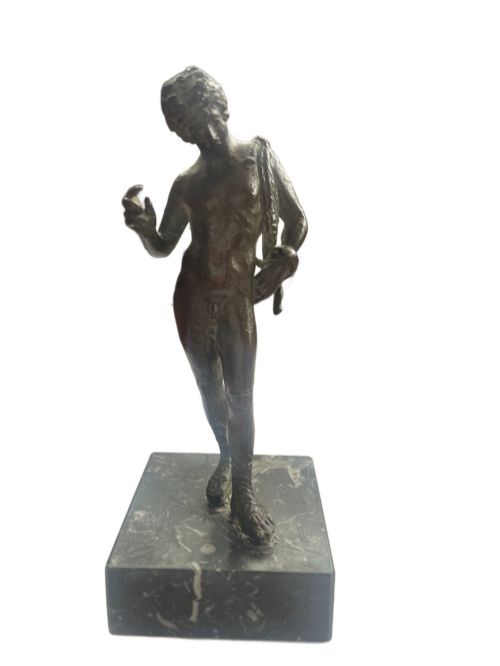
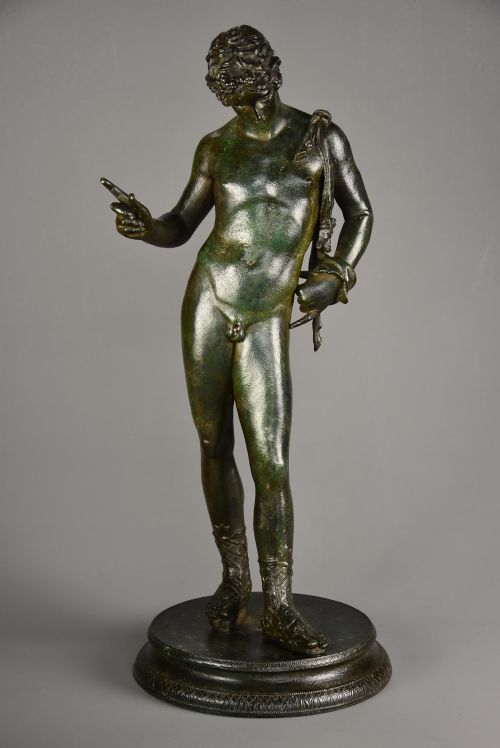
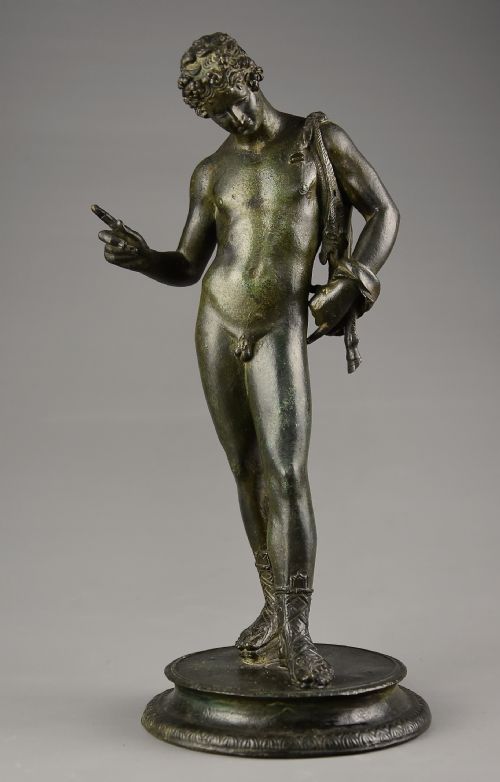


Antique Narcissus Sculpture
An antique narcissus sculpture captures the classicism of the Grand Tour, offering a bronze study after the antique for the collector's desk.
Antique Narcissus Sculpture
When searching for an antique narcissus sculpture, the buyer encounters nineteenth-century bronzes cast as souvenirs in Italy. These figures replicate classical statuary discovered at Pompeii and Herculaneum, often capturing the youth poised with a shell or listening intently.
The objects on this page belong predominantly to the late nineteenth century, spanning the eighteen-seventies to eighteen-nineties. They take the form of freestanding sculptures and statues, sometimes identified interchangeably in period or modern records with Dionysus or Bacchus.
Neapolitan workshops dominate the origin of these pieces, reflecting the souvenirs collected by travellers on the Grand Tour. These bronzes serve as cabinet sculptures, bringing classical revival aesthetics into domestic interiors.
Materials and manufacture
The primary material visible in the evidence is bronze, utilised both in standard form and with deliberate patination. Artisans applied dark green or varied patination to simulate the aged surfaces of excavated antiquities.
Certain pieces incorporate fossil marble bases, providing a heavy mineral plinth that elevates the bronze figure. Gilding also appears on select souvenir bronzes, adding surface sheen to the cast metal.
These sculptures rely on traditional lost-wax or sand-casting methods executed by nineteenth-century foundries. The finishing work involves chasing the metal surface to sharpen the anatomical details before applying the final patination.
Listings demonstrate that nineteenth-century Italian bronze sculptures frequently combine patinated metal with fossil marble bases.
Variations in quality
The choice of base contributes to the distinction between pieces, with fossil marble plinths offering greater substance than plain or unmounted castings. The depth and subtlety of the green or dark patination further separate standard souvenirs from superior artistic renditions.
Michele Amodio
The Antique Narcissus Sculpture Glossary
- Grand Tour
- The traditional journey of education and pleasure undertaken by young European elites through France and Italy. This travel generated a demand for bronze souvenirs cast after ancient sculptures.
- Patinated Bronze
- Bronze metal treated with chemical solutions to produce a coloured surface coating, such as dark green. This finish mimics the oxidation found on buried archaeological finds.
- Fossil Marble
- A limestone composed of fossilized shell fragments, polished for use as a decorative base. It provides weight and contrast to nineteenth-century metal sculptures.
- Neoclassical
- A Western cultural movement drawing inspiration from the art and culture of classical antiquity. It influences the proportions and theatrical poses seen in these figures.
- Lost-wax casting
- A metalworking process where a molten metal is poured into a mould that has been created by means of a wax model. This technique allows for intricate detailing in small-scale figures.
Antique Narcissus Sculpture: Frequently Asked Questions
What is an antique narcissus sculpture?
These pieces are nineteenth-century bronze figures modelled after classical antiquities excavated in Italy. They record the neoclassical taste of travellers returning from the Grand Tour.
Most examples depict the youth standing or resting, sometimes historically conflated with Bacchus or Dionysus. They function as decorative cabinet bronzes.
Where were these sculptures made?
The evidence points specifically to Neapolitan workshops and Italian foundries producing souvenirs for foreign visitors. These artisans specialised in translating museum-scale antiquities into portable bronzes.
Production dates cluster in the latter half of the nineteenth century, particularly the eighteen-eighties and nineties. They reflect a thriving local industry geared towards the tourist market.
How do I style a bronze sculpture at home?
These figures suit display surfaces such as mahogany desks, bookshelves, or side tables where their patinated surfaces catch the light. Their compact scale allows them to integrate easily among books and other cabinet objects.
Peculiarities like fossil marble bases provide natural stability and texture, letting the sculpture anchor a vignette. Keeping them away from direct moisture preserves the chemical patination on the metal.
Are these figures always Narcissus?
Historical documentation and nineteenth-century titling often conflated the subject with Dionysus or Bacchus. The iconography shares common classical postures derived from Pompeian originals.
Buyers should examine the specific attributes, such as wreaths or positioning, while recognising that period nomenclature frequently used the names interchangeably.