

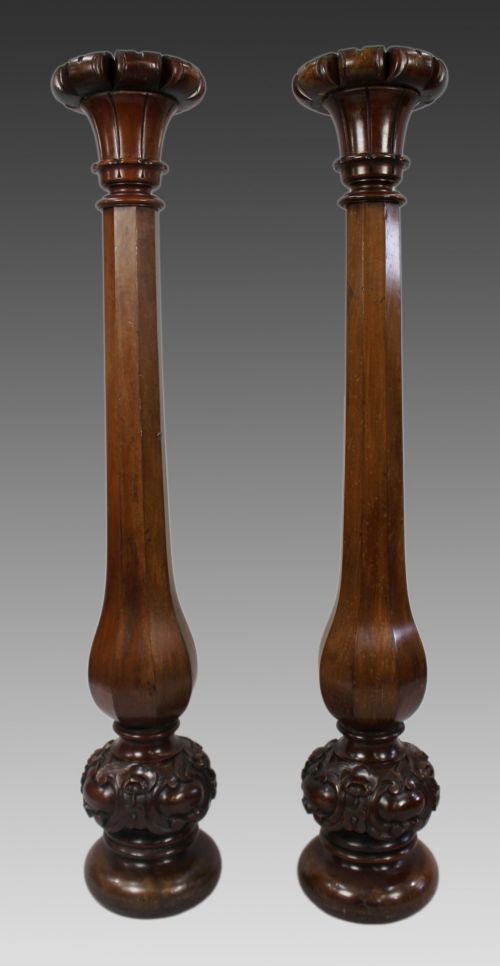



Classical Mahogany Plinth
A classical mahogany plinth brings architectural presence to a room, offering a sturdy stage for a bust, urn or sculpture.
Classical Mahogany Plinth
When you search for a classical mahogany plinth, you are looking at substantial display furniture designed to elevate decorative objects. These pieces appear in forms such as columns, pedestals, display stands, console tables and pedestal cabinets.
The versions you are most likely to meet on this page span the nineteenth century, including Victorian, William IV, Georgian and Regency periods. They arrive in styles like neoclassical, classical revival and Chippendale revival.
Makers shaped them as single columns or paired stands, sometimes incorporating marble tops, brass details or hidden compartments. Their function remains simple: to raise a sculpture or plant to eye level with formal dignity.
How they were made
Carpenters constructed these supports primarily using solid mahogany, mahogany veneer and pine, often combining them with hardwood timber. Workshops applied timber and grain painting or carved wood directly into the structure to create classical fluting and architectural detail.
Many examples integrate contrasting materials to top the timber columns. Statuary marble slabs and inset brass elements appear frequently, secured to heavy wooden bases designed to balance weighty objects placed upon them.
Classical Mahogany Plinth Retail Price Guide 2026
Typical asking prices for classical mahogany plinth among the pieces listed under this phrase on Sellingantiques today, from the lower quarter to the upper quarter. They describe what is for sale here now, not the wider market.
Listings feature mahogany, pine, hardwood, giltwood, brass and marble across nineteenth-century and early twentieth-century dates.
What varies in quality
The distinction between a standard stand and a superior example lies in the depth of timber carving and the choice of materials. Solid mahogany columns with precise neoclassical reeding or fluting demand greater joinery skill than plain veneered surfaces.
The addition of heavy statuary marble tops and integrated functional elements, such as secret compartments or robust brass mounts, elevates the execution of the piece and reflects the ambition of the original workshop.
Freeman’s
The Classical Mahogany Plinth Glossary
- Plinth
- The heavy base or lower block supporting a column, pedestal or sculpture. It provides essential stability to tall display stands.
- Pedestal
- An upright architectural support used to elevate a bust, vase or urn. These structures often feature square or hexagonal shafts.
- Console table
- A wall-mounted or freestanding table supported by consoles or pillars. They frequently share the neoclassical vocabulary of classical plinths.
- Neoclassical
- A style drawing inspiration from the classical art and architecture of ancient Greece and Rome. It defines much of the ornamentation found on nineteenth-century furniture.
- Veneer
- A thin layer of figured mahogany applied to a secondary wood core such as pine or hardwood. This technique allowed cabinetmakers to display striking timber grain patterns.
Classical Mahogany Plinth: Frequently Asked Questions
What is a classical mahogany plinth used for?
These supports were designed primarily to elevate sculptures, busts, urns and heavy planters within a domestic interior. By raising decorative items, they command attention and create a focal point in a hallway or reception room.
Today, they serve the same practical and aesthetic function, offering a stable stage for art pieces or large ceramic vessels while adding period character to a space.
How do I date a nineteenth-century pedestal?
Dating relies on observing the timber, construction methods and stylistic vocabulary present in the piece. Pieces from the Georgian and Regency eras often feature clean neoclassical lines, while later Victorian and revival examples might incorporate heavier carving or alternative wood cores like pine.
Examining the underside, the joinery of the base, and the integration of marble tops helps distinguish early nineteenth-century work from later interpretations.
Are these pedestals sold as pairs?
The selection includes both single columns and matched pairs created for symmetrical placement in a room. Pairs often function well on either side of a doorway, fireplace or large console table.
Individual pedestals appear frequently too, suited to a corner or an isolated display position where balanced symmetry is not required.
How do I maintain a mahogany and marble stand?
Mahogany surfaces benefit from regular dusting with a soft cloth and occasional treatment with appropriate wood maintenance products to preserve the finish. Avoid placing timber in direct sunlight or near heat sources to prevent the wood from drying out.
Marble tops require simple wiping with a damp cloth and mild soap, avoiding acidic cleaners that can etch the polished stone surface.