



Classical Lidded Urns
These classical lidded urns bring architectural dignity and formal balance to a room, drawing on centuries of revival design from bronze to porcelain.
Classical Lidded Urns
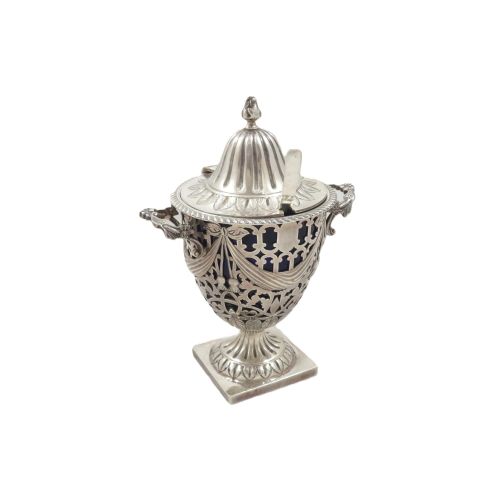
Classical lidded urns are decorative vessels shaped by ancient Greek and Roman forms, adapted across later centuries for interior display and garden use. When searching for classical lidded urns, buyers encounter everything from modest silver sugar baskets to monumental porcelain garnitures and grand bronze souvenirs.
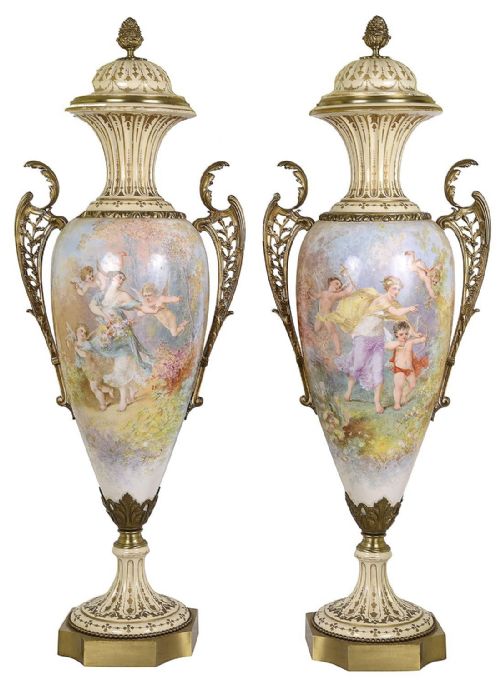
The nineteenth century dominates the selection, particularly through Sevres style and Vienna porcelain productions, alongside Italian Grand Tour bronzes and marble pieces. Pairs appear frequently, often designed as mantel garnitures or matching console ornaments with their original fitted covers intact.
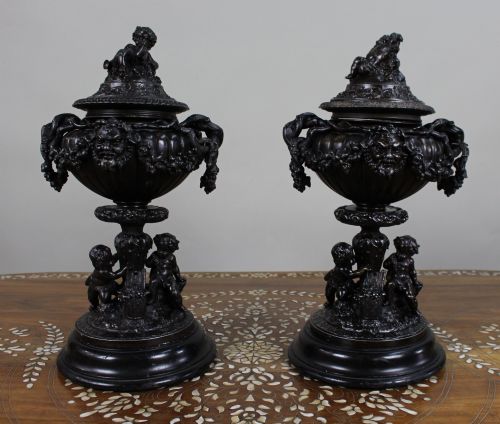
Forms range from campana silhouettes and amphora vases to pedestalled vessels featuring neoclassical handles, Bacchic masks, and putti details. Materials span ceramics, cast metals, and carved stone, reflecting varied interpretations of antiquity from the Georgian era into the Edwardian period.
Materials and Construction
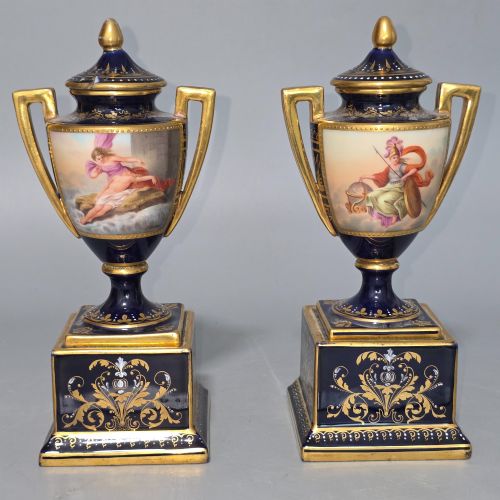
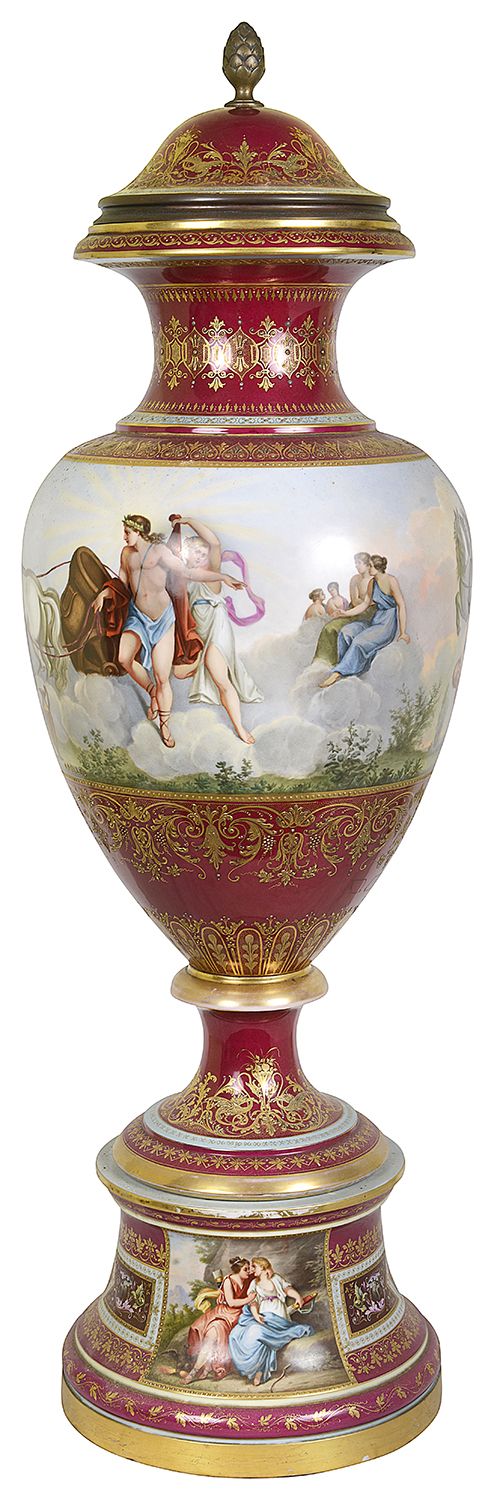
Porcelain examples rely on hand-painted surfaces, gilt accents, and detailed mouldings, frequently associated with continental factories like Vienna, Sevres, and Dresden. These ceramic bodies are often paired with cast bronze or ormolu mounts that secure the covers and form classical handles.
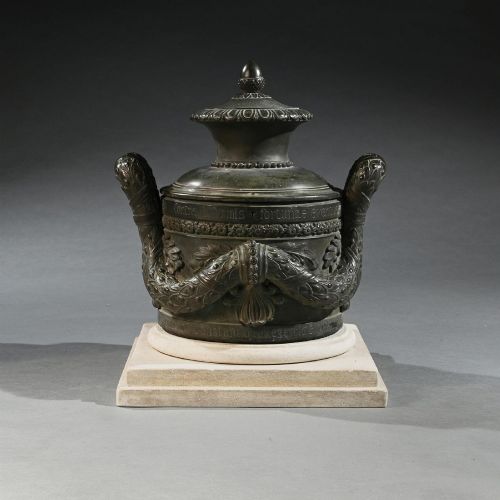
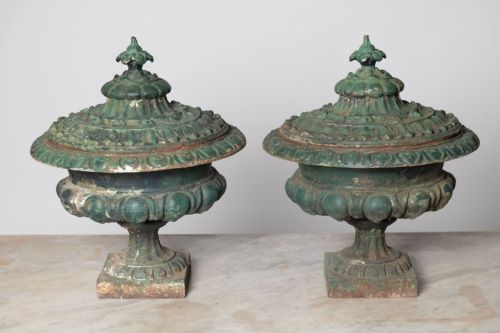
Metal versions utilise bronze, spelter, and cast iron, sometimes enhanced with silvering, gold leaf, or patination to emulate ancient metalwork. Grand Tour souvenirs combine metals with carved stone bases such as rouge griotte or alabaster, while other works employ terracotta, lead, and turned timber with brass finials.
The listings on this site span materials from delicate Vienna porcelain and cast bronze to heavy lead and turned fruitwood.
Evaluating Quality and Execution
Quality rests in the crispness of the casting, the precision of the hand-painting, and whether the original lid survives with the body. Finer examples display deeply chased bronze mounts, balanced proportions, and signatures from known painters or makers rather than generic factory marks.
The integrity of the materials dictates longevity, seen in the smooth polish of marble bases, the weight of cast metals, and the lack of clumsy restoration on ceramic handles. Superior pairs maintain symmetry in both form and painted decoration across both vessels.
Auguste Cain·F. Koller·Herend
The Classical Lidded Urns Glossary
- Campana
- A bell-shaped vessel with an everted rim and a footed base, frequently seen in classical urn designs. This silhouette originates from antique garden and decorative pottery.
- Ormolu
- Gilt bronze mounts applied to furniture, clocks, and porcelain vases during the eighteenth and nineteenth centuries. The technique involves a mercury amalgam applied to cast bronze to achieve a durable golden finish.
- Garniture
- A set of three or more matching decorative vases or urns designed to be displayed together on a mantelpiece or sideboard. They typically feature a taller central piece flanked by smaller matching vessels.
- Grand Tour
- A nineteenth-century tradition where wealthy travellers collected bronze, marble, and alabaster souvenirs of ancient monuments. These cabinet-sized reductions replicated famous classical antiquities.
- Amphora
- A two-handled jar with a narrow neck used in antiquity for storage and later adopted as a neoclassical decorative shape. Ceramic versions often feature elaborate figural scenes.
Classical Lidded Urns: Frequently Asked Questions
Where should I display a lidded urn?
These pieces suit prominent flat surfaces where their vertical proportions and decorative details can be appreciated without obstruction. Common placements include marble mantelpieces, entrance hall console tables, and large bookcases.
Pairs look particularly balanced when arranged symmetrically, while monumental single urns serve as focal points on pedestals or heavy sideboards.
How do I care for antique porcelain urns?
Dust ceramic surfaces gently with a soft, dry brush to prevent accumulation in recessed mouldings and hand-painted areas. Avoid using liquid cleaners or abrasive cloths, which can damage delicate overglaze gilding and painted enamels.
Keep metal mounts dry and handle the lids with care, supporting both the body and the cover whenever moving the piece.
How can I tell a Grand Tour bronze from a later copy?
Nineteenth-century Grand Tour bronzes typically exhibit a deep, stable patination acquired over decades, combined with precise chasing to the cast details. They often incorporate authentic stone bases like rouge griotte marble or alabaster that show natural geological variations.
Examine the underside and joints for the honest wear and construction methods consistent with nineteenth-century foundry work.
Were these urns always meant to be purely decorative?
Many classical urns served as ornamental centerpieces from their creation, though some smaller variants functioned as sugar bowls, tea caddies, or tazzas. Larger porcelain and metal examples were designed primarily to emulate ancient monumental vessels and display fine artistic craftsmanship.
The presence of fitted lids often relates to the classical form rather than an active utilitarian function.