





Classical Inlay Credenza
A classical inlay credenza brings refined symmetry to a room, offering both generous display space and intricate wooden ornamentation.
Classical Inlay Credenza
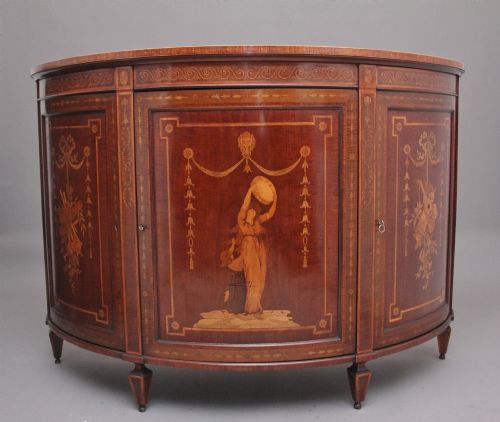
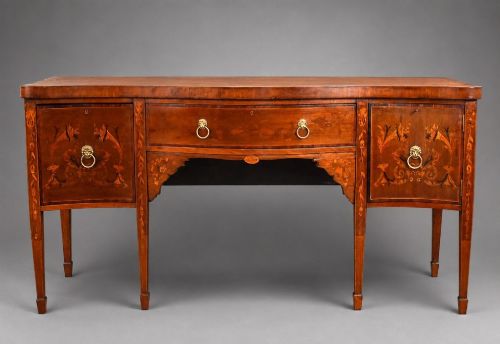
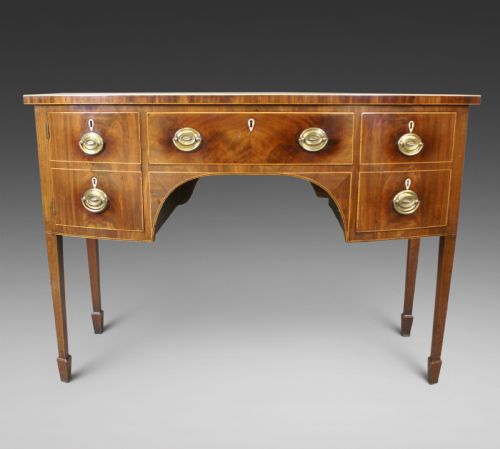
When searching for a classical inlay credenza, buyers encounter a selection of sophisticated sideboards, side cabinets, and breakfront credenzas spanning the Georgian, Regency, and Victorian eras through to the early twentieth century. These low storage pieces often incorporate geometric or floral decorative motifs set into contrasting timber grounds.
The pieces available display diverse regional influences, including Sheraton Revival designs alongside French Neoclassical forms and Italian exhibition pieces. Cabinets typically feature cupboards or drawers configured for dining rooms and grand reception spaces.
Makers utilised woods such as satinwood, mahogany, rosewood, and walnut to build these substantial pieces, adorning them with boxwood stringing and marquetry panels. The assortment ranges from serpentine sideboards to demi-lune side cabinets.
How they were made
Cabinet makers built these pieces using solid and veneered timbers like mahogany, satinwood, and walnut, often applying ebonised finishes for dramatic contrast. Carcasses were constructed to support elaborate surface decoration without warping.
Detailed ornamentation relied on marquetry inlay and boxwood stringing, creating intricate floral or classical motifs across doors and panels. Brass fittings, handles, and gallery rails were frequently added to complete the composition.
Classical Inlay Credenza Retail Price Guide 2026
Typical asking prices for classical inlay credenza among the pieces listed under this phrase on Sellingantiques today, from the lower quarter to the upper quarter. They describe what is for sale here now, not the wider market.
Listings feature pieces spanning the Georgian, Regency, and Victorian periods, constructed from satinwood, mahogany, rosewood, and walnut with marquetry inlay.
What varies in quality
The standard of a classical inlay credenza depends heavily on the precision of the marquetry and the choice of primary timbers, with finely figured satinwood and mahogany elevating the piece. The crispness of the boxwood stringing and the depth of the floral painted details also distinguish finer workshops from standard production.
Construction methods reveal the tier of manufacture, notably in the dovetailing of drawers and the stability of large breakfront carcasses. Superior examples exhibit harmonious proportions and balanced grain matching across the entire facade.
Pietro Ferrario·Edwards and Roberts
The Classical Inlay Credenza Glossary
- Credenza
- A low cabinet or sideboard designed for storage and display, often featuring central cupboards flanked by side sections. Originally developed in Italy, the form evolved across nineteenth-century Britain and Europe.
- Marquetry Inlay
- The art of applying pieces of veneer to a structure to form decorative patterns and pictures. Craftsmen cut contrasting woods like boxwood and satinwood to fit precisely within the ground timber.
- Satinwood
- A durable, lustrous timber native to India and Sri Lanka, prized for its golden yellow sheen. Cabinet makers frequently used it as a primary veneer during the Sheraton Revival period.
- Serpentine
- A curved shape characterised by a convex centre flanked by concave ends, creating a gentle wave effect along the front of a sideboard. This profile required advanced woodworking skill to execute properly.
- Demi-lune
- A half-moon shape utilised for the footprint and top surface of specific side cabinets. This curved form allowed furniture to sit flush against a wall while offering a softer profile than a rectangular cabinet.
Classical Inlay Credenza: Frequently Asked Questions
What is a classical inlay credenza used for?
These cabinets served primarily in dining rooms and grand hallways for storing tableware, linens, and serving dishes while providing a surface for displaying decorative objects.
Today, they function well in living spaces as media consoles, sideboards, or statement storage furniture that adds architectural interest to a room.
How do I identify a Sheraton Revival piece?
Sheraton Revival furniture typically exhibits light satinwood veneers, delicate floral marquetry, and classical motifs inspired by eighteenth-century designs.
Pieces from this movement frequently date from the late nineteenth or early twentieth century, showing refined proportions and meticulous boxwood stringing.
What is the difference between a credenza and a sideboard?
While both provide low storage, a credenza traditionally refers to a cabinet with cupboards spanning its length, often featuring a more architectural or exhibition-focused design.
Sideboards historically incorporated drawers flanked by cupboards specifically for dining room service, though nineteenth-century makers occasionally blurred these definitions.
How do I care for antique inlaid wood?
Maintain these surfaces by keeping them away from direct sunlight and fluctuating heat sources, which can cause delicate veneers and boxwood stringing to lift.
Apply high-quality beeswax sparingly and buff gently with a soft cloth to nourish the timber without damaging the historic polish or marquetry.