


Ebonised and Ormolu Credenza
An ebonised and ormolu credenza brings nineteenth-century presence and rich contrast to a room through dark polished wood and bright gilded bronze mounts.
Ebonised and Ormolu Credenza
An ebonised and ormolu credenza is a substantial nineteenth-century cabinet designed for display and storage, commonly appearing from Victorian and French Napoleon III periods.
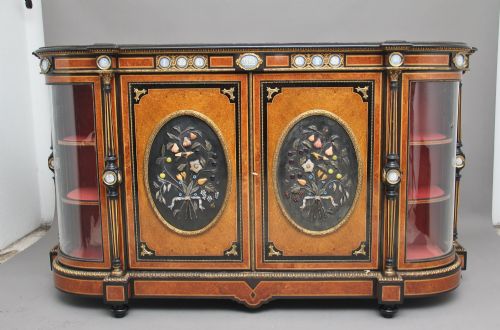
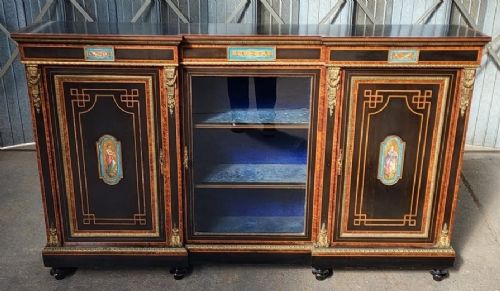
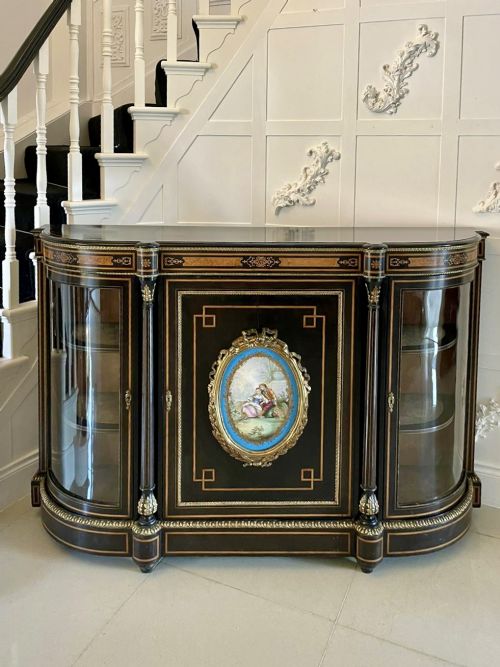
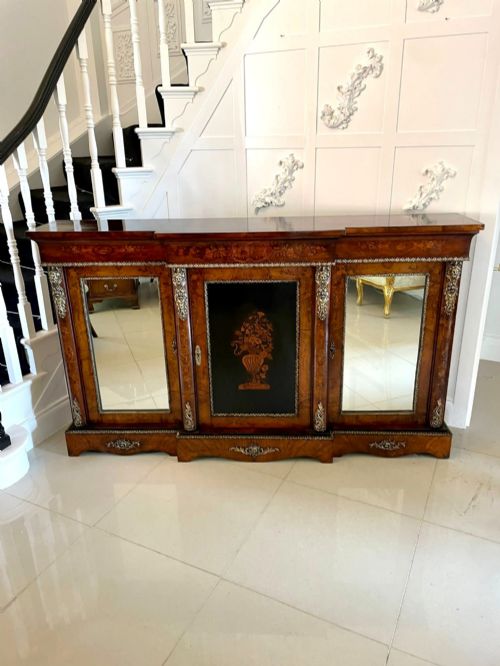
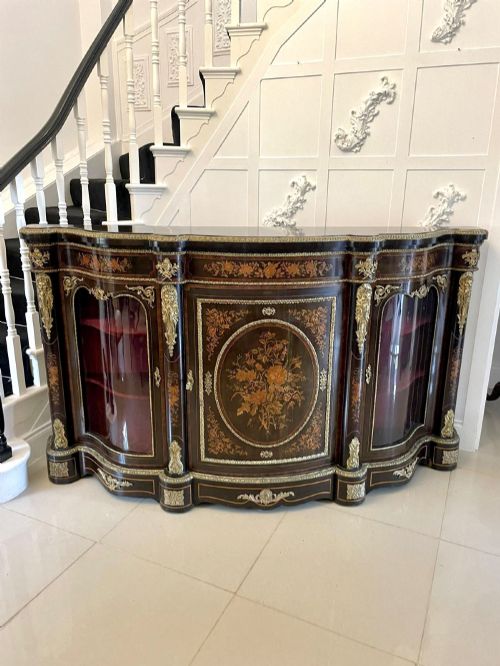
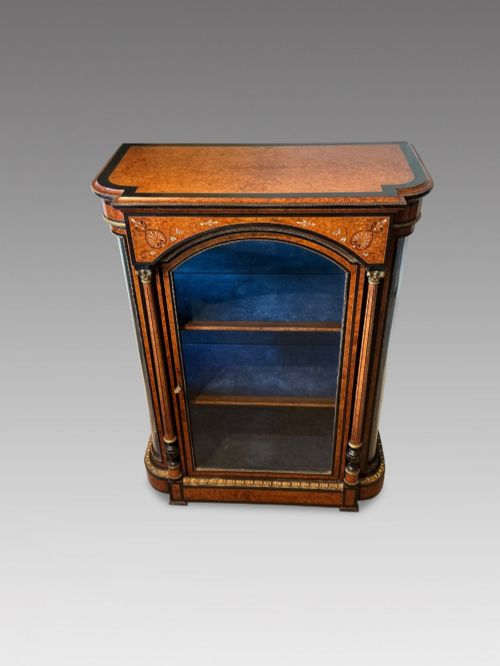
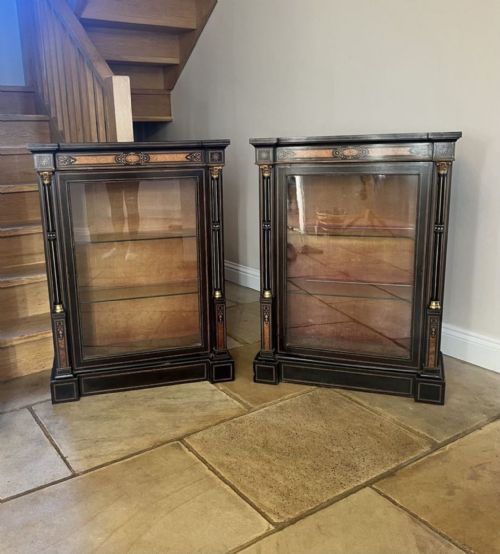
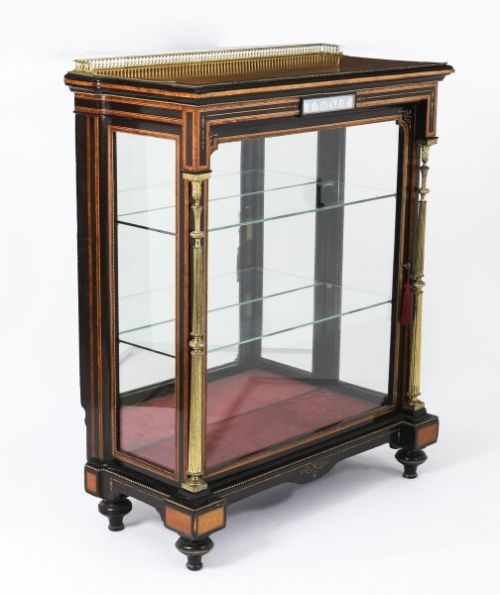
The pieces on this page span credenzas, side cabinets, and pier cabinets, taking serpentine, breakfront, or straight forms with glazed doors or mirrored backs.
Origins divide principally between English Victorian workshops and French makers influenced by revival styles, incorporating marquetry, porcelain plaques, or marble tops.
Materials and Technique
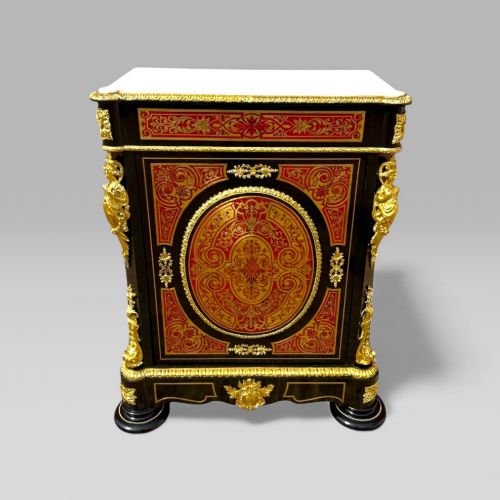
The dark finish is achieved by ebonising wood to mimic ebony, often paired with contrasting timbers like amboyna, burr walnut, and walnut veneer.
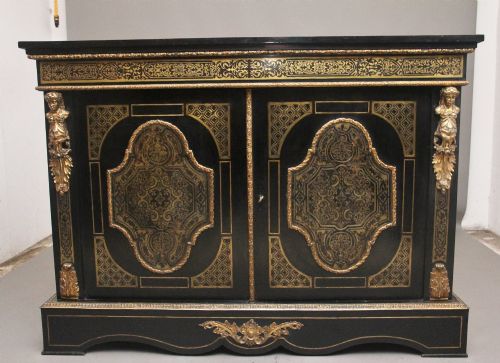
Cast ormolu and brass mounts frame panels and corners, whilst intricate inlay utilises floral marquetry, tortoiseshell, and boulle work.
Cabinets feature glazed doors, marble tops, and occasionally pietra dura or Sevres-style porcelain plaques set directly into the wooden framework.
Listings span the Victorian and Napoleon III periods, recording materials from ebonised wood and ormolu to tortoiseshell and Sevres-style porcelain plaques.
Judging Quality
Quality rests upon the crispness of the cast ormolu mounts and the precision of the marquetry or boulle inlay work across the cabinet body.
The selection of secondary timbers and veneers, such as figured amboyna or burr walnut, dictates the depth of visual texture in the piece.
Structural complexity, seen in serpentine fronts, breakfront layouts, and matching pairs, separates standard items from exceptional examples.
The Ebonised and Ormolu Credenza Glossary
- Ebonised
- Wood treated with a dark finish to resemble solid ebony. This technique gained widespread popularity during the nineteenth century.
- Ormolu
- Gilt bronze mounts applied for decorative effect. The metal is cast and chased before receiving its gold finish.
- Boulle
- Marquetry technique utilising tortoiseshell and brass inlay. Named after the royal cabinetmaker André-Charles Boulle.
- Marquetry
- Decorative patterns formed by fitting together thin veneers of wood and other materials. Floral motifs frequently appear on nineteenth-century cabinets.
- Pier Cabinet
- A narrow cabinet designed to stand against a wall pier between windows. These often feature glazed doors for display.
Ebonised and Ormolu Credenza: Frequently Asked Questions
What is an ebonised and ormolu credenza used for?
These cabinets serve as principal living room or dining room furniture pieces. They provide surface display space on top and enclosed shelving behind glazed or panelled doors below.
Historically, the central cupboards and side sections housed porcelain, silver, or documents. Today, they function similarly while anchoring a room's decorative scheme.
How do I tell Victorian from Napoleon III pieces?
Victorian pieces often lean towards English walnut and floral marquetry with restrained ormolu. French Napoleon III examples frequently utilise heavier boulle work, tortoiseshell, and marble tops.
Both styles share the nineteenth-century fondness for ebonised surfaces, making construction details and timber choices the clearest indicators of origin.
Are these cabinets all matching pairs?
Most listings are single standalone cabinets, though matching pairs do appear in the selection. Pairs are typically pier cabinets or smaller side cabinets designed to flank a fireplace or window.
Single credenzas usually feature breakfront or serpentine shapes intended to command a wall independently.
How do I care for ebonised wood and ormolu?
Maintain ebonised surfaces with a soft, dry cloth and avoid silicone-based polishes that can dull the dark finish over time. Keep the cabinets away from direct sunlight and heat sources.
Ormolu mounts require gentle dusting without abrasive cleaners to preserve the gilded surface. Marble tops benefit from prompt wiping of any liquid spills to prevent staining.