



Antique Marble Inlay Cupboard
An antique marble inlay cupboard brings solid stone tops and detailed woodwork together in practical furniture.
Antique Marble Inlay Cupboard
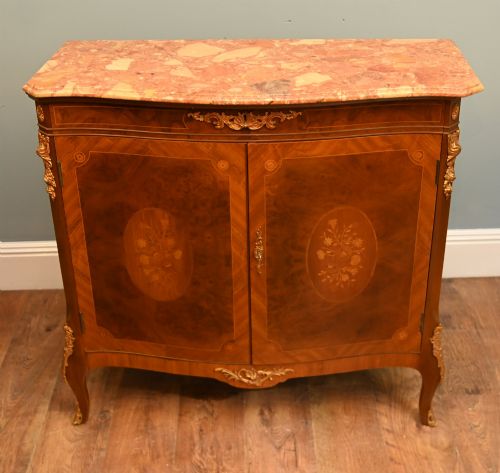
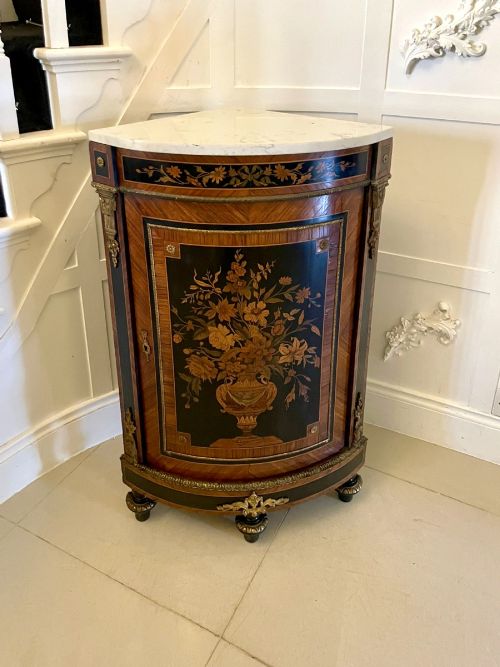
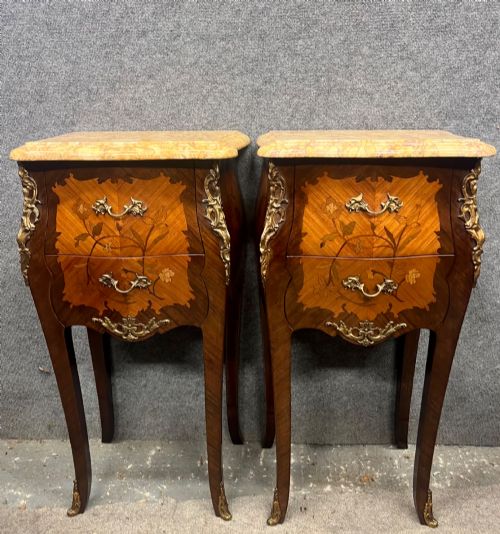
The term antique marble inlay cupboard covers a range of storage pieces built with stone tops and patterned wooden bodies. Pieces span the eighteenth, nineteenth and early twentieth centuries, appearing in forms such as bedside cabinets, corner units and side cabinets. French and Italian workshops dominate the selection, often working in Louis XV or Louis XVI styles.
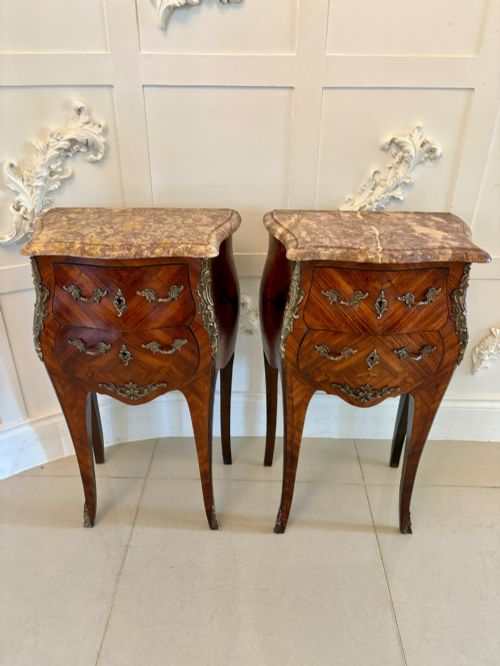
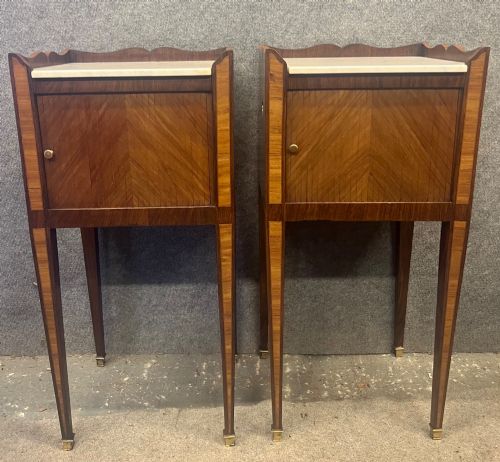
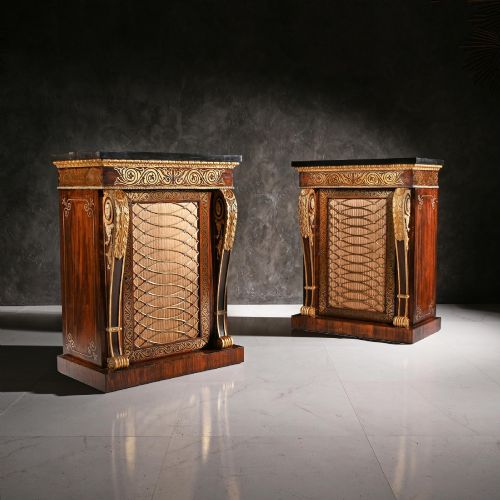
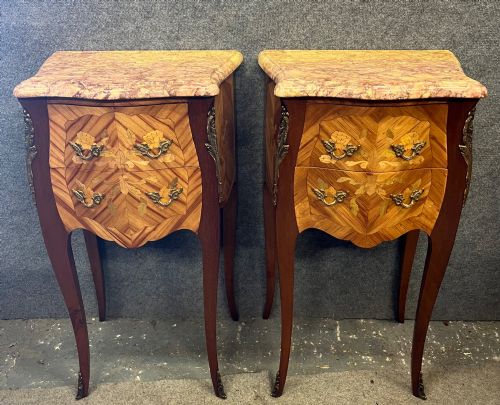
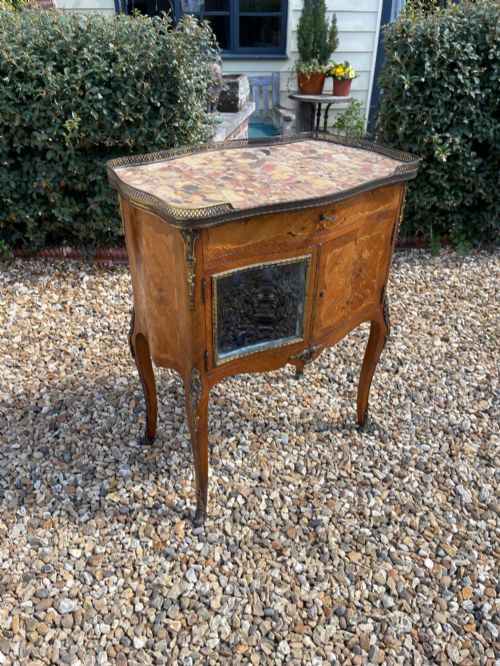
Bedside cabinets and pairs of lamp tables surface most frequently among the current options. These smaller cupboards combine enclosed storage with a durable marble surface suited to daily use. Alongside them, larger side cabinets and pier cabinets offer grander proportions and more intricate marquetry.
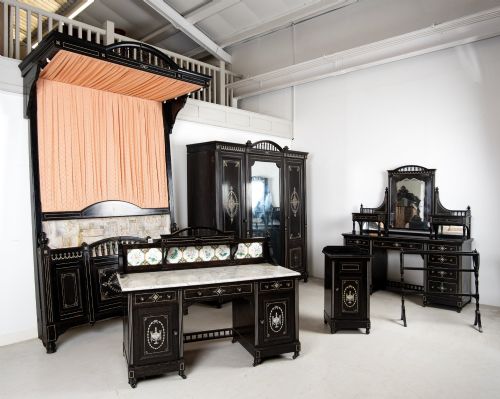
Origins stretch across various European traditions, with French provincial and metropolitan designs leading the selection. Walnut, kingwood and mahogany form the primary carcases, while specific pieces adopt ebonised finishes or brass mountings. Each example reflects the prevailing taste of its decade of construction.
Materials and construction methods
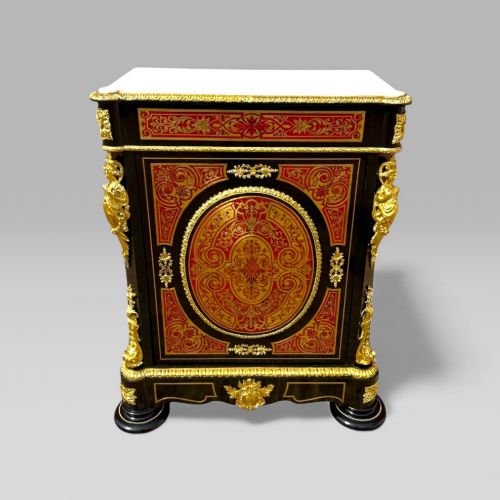
Cabinet makers built the structural carcases using dense timbers such as walnut, mahogany and kingwood, often applying lighter veneers in floral or geometric marquetry patterns. Brass stringing, tortoiseshell and ormolu mounts frequently accent the woodwork, particularly on French pieces influenced by Boulle techniques. This combination of structural timber and decorative veneer required skilled joinery to prevent warping.
The distinctive stone surfaces utilise heavy marble slabs, cut and polished to fit precisely over the cabinet top. These tops provide a cool, resilient surface that contrasts with the warm tones of the polished wood below. Ormolu mounts, cast in bronze and gilt, secure corners and key areas while adding architectural weight.
The furniture forms include demi-lune consoles, corner cabinets, and multi-piece bedroom suites dating from the Victorian era onward.
Markers of distinction and build quality
Quality rests in the precision of the marquetry and the selection of the timber veneers. Finer examples display tightly fitted wood grains and complex pictorial or floral motifs that remain flush with the surrounding surface. Lesser pieces rely on simpler geometric layouts or printed substitutes for genuine inlay work.
The integration of the marble top and the heft of the metal mounts also signal grade. Superior cabinets use thick, well-figured marble slabs that sit flush against properly seasoned timber carcases, accompanied by chased ormolu rather than lightweight stamped brass.
Louis Constantin Le Gaigneur·Collinson & Lock London
The Antique Marble Inlay Cupboard Glossary
- Marquetry
- The art of applying pieces of veneer to a structure to form decorative patterns or pictures. Craftsmen cut various woods to fit together like a puzzle before gluing them to the carcase.
- Ormolu
- Gilded bronze mounts used for decorative and structural edging on fine furniture. This technique gained widespread popularity in French cabinet making during the eighteenth and nineteenth centuries.
- Boulle
- A type of marquetry using brass and tortoiseshell developed in France. It creates a striking contrast between the metallic sheen and the dark, mottled shell.
- Demi-lune
- A half-moon shape used for the footprint of console tables and cabinets. This curve allows the furniture to sit flat against a wall while projecting into the room.
- Meuble d'appui
- A French term for a sideboard or standing cabinet used for support or display. These pieces usually feature doors enclosing shelves at a comfortable height.
Antique Marble Inlay Cupboard: Frequently Asked Questions
How do I clean the marble top?
Wipe the stone surface using a soft cloth dampened with warm water and mild, neutral soap. Avoid abrasive cleaners or acidic substances like vinegar, which can etch the polished finish.
Dry the marble thoroughly afterwards to prevent water marks. Periodic application of a specialised stone sealer helps protect against stains.
Are these cupboards suitable for bedside use?
Many of the listed pieces function well as bedside tables or lamp chests. Their dimensions provide convenient surface area for lighting and night items while offering enclosed storage underneath.
Check the height of the specific cabinet against your bed frame to ensure comfortable daily access. The stone top safely accommodates water glasses and heavy lamps.
How can I tell the period from the style?
Mid-nineteenth century pieces often display revival styles such as Louis XV or Rococo influence, characterised by curved lines and heavy ormolu mounts. Later nineteenth and early twentieth-century examples frequently incorporate ebonised woods or simpler neoclassical lines.
Examine the interior construction and secondary woods alongside the exterior style to confirm the date. Drawer linings and backboards reveal the manufacturing techniques of their specific decade.
What is the difference between marquetry and inlay?
Marquetry involves assembling an entire decorative veneer sheet from various woods before applying it to the furniture surface. Inlay typically refers to cutting recesses directly into solid wood and fitting contrasting materials inside.
Most decorative cabinets from this selection utilise marquetry techniques for their intricate floral or geometric door panels.