




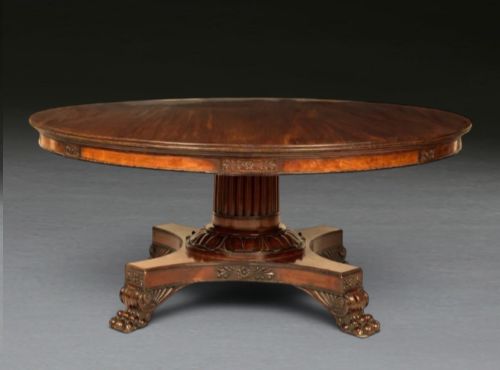

Classical Foyer Table
A classical foyer table anchors an entrance hall with architectural form and rich timber, bringing grand proportion to domestic spaces.
Classical Foyer Table
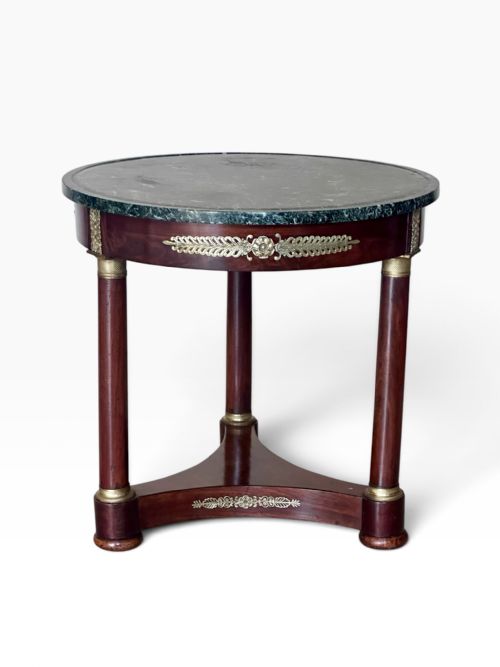
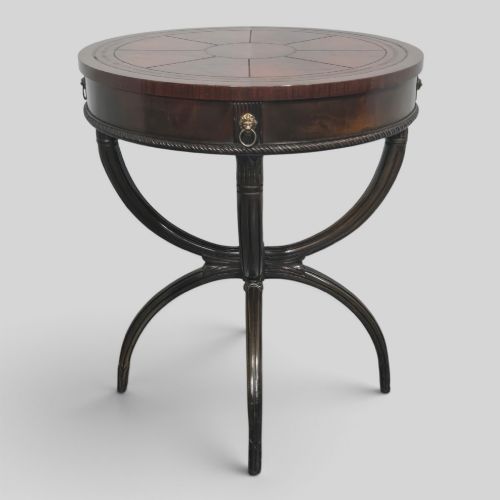
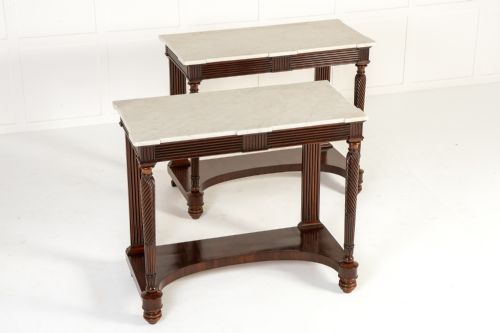
A classical foyer table encompasses console tables designed to stand against a wall and centre tables intended for the middle of a room. These pieces emerge predominantly from nineteenth century traditions, including Regency, French Empire, and Victorian neoclassical revival periods.
The inventory on this page relies heavily on nineteenth century mahogany console tables and marble topped centre tables. Buyers will frequently encounter French Empire and Regency iterations drawing on Italian neoclassical and Louis XVI design vocabularies.
Materials and construction
Cabinetmakers constructed these tables using dense timbers such as mahogany and oak, often finished with intricate marquetry inlay. Tops frequently incorporate heavy stone, including white marble and Siena marble, demanding sturdy structural support beneath.
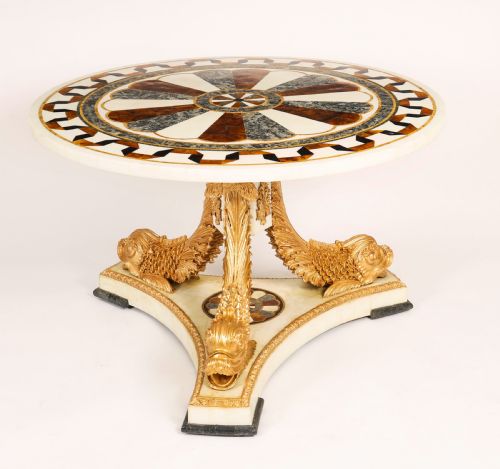
Decorative embellishments rely on cast bronze ornaments, ormolu mounts, and giltwood highlights. These applied metal details and gilded wooden carvings define the neoclassical and empire aesthetics seen across the pieces.
Classical Foyer Table Retail Price Guide 2026
Typical asking prices for classical foyer table among the pieces listed under this phrase on Sellingantiques today, from the lower quarter to the upper quarter. They describe what is for sale here now, not the wider market.
Dolphins occasionally swim into the neoclassical repertoire, supporting tabletops with carved mythological grace.
Judging quality and execution
Quality rests in the precision of the cabinetwork and the selection of materials, particularly the depth of figure in mahogany veneers and the thickness of the marble tops. Superior examples display crisp carving on giltwood elements and finely cast ormolu or bronze mounts.
Holland and Son
The Classical Foyer Table Glossary
- Console table
- A table designed to be fixed against a wall, frequently supported by front legs or brackets while relying on wall fixings for stability.
- Centre table
- A freestanding table intended to sit in the middle of a room, finished on all sides for viewing from any angle.
- Ormolu
- Gilded bronze used for decorative mounts and ornaments on furniture, highly popular in French Empire design.
- Siena marble
- A distinctive yellow Italian marble with dark veining, prized for decorative tabletops in neoclassical interiors.
- Marquetry
- The art of applying pieces of veneer to a structure to form decorative patterns and pictures.
Classical Foyer Table: Frequently Asked Questions
Where should I place a centre table?
Centre tables require adequate floor space to allow movement around all sides, making them ideal for large entrance halls or principal reception rooms.
Positioning one beneath a central chandelier or ceiling rose enhances its role as a focal point for the space.
How do I care for a marble top?
Marble surfaces need protection from acidic liquids and moisture, which can etch the polished stone over time. Regular dusting with a soft cloth keeps the material clean without resorting to harsh chemical cleaners.
Using coasters and mats prevents accidental marking during daily use.
What is the difference between console and centre tables?
Console tables are meant for placement against a wall, often featuring a flat back and decorative legs at the front. Centre tables are fully finished in the round to be viewed from every direction in an open space.
Both serve distinct spatial functions within classical interior layouts.
How do I identify Regency style?
Regency design draws heavily on classical Greek and Roman motifs, showing clean architectural lines alongside rich mahogany and giltwood details. Ormolu mounts and bold geometric forms often appear on tables from this period.
The style prioritises symmetry and classical dignity over excessive ornamentation.