

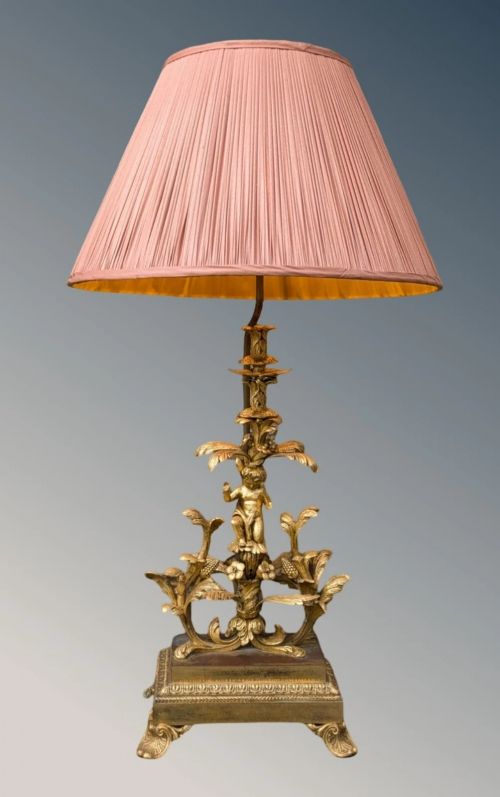
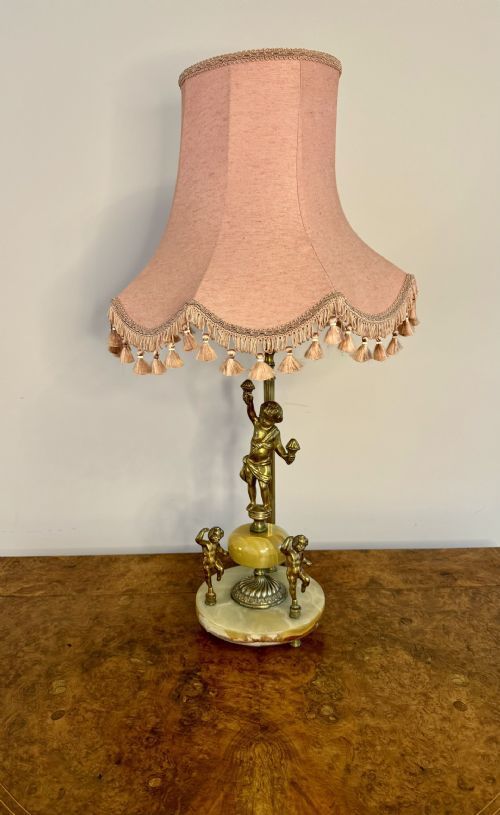
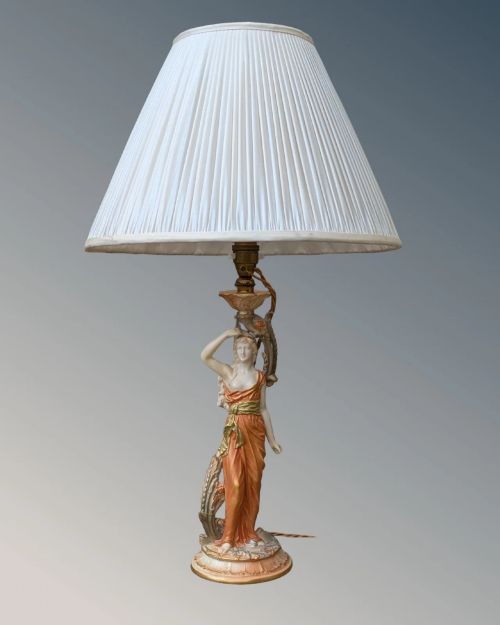


Classical Figure Table Light
A classical figure table light combines mythological or historical subjects with functional illumination, bringing sculptural presence to a room.
Classical Figure Table Light
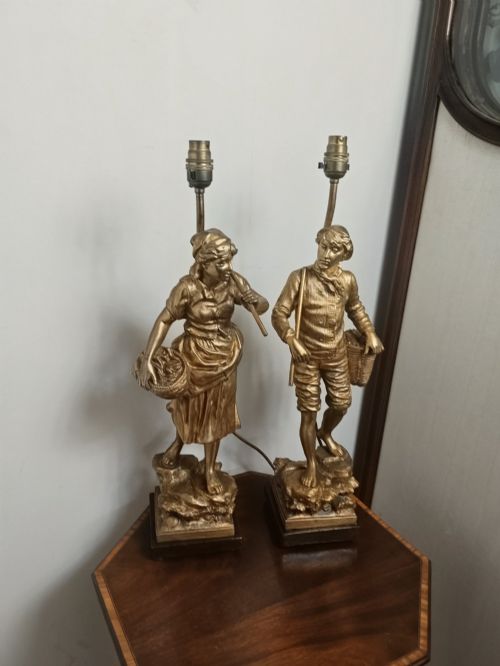
A classical figure table light takes the form of a sculpted human or mythical subject integrated into a lighting base, often originating from nineteenth-century European foundries and studios.
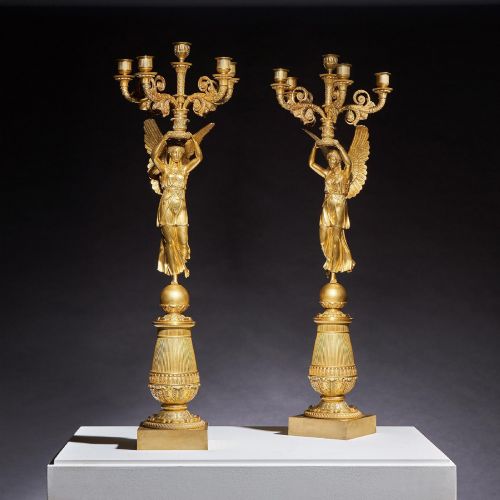
The objects span diverse formats including converted candelabra, oil lamps, and dedicated figural bases influenced by neoclassical, French Empire, and Art Nouveau aesthetics.
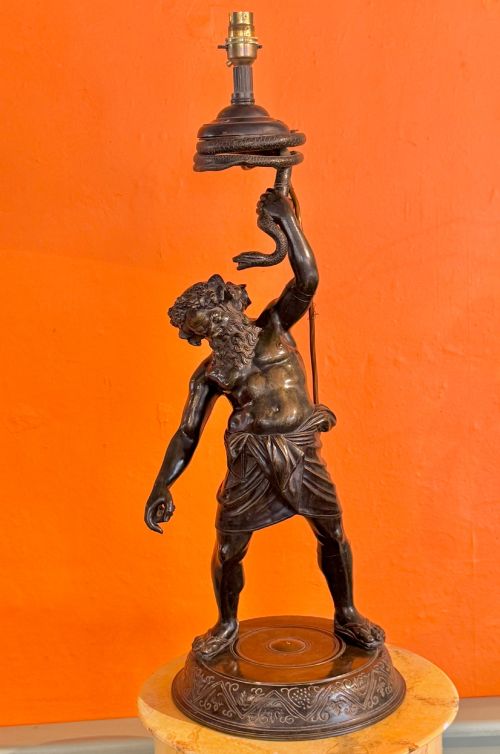
Makers drew heavily on antique mythology, representing figures such as Atlas, Minerva, and various nymphs, mounted upon marble plinths or cast metal bases.
Materials and construction methods
Foundries utilised bronze, brass, or cast spelter for the primary figural elements, frequently applying gilt, ormolu, or cold-painted finishes to enhance surface detail.
Bases incorporate heavy supportive materials such as carved marble, onyx, or rock crystal, which provide necessary stability for tall figural compositions.
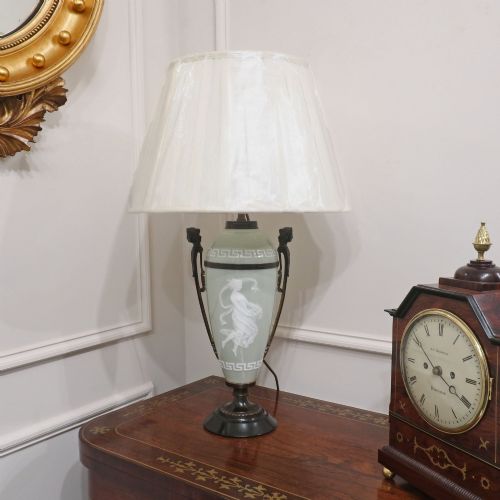
Decorative detailing incorporates specialised ceramic elements including pate sur pate porcelain, Wedgwood jasperware, and Baccarat frosted glass alongside traditional fabric shades.
Mermaids occasionally moonlight as torchère supports, proving that nineteenth-century lighting engineers took mythological marine life very seriously.
Distinctions in craftsmanship
Material selection dictates longevity and weight, with solid bronze and heavy ormolu mounts demonstrating greater durability than lighter spelter alternatives.
Attribution to known sculptors or respected foundries elevates the standing of an individual piece, reflecting superior artistic direction and meticulous assembly.
Pierre Philippe Thomire·G Amodio Naples·Emile Picault·Jean-Jules Cambos·Auguste Moreau
The Classical Figure Table Light Glossary
- Spelter
- A zinc alloy commonly utilised as a less costly alternative to bronze for figural castings. It is frequently painted or bronzed to simulate heavier metals.
- Ormolu
- A technique involving the application of finely ground high-carat gold to a bronze object. This process creates a rich, durable golden finish characteristic of French luxury items.
- Caryatid
- A sculpted female figure serving as an architectural support element or lamp shaft. Classical examples often depict draped figures carrying baskets or torches.
- Grand Tour
- A nineteenth-century tradition where travellers collected classical antiquities and bronze reductions in Italy. These souvenirs heavily influenced contemporary European lighting design.
Classical Figure Table Light: Frequently Asked Questions
What is a classical figure table light?
A classical figure table light is a functional lighting fixture incorporating a sculpted human, mythological, or allegorical subject. These pieces typically feature figures cast in bronze, brass, or spelter integrated into a decorative base.
Originating largely in the nineteenth and early twentieth centuries, they reflect broader artistic revivals including neoclassical and Art Nouveau styles. The sculptures often depict historical or divine characters mounted on marble or onyx plinths.
How were these lamps used historically?
Originally manufactured as oil lamps, candelabra, or candlesticks, many pieces were subsequently converted to electrical illumination during the twentieth century. They served as prominent decorative items on desks, sideboards, and mantlepieces in formal interiors.
The inclusion of figures such as Atlas, Minerva, or allegorical representations of virtues provided both illumination and a display of classical learning and refined taste.
How do I distinguish bronze from spelter?
Bronze is a heavy, durable copper alloy that develops a rich natural patina over time and yields a resonant tone when struck. Spelter is a softer zinc alloy that feels lighter and often shows grey metal beneath worn painted surfaces.
Examining the underside or areas of friction can reveal the underlying metal composition. Furthermore, fine chisel work is typically sharper on genuine bronze castings than on softer spelter.
How do I care for antique metal lamps?
Maintain metal surfaces by dusting gently with a dry, soft cloth to prevent the accumulation of dirt within intricate crevices. Avoid chemical cleaners or abrasive polishes that can strip original patinas, gilding, or cold-painted details.
Protect marble bases from moisture and acids, and ensure electrical components are inspected periodically by a qualified professional to maintain safety standards.