
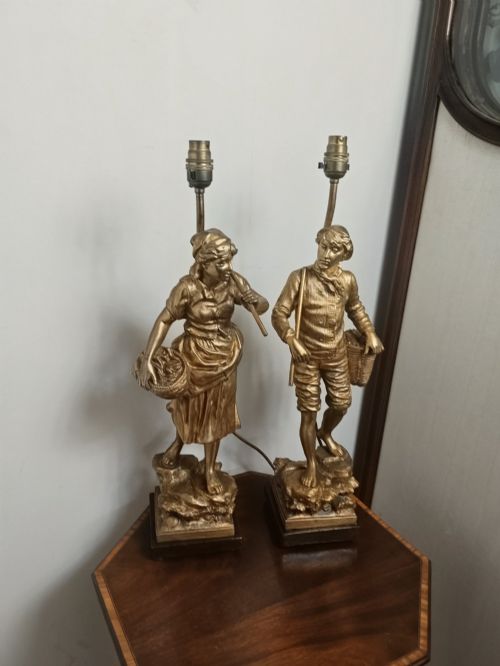

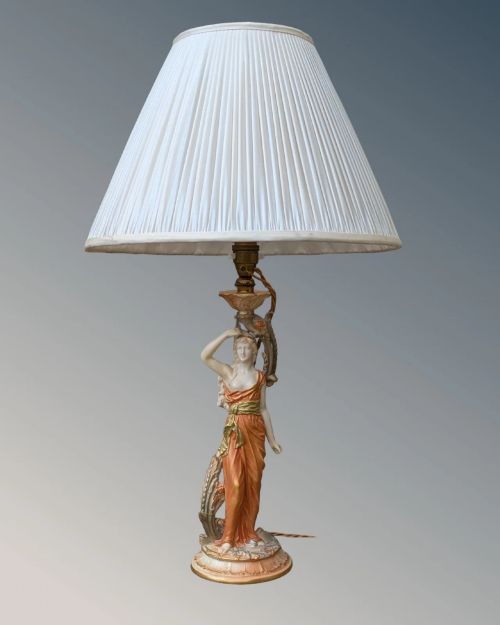


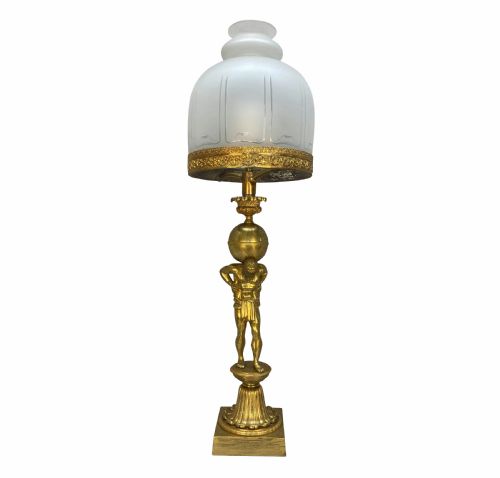
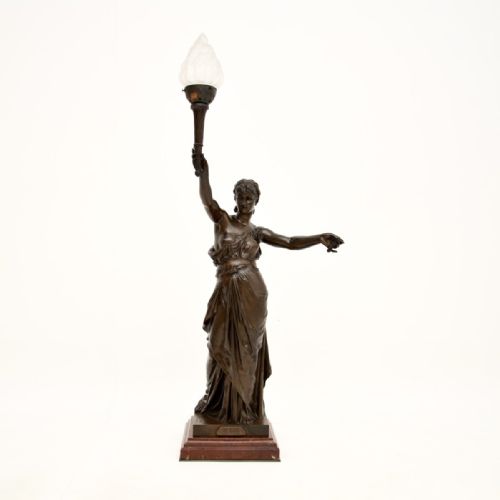


Classical Figural Table Lamp
A classical figural table lamp brings narrative sculpture into interior lighting, typically depicting allegorical figures, cherubs, or mythological subjects cast in metal or carved in stone.
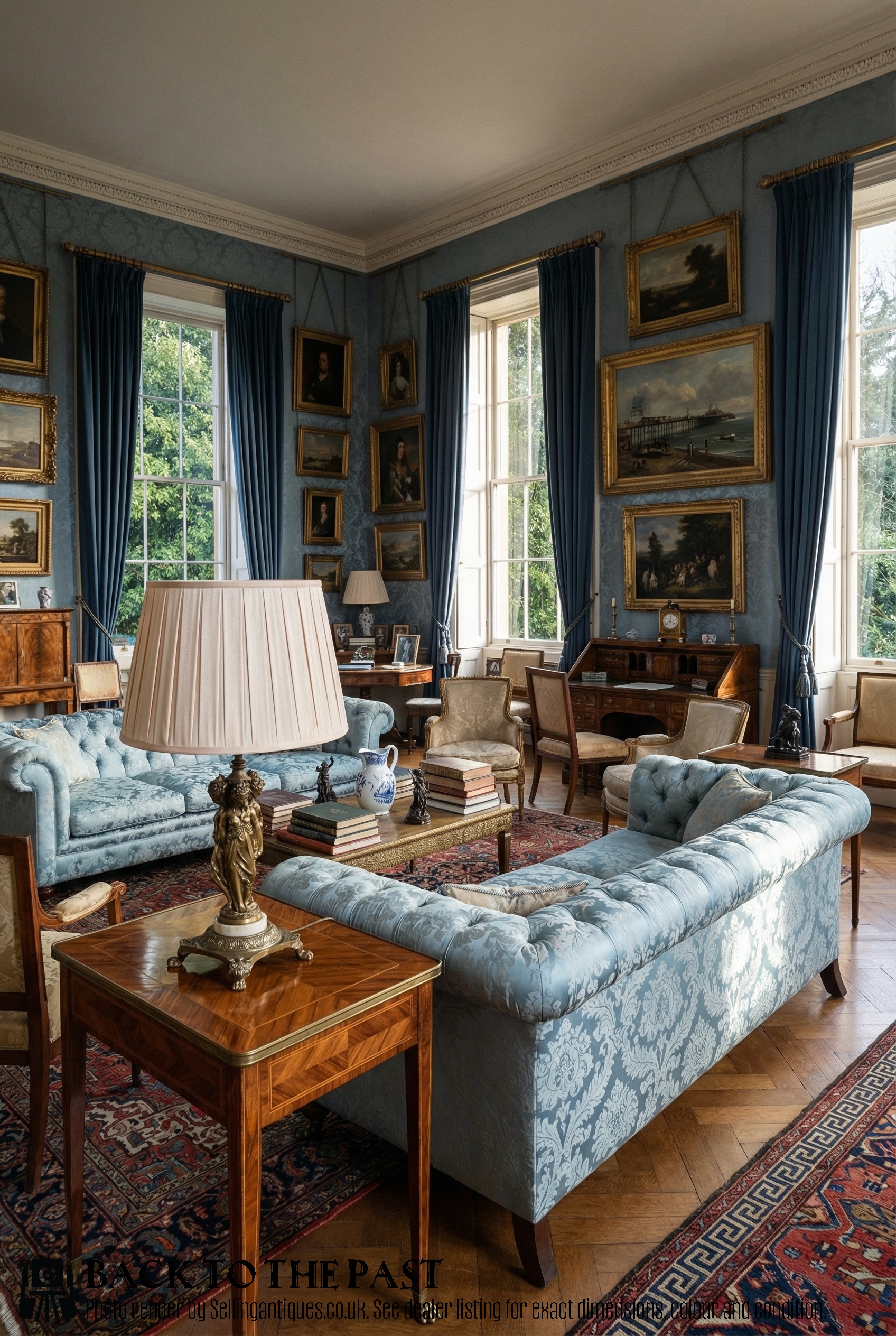
Classical Figural Table Lamp
A classical figural table lamp combines sculptural human forms with functional illumination, taking the shape of maidens, cherubs, and allegorical figures rooted in mythological or classical themes. These pieces emerge from the nineteenth century through the early twentieth century, spanning Victorian, Regency, and Art Nouveau aesthetics.
The most common examples encountered here are French and English productions executed in bronze, gilded brass, or painted spelter, often mounted on heavy marble or ceramic plinths. Many originate as oil lamps or bronze statuary later converted for electrical use, retaining their original patination and figurative integrity.
Materials and construction methods
Foundry work dominates the construction of these items, utilising sand-cast bronze, gilt bronze, and zinc-alloy spelter to render detailed drapery, anatomy, and facial expressions. Figures are frequently cold-painted, silvered, or gilded to enhance texture, while bases combine veined marble, brass, and porcelain elements for stability.
Lamps incorporate delicate applied components such as frosted glass shades, fabric coverings, and torchère elements designed to diffuse light across the metallic surfaces. Conversion wiring is standard among older metal and porcelain bases, integrating internal lamp holders without compromising the original sculptural casting.
Listings feature periods spanning the Regency era, the Victorian period, and the early twentieth century up to nineteen-twenty.
Evaluating sculptural and material quality
The choice of base materials dictates overall durability and aesthetic balance, with heavy natural marble plinths and fire-gilded or ormolu bronze surfaces commanding greater presence than lighter painted metal on ceramic foundations. Original surface finishes, such as patinated bronze or cold-painted pigments, retain higher desirability than later repainted or stripped surfaces.
E Rousseau·L & F Moreau·Royal Worcester·Emile Picault·Baccarat·Jean-Jules Cambos·H Moreau·Henri Honore Ple·Auguste Moreau
The Classical Figural Table Lamp Glossary
- Spelter
- A zinc-based alloy commonly used as a cost-effective alternative to bronze in nineteenth and twentieth-century statuary and lighting. It is softer than bronze and typically takes a painted or bronzed finish.
- Ormolu
- Gilt bronze produced by applying a finely ground high-carat gold-mercury amalgam to a bronze object, followed by firing. This French technique yields a durable, rich golden lustre.
- Cold-painted
- A method of applying non-fired paint to metal sculptures after casting and finishing. This technique appears frequently on nineteenth-century bronze and spelter decorative items.
- Torchère
- A decorative stand or sculptural figure holding a light source, often depicted as a classical torch-bearer. In lamp design, the figure supports the shade or burner directly.
- Neoclassical
- A style reviving classical antiquity's architectural and artistic motifs, prominent in nineteenth-century decorative arts. It emphasises symmetry, restraint, and mythological themes.
Classical Figural Table Lamp: Frequently Asked Questions
How do I date my lamp?
Dating relies on stylistic markers, material composition, and the presence of foundry marks or artist signatures inscribed on the base or casting.
Victorian and Regency pieces often feature heavier bronze and classical marble plinths, while later Art Nouveau and Edwardian examples utilise flowing organic lines, spelter, or frosted glass.
Were these lamps always electric?
Most older examples started life as oil lamps, kerosene burners, or decorative bronze statuary before being professionally converted for modern electrical use.
Conversions generally occurred later in the twentieth century, adapting the original hollow figures and vase forms to accommodate internal wiring and bulb holders.
How should I clean bronze and spelter?
Dust metal surfaces gently with a dry, soft cloth to protect patinas, avoiding abrasive metal polishes that strip original gilding or cold-painted finishes.
Marble plinths tolerate a slightly damp cloth, but moisture must be kept away from electrical components and painted metal details.