



Spelter Table Lamp
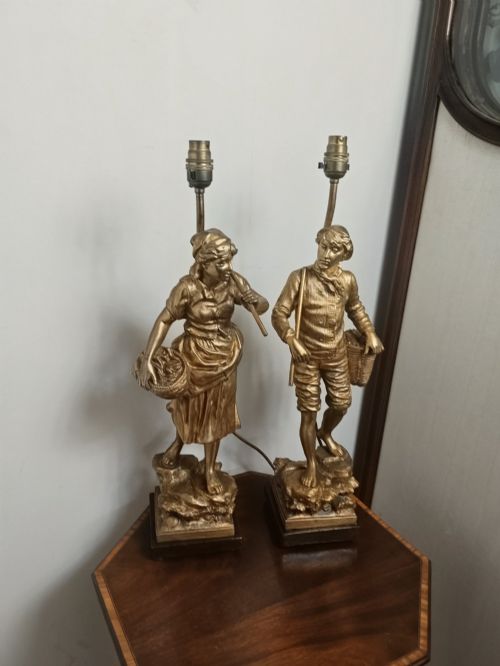
A spelter table lamp brings expressive metal figures and warm light together, offering striking decorative presence for any room.
Spelter Table Lamp
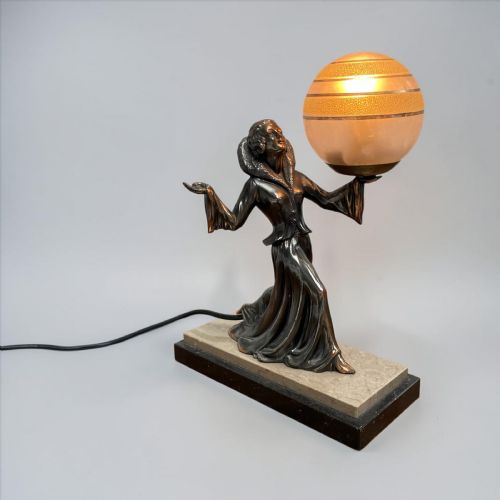
A spelter table lamp combines a cast white-metal alloy base with an electrical fitting, frequently depicting human figures, animals, or narrative scenes. These pieces span from the late nineteenth century through the Art Deco era, capturing Victorian, Edwardian, and modernist tastes.
The most common versions met on this page include French figural designs, such as damsels, cavaliers, and Art Deco ladies. They often incorporate marble plinths and glass shades, ranging from simple night lights to large sculptural arrangements.
Materials and construction
Spelter forms the core of these sculptures, cast from a zinc-based alloy that allows for fine detail and deep relief work. Makers finished the surface with patination, gilding, silvering, or hand painting to simulate more expensive bronzes.
Marble and brass frequently form the structural bases and mounts, providing stable foundations for the heavier metal figures. Glass components, including frosted or ruby shades, complete the assemblies alongside fabric elements.
A playful pierrot playing an accordion shares space with watchful pointer dogs and flying seagulls on marble bases.
Distinguishing quality
The integration of materials dictates overall presence, where dense marble bases and intact original glass shades elevate the piece. The depth and durability of the original patination or gilding further mark the standard of manufacture.
E Rousseau·L & F Moreau·P Sega·Auguste Moreau
The Spelter Table Lamp Glossary
- Spelter
- A zinc-based alloy used as an economical alternative to bronze for sculptural casting. It accepts patination and paint readily to mimic heavier metals.
- Patinated metal
- Metal treated with chemicals or heat to produce a specific surface colour and aged appearance. This finish enhances the definition of the cast figures.
- Art Deco
- A design style from the 1920s and 1930s characterised by streamlined geometric forms and stylised human figures. It appears frequently in these lamp bases.
- Neoclassical
- A revival style drawing on classical Greek and Roman motifs, visible in the architectural lines and classical figures of earlier pieces.
Spelter Table Lamp: Frequently Asked Questions
What is spelter?
Spelter is a zinc-based alloy that makers utilised widely for decorative sculptures and lamp bases during the nineteenth and twentieth centuries. It provided an affordable alternative to bronze while allowing for intricate casting.
Craftsmen finished these castings with various surface treatments, including bronze patinas, gilding, and polychrome paint, to achieve a rich decorative effect.
How do I date a lamp?
Dating relies on stylistic clues, such as the flowing organic lines of late nineteenth-century Art Nouveau versus the geometric forms of 1920s and 1930s Art Deco. Materials like marble bases and specific glass shades also help narrow the period.
Inscribed signatures or foundry marks on the metal base often point directly to the maker and active production years.
How were they used?
These pieces functioned primarily as decorative interior lighting, illuminating parlours, boudoirs, and halls during the Victorian, Edwardian, and modernist periods. Many served a dual purpose as sculptural art objects and functional light sources.
Smaller variants often acted as night lights, providing gentle illumination in bedrooms through coloured or frosted glass shades.
Are original shades common?
Original glass shades or fabric elements are less common than the metal bases, as fragile components frequently broke or degraded over the decades. Many surviving lamps have been paired with replacement shades that match the period style.
Frosted and ruby glass elements found on some pieces represent period configurations that collectors particularly value.