
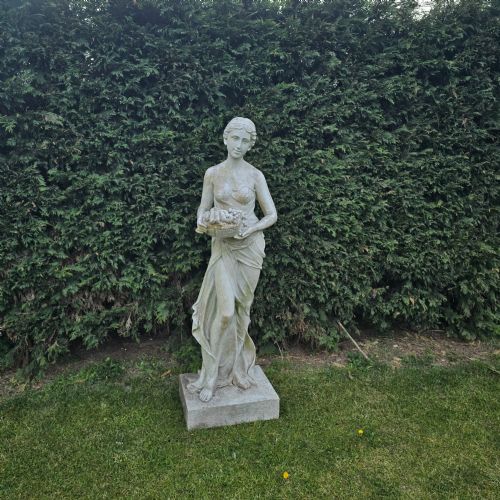
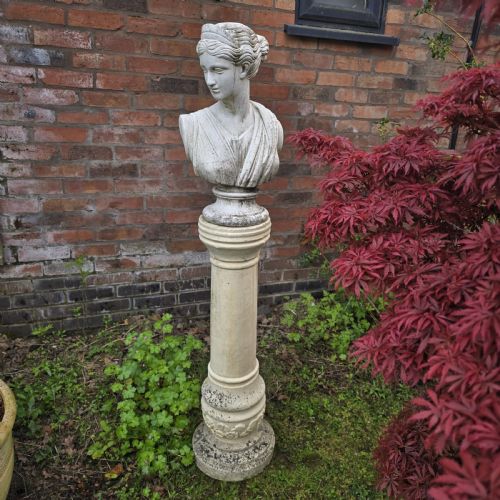


Classical Female Garden Statue
A classical female garden statue brings timeless mythological and allegorical presence to an outdoor space.
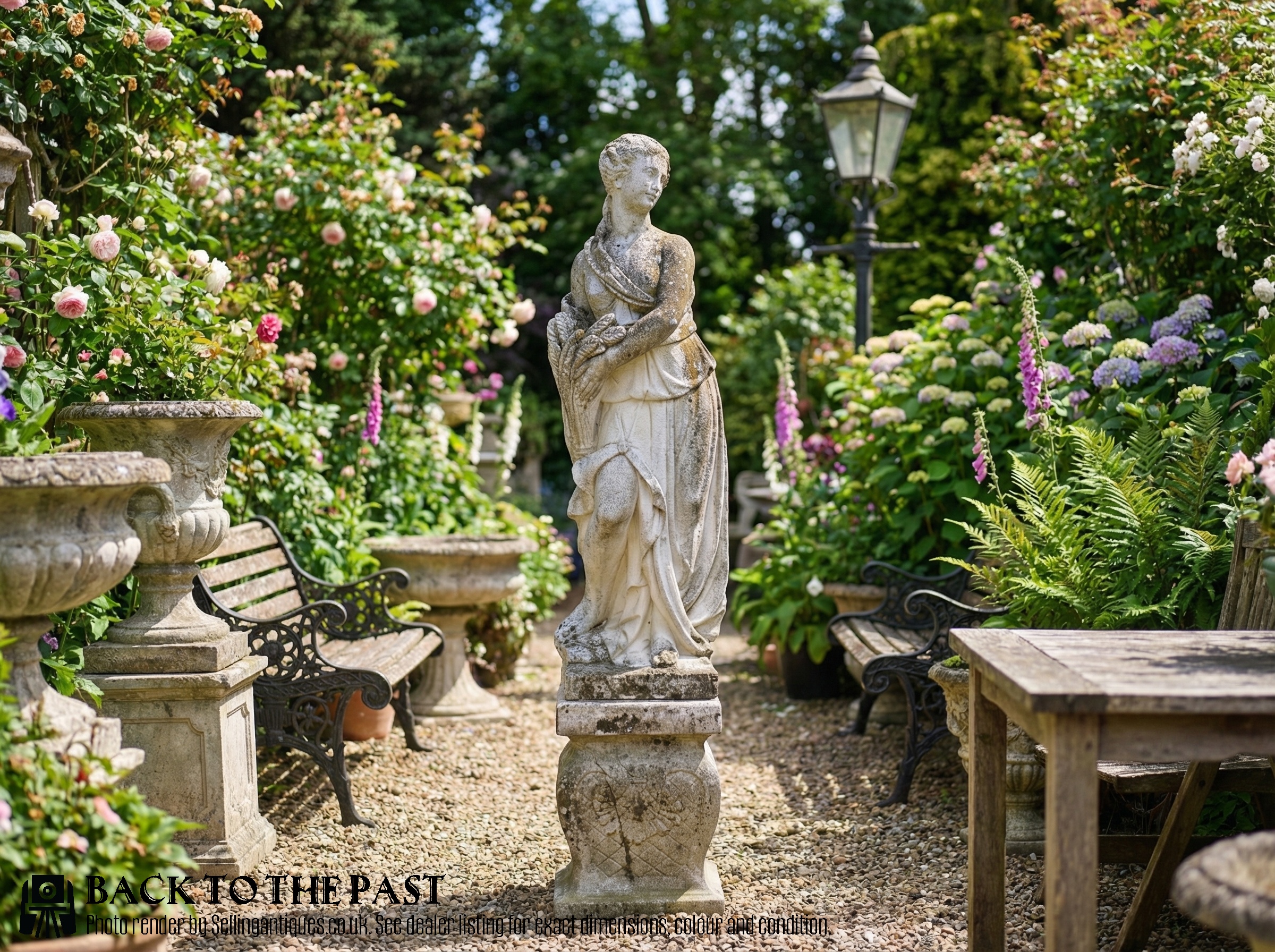
Classical Female Garden Statue
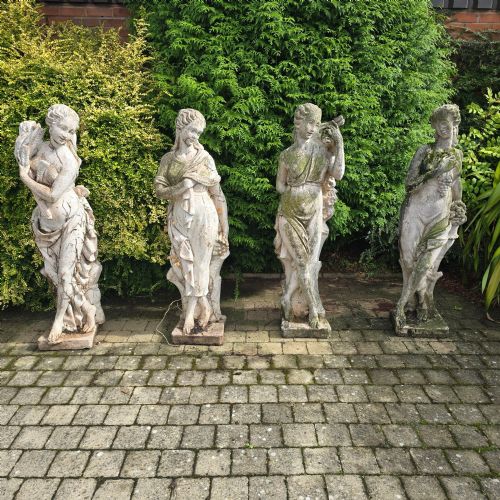
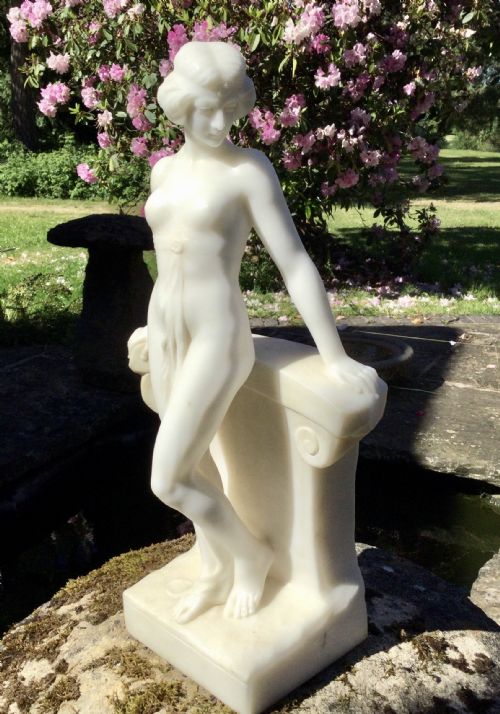
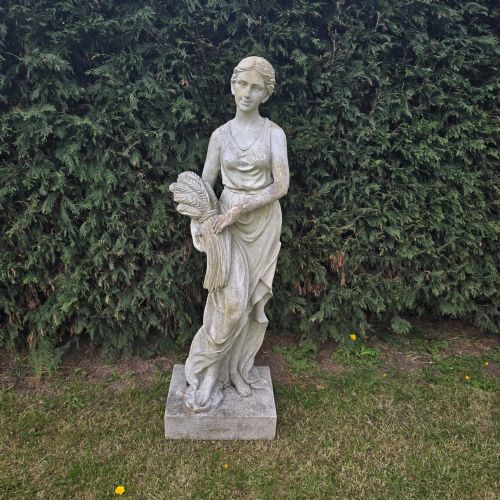
When you search for a classical female garden statue, you are looking at figurative garden statuary and sculptures spanning the nineteenth century through the mid twentieth century. These pieces draw heavily on neoclassical, classical revival, and art nouveau styles to depict figures such as Venus, Athena, and the Four Seasons. The selection you meet here ranges from life sized stone figures and busts on plinths to cast iron and terracotta works.
The materials vary across reconstituted stone, cast stone, concrete, carved stone, white marble, cast iron, terracotta, and plaster. Many pieces originate from specific periods including the Victorian era, the nineteenth century, and decades such as 1880, 1900, 1920, 1930, and 1950. Forms encompass draped ladies, water carriers, torsos, and sculptural busts designed for garden display or architectural placement.
Materials and production methods
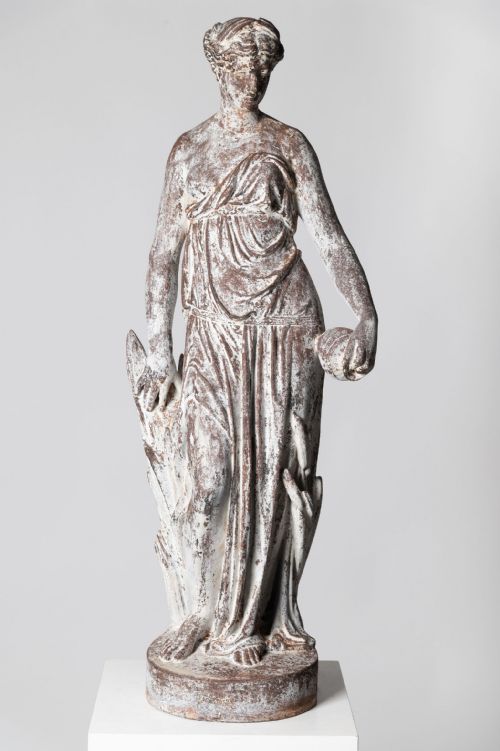
Makers utilised casting techniques with metals like cast iron from foundries such as Val d'Osne, alongside moulded compositions including reconstituted stone, cast stone, concrete, and plaster. These cast and moulded pieces allowed workshops to replicate intricate neoclassical drapery and botanical allegories efficiently.
Carved works rely on hand chiseling traditional materials like white marble, Carrara marble, and solid stone. Artisans shaped these stones into detailed forms, including full figures and busts, often referencing classical antiquity or specific artists.
Listings feature materials spanning white marble, cast iron, terracotta, reconstituted stone, and concrete across the nineteenth and twentieth centuries.
Distinctions in craftsmanship and medium
The distinction between a top tier piece and a simpler version rests on the medium and the fidelity of the carving or casting. Hand carved Carrara marble or solid stone sculptures exhibit finer anatomical details and crisp drapery compared to standard cast concrete or plaster pieces.
Foundry work also dictates quality in metal pieces, where designated iron founders produce sharper definition in cast iron figures and busts than generic metalwork. Natural weathering over decades enhances the surface texture of stone and iron works of higher substance.
Val d Osne foundry
The Classical Female Garden Statue Glossary
- Neoclassical
- A style reviving the art and architecture of ancient Greece and Rome. This aesthetic dominates the proportions and drapery of these female statues.
- Plinth
- A heavy base or pedestal supporting a statue or bust. Many garden figures and stone busts are mounted upon these to elevate their display.
- Reconstituted stone
- A composite material made from crushed stone and a binder, cast in moulds to resemble natural carved stone. It provides durability for outdoor garden statuary.
- Terracotta
- Fired clay used for sculptural works. This medium offers a warm reddish brown tone distinct from stone or iron.
- Allegorical figure
- A symbolic personification of a concept, such as the Four Seasons, Summer, Autumn, or water carrying. These subjects frequently appear in nineteenth and twentieth century garden sculptures.
Classical Female Garden Statue: Frequently Asked Questions
How do I clean a stone garden statue?
Gently wash stone and reconstituted stone surfaces with water and a soft brush to remove dirt and moss. Avoid harsh chemical cleaners that can damage the exterior patina.
Allow the material to weather naturally, as weathering often enhances the classical appearance of nineteenth and twentieth century garden pieces.
Can cast iron statues stay outside all year?
Cast iron garden statues withstand outdoor environments well, but they require protection against prolonged moisture to prevent excessive rust formation. Regular inspection helps maintain the metal surface.
Applying a protective wax or coating can help preserve iron figures originating from nineteenth century foundries.
What is the difference between cast stone and carved marble?
Cast stone is formed by pouring a mixture of aggregate and binder into a mould, whereas carved marble is hand chipped from a solid block by a sculptor. Marble generally offers finer detail and a smoother crystalline texture.
Carved marble pieces, such as Carrara marble busts, are typically suited for sheltered outdoor areas or interior display compared to durable cast stone.
How do I identify a neoclassical statue?
Neoclassical statues feature balanced compositions, restrained emotion, and classical drapery inspired by ancient Greek and Roman art. Subjects often include mythological figures like Venus and Athena.
Look for architectural elements like plinths and classical attributes such as lamps or lions accompanying the female figure.