
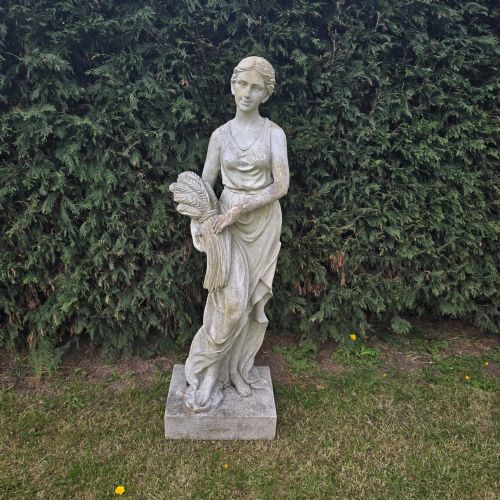
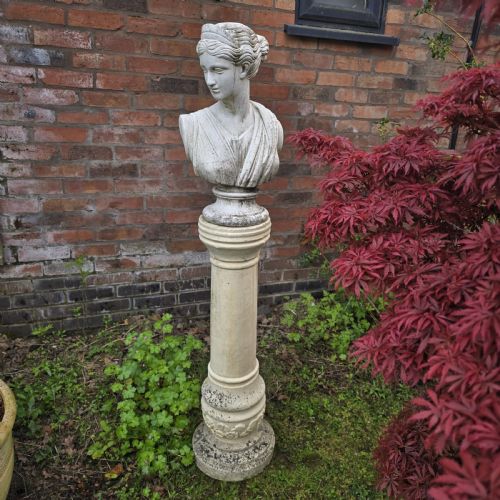


Neoclassical Stone Garden Statue
These neoclassical stone garden statue pieces bring classical form and timeless presence to an outdoor space.
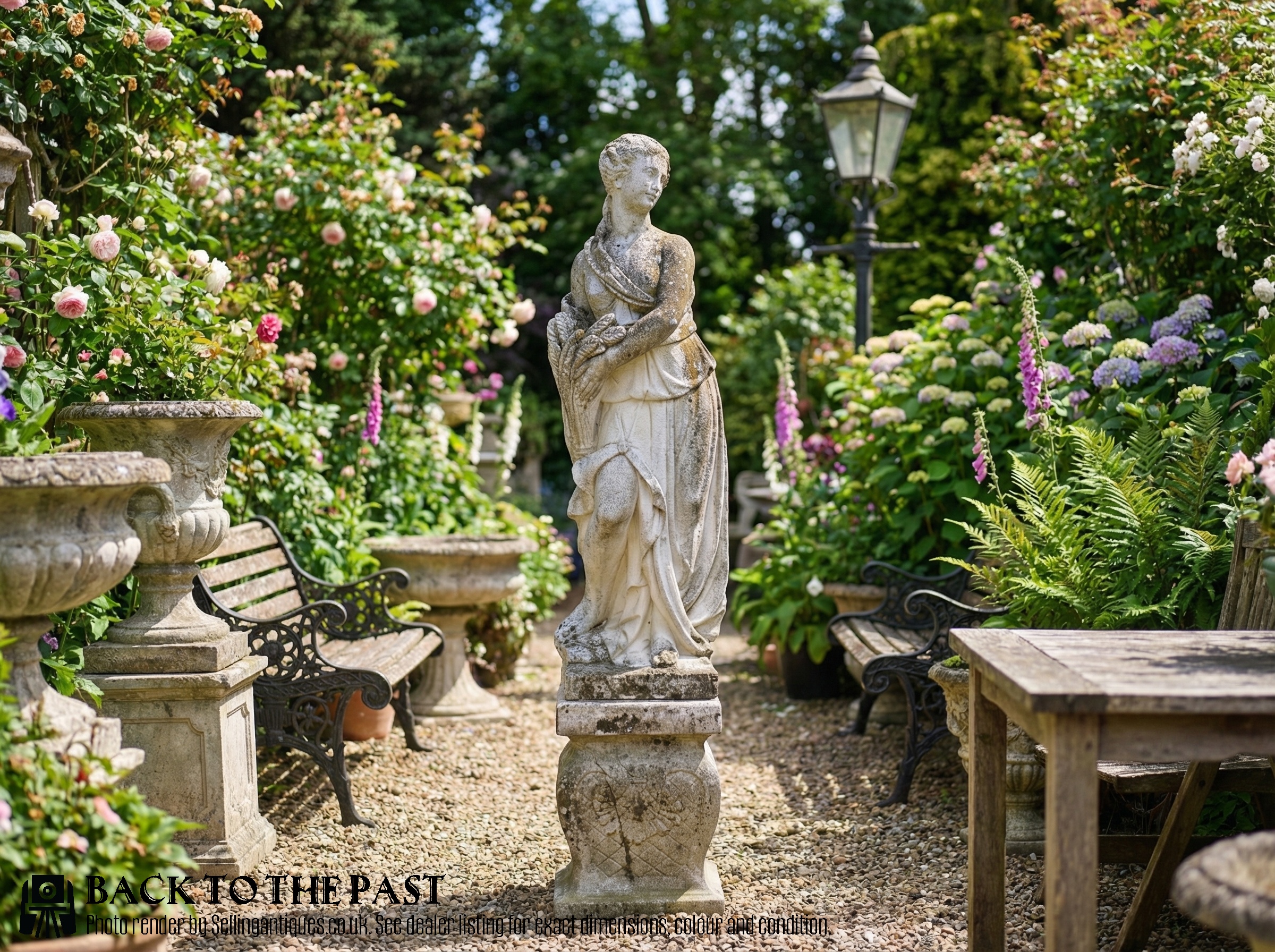
Neoclassical Stone Garden Statue
A neoclassical stone garden statue brings formal classical design to grounds and terraces through figures, busts and pedestals. These sculptures draw directly on ancient Greek and Roman models, depicting figures such as Venus, Athena, draped ladies and allegorical representations of seasons like Summer.
The selections available here range from substantial nineteenth century carved marble works to twentieth century cast stone and composition pieces. Buyers encounter life sized female figures, detailed busts on pedestals, and stoneware plinths designed to elevate sculptural forms in a garden setting.
Originating from grand tour collections or later revival periods spanning the nineteenth and twentieth centuries, these statues introduce architectural dignity to landscape design. Many examples pair a principal figure with an integrated or matched stone pedestal to create a commanding focal point.
Materials and methods of construction
Cast stone, reconstituted stone and composition stone offer durable alternatives utilised from the late nineteenth century through the twentieth century. These moulded materials allow for the mass production of detailed garden statuary, plinths and pedestals while retaining the heavy weight and weathered texture of natural stone.
Una and her loyal lion stand ready to guard the garden terrace in carved solid marble.
Distinctions in quality and execution
The distinction between standard garden ornaments and superior pieces rests upon the quality of the carving and the fidelity of the sculptural form. Hand carved solid marble works display subtle transitions in facial expression and naturalistic folds in drapery that mass poured cast stone cannot replicate.
Proportion and the handling of anatomical details separate fine classical revival pieces from simpler garden masonry. Superior works exhibit careful attention to the stance of figures like Venus or Athena, alongside well proportioned pedestals that complement the sculpture above.
The Neoclassical Stone Garden Statue Glossary
- Neoclassical
- A style reviving the design, forms and motifs of ancient Greece and Rome. This aesthetic dominates the proportions and subjects of these garden sculptures.
- Reconstituted stone
- A manufactured material made from crushed stone and a binder, cast in moulds to create garden ornaments and statues. It provides the appearance of natural stone at a lower production cost.
- Plinth
- A heavy base or pedestal that supports a statue, bust or urn. These architectural supports raise garden sculptures to a prominent viewing height.
- Carrara marble
- A type of white or blue grey marble quarried in the city of Carrara in Italy. Sculptors have utilised this fine grained stone for centuries to carve detailed figures and busts.
Neoclassical Stone Garden Statue: Frequently Asked Questions
What materials are these garden statues made from?
The pieces utilise a range of materials including natural carved marble, Carrara marble, stoneware, and plaster alongside moulded cast stone, reconstituted stone and composition stone. Natural marble indicates hand carved production, while cast and composition options utilise moulded aggregates.
Selecting between these materials depends on desired detail and weight. Carved marble offers unique hand worked surfaces, whereas reconstituted and cast stone provide robust alternatives suited for outdoor garden display.
How do I choose the right pedestal?
Pedestals and plinths are designed to elevate statues and busts, providing structural support and visual presence within a garden or terrace. Matching a heavy stone bust with a sturdy nineteenth century stoneware plinth ensures stability and correct architectural proportion.
Consider the scale of the sculpture when selecting a base to maintain balance. Taller figures require wider, heavier pedestals to anchor the piece securely in an outdoor landscape.
What periods do these sculptures date from?
The available pieces primarily span the nineteenth century and the twentieth century, with examples recorded from the eighteen eighties through nineteen fifty. Nineteenth century works often include grand tour marble sculptures and stoneware plinths, while later decades feature cast and composition stone.
Earlier nineteenth century pieces reflect traditional carving traditions, whereas twentieth century examples demonstrate the expansion of cast stone manufacturing techniques for garden ornamentation.
Are these pieces suitable for outdoor display?
Most statues, plinths and sculptures listed are designed specifically for garden and landscape settings. Materials like cast stone, reconstituted stone, stoneware and solid marble withstand outdoor weathering when placed on stable ground or pedestals.
Heavier stone and marble figures require level foundations to prevent shifting over time. Regular placement on dedicated stone plinths also keeps sculptures elevated above damp soil.