
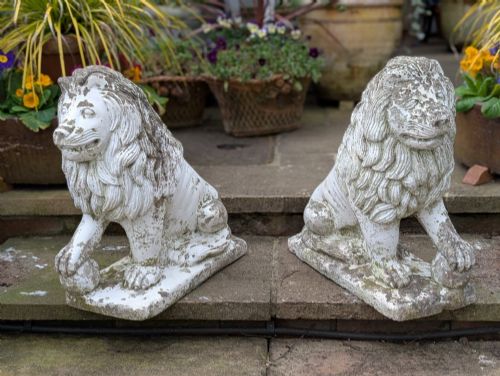
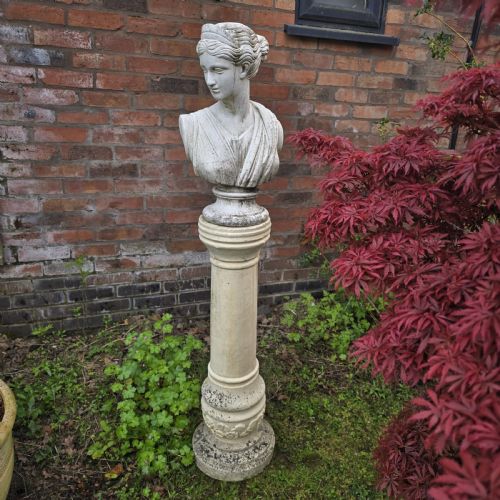


Vintage Stone Statue Plinth
A vintage stone statue plinth gives a garden sculpture or classical bust the architectural elevation and grounding it requires to command a terrace.
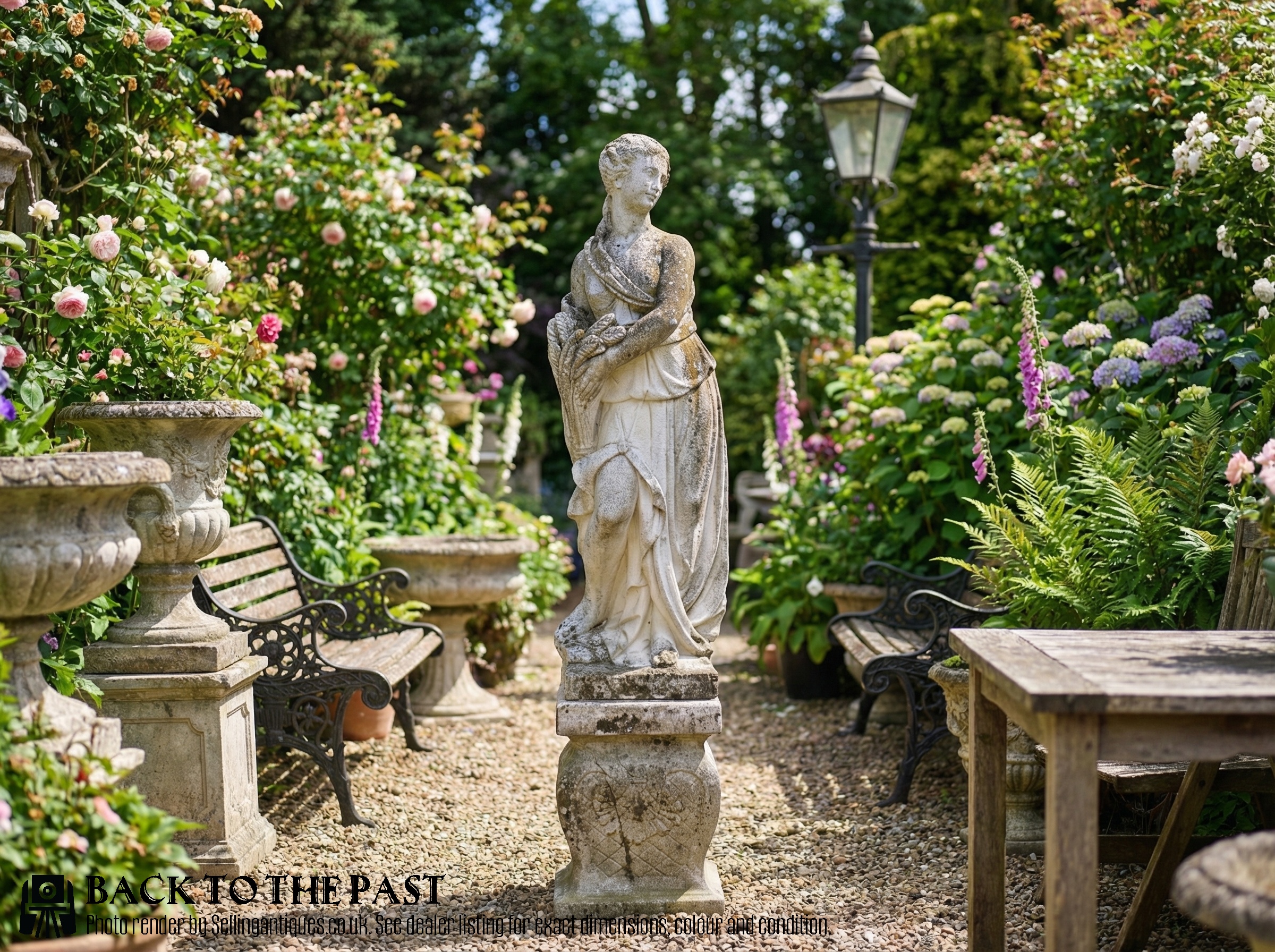
Vintage Stone Statue Plinth
A vintage stone statue plinth supports sculptural works ranging from garden statues and garden statuary to indoor busts. These architectural supports elevate focal pieces within a garden or interior scheme.
Buyers encounter standalone pedestals and columns alongside integrated compositions where the statue rests permanently upon its base. Materials span reconstituted stone, cast stone, and various marbles including Carrara and Arabescato.
The selection extends from nineteenth-century stoneware plinths and French Medici lions to mid-twentieth-century garden figures such as the Four Seasons and individual Greek ladies. Neoclassical and classical revival styles dominate the available forms.
How these supports were constructed
Masons shaped natural stones like Carrara and Arabescato marble using traditional carving techniques to form smooth columns, torchères, and classical plinths. These marble supports exhibit natural veining and precise architectural profiles.
Cast and reconstituted stone alternatives utilised moulds to shape composite materials for garden statuary and plinths. This technique allowed workshops to produce durable architectural elements designed to weather outdoors.
Finishes such as paint were occasionally applied to stone surfaces, while weathering accrued naturally on nineteenth-century stoneware and twentieth-century garden pieces left exposed to the elements.
Several stone youths and four distinct seasonal figures stand quietly waiting to hold up your favourite bust.
What distinguishes finer examples
The refinement of the carving and moulding separates standard garden supports from exceptional architectural columns. Crisp fluting, sharp acanthus details, and balanced proportions elevate a piece above utilitarian mass-produced alternatives.
Material selection dictates the character and longevity of the object, with solid Carrara and Arabescato marble offering dense, lustrous surfaces compared to simpler cast stone variants. The natural weathering on older stoneware adds an appealing patina that machine ageing cannot replicate.
The Vintage Stone Statue Plinth Glossary
- Plinth
- A heavy rectangular or square base supporting a statue, column, or bust. It lifts the sculpture off the ground to improve its visibility.
- Torchère
- A tall ornamental stand or pillar originally designed to carry a torch or candle. In later periods, it functioned as a sculptural pedestal.
- Reconstituted stone
- A composite material made from crushed stone and cement binder moulded into architectural shapes. It provides a durable alternative to quarried block.
- Carrara marble
- A type of white or blue-grey marble quarried in Italy. Sculptors prized it for its fine grain and consistent texture.
- Neoclassical revival
- An artistic movement drawing inspiration from classical antiquity. It emphasises strict proportions, symmetry, and restrained ornamentation.
Vintage Stone Statue Plinth: Frequently Asked Questions
Where should I place a heavy marble column?
Heavy marble columns require a stable, level surface capable of supporting significant weight without shifting. Indoors, ensure hardwood floors or heavy carpets distribute the load evenly.
Outdoors, position the support on a solid paved terrace or concrete pad rather than soft soil to prevent subsidence over time.
Can reconstituted stone plinths stay outside in winter?
Reconstituted stone and cast stone pieces tolerate outdoor placement well if manufacturers designed them for garden use. Their dense composition resists typical seasonal moisture.
Protect vulnerable joints and prevent water accumulation in hollow sections to avoid frost damage during freezing temperatures.
How do I clean weathered garden statuary?
Remove surface dirt and organic matter gently using soft bristle brushes and clean water. Avoid harsh chemical cleaners that strip the historic patina or etch the stone surface.
Allow the stone to dry naturally after washing to preserve the weathered appearance accrued over decades.
How do I distinguish marble from cast stone?
Examine the surface under magnification to identify natural crystalline structures and veining characteristic of quarried marble. Cast stone often reveals tiny air bubbles from the moulding process.
Touch the material to feel its temperature, as natural stone generally feels cooler and denser than composite mixtures.