

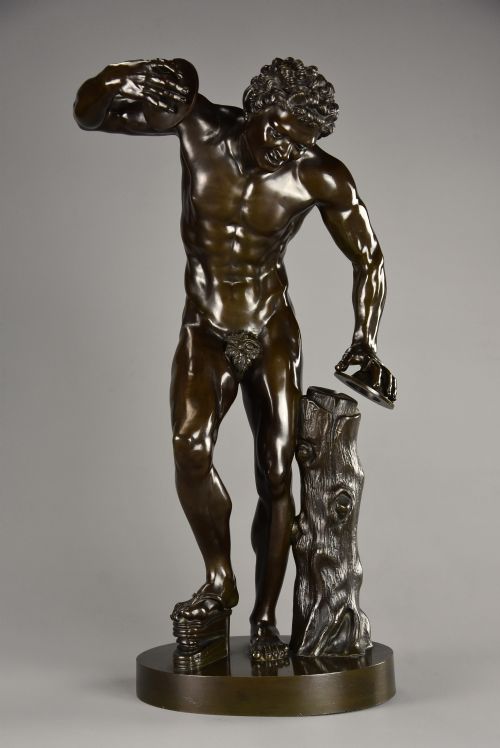


Classical Faun Sculpture
These classical faun sculpture pieces capture mythological figures in bronze, marble, and lead, bringing grand tour elegance and ancient myth directly into your home.
Classical Faun Sculpture
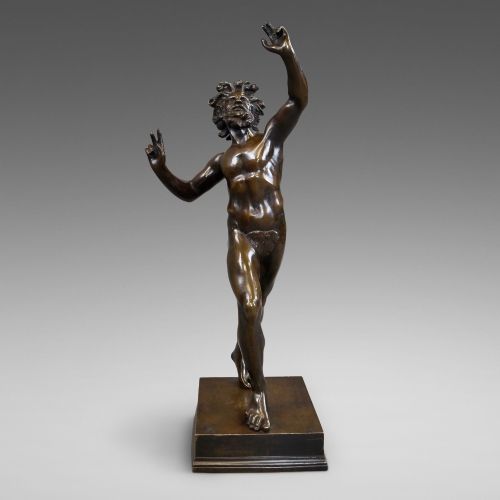
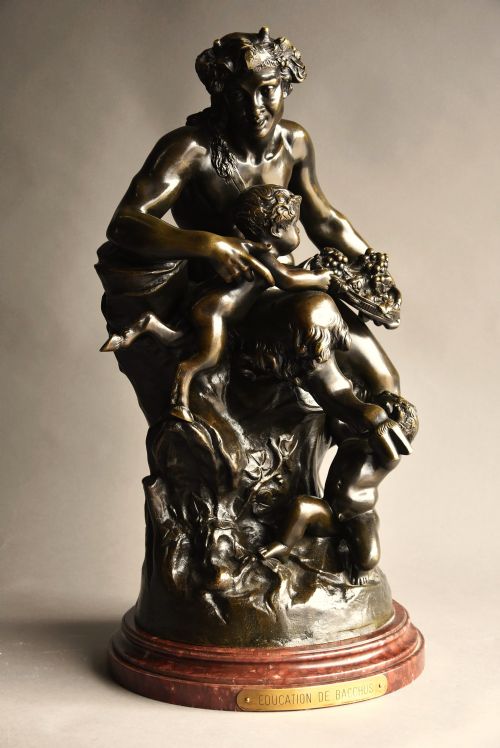
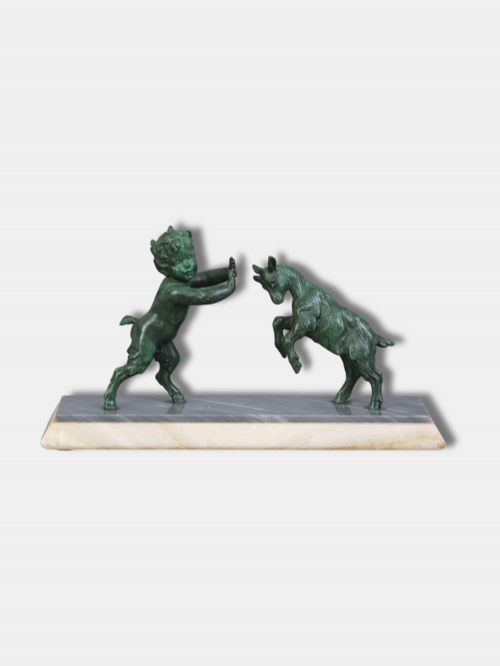
A classical faun sculpture depicts mythical woodland beings, often shown dancing, playing cymbals, pipes, or flutes, and interacting with figures like Bacchus or goats. These works draw heavily on ancient prototypes discovered during excavations at Pompeii and Rome, forming a key category of nineteenth-century decorative art.
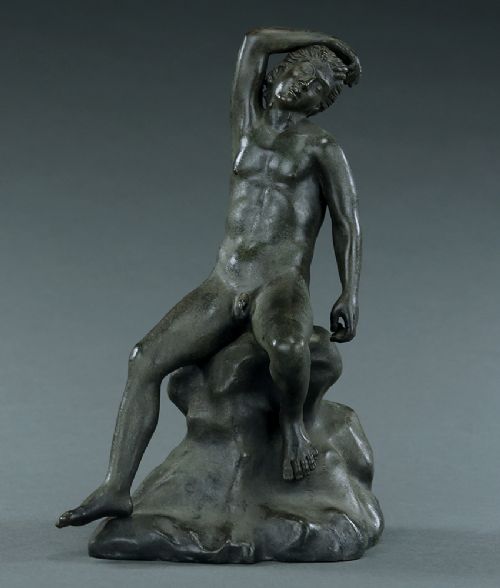
The versions most frequently met on this page are nineteenth-century bronze Grand Tour souvenirs, reductions of famous antiquities designed for European travellers. Pieces range in scale from cabinet-sized table ornaments to larger garden statues and groups cast in metal, plaster, or lead.
Materials and casting methods
Foundry workers utilised traditional bronze casting techniques to create these sculptures, applying chemical patination ranging from deep dark brown tones to bright verdigris and green finishes. Surface details such as hair, musculature, and musical instruments were chased by hand after casting to sharpen the definition.
Alternative materials include cast lead, carved marble, and moulded plaster, each offering a distinct weight and surface texture. Bronze reductions relied on accurate scaling from ancient marble originals housed in European museums.
Listings feature nineteenth-century materials including patinated bronze, cast lead, and plaster, reflecting both French and Italian foundry traditions.
Distinguishing quality in cast figures
The distinction between ordinary production and superior quality lies in the crispness of the chasing and the depth of the foundry work. Finer examples display lively facial expressions, articulated fingers and toes, and careful attention to the drapery or animal pelts.
Foundry marks and stamps provide evidence of the maker's workshop, while the richness of the patination and the stability of the mount contribute to the visual strength of the piece.
Emile Carlier·Augusto Rivalta
The Classical Faun Sculpture Glossary
- Grand Tour
- A traditional trip through Europe undertaken by upper-class young men in the eighteenth and nineteenth centuries to study classical art and architecture. Souvenirs purchased along the way often included small bronze sculptures of ancient statues.
- Patination
- The chemical treatment or natural weathering applied to the surface of metal to produce a specific colour and finish. Bronze figures often show dark brown, green, or verdigris patination.
- Reduction
- A smaller scale copy of a well-known full-size ancient statue or monument. These were produced using pointing machines or reduction apparatus to maintain accurate proportions.
- Satyr
- A mythological creature associated with Dionysus, possessing the ears and tail of a horse or goat alongside human form. They frequently appear in classical sculpture alongside fauns and bacchic figures.
Classical Faun Sculpture: Frequently Asked Questions
What is a classical faun sculpture?
A classical faun sculpture depicts a mythological half-man, half-goat figure engaged in music, dance, or revelry. Most examples on this market date from the nineteenth century and reference famous ancient discoveries.
These pieces served as decorative cabinet bronzes or library ornaments for collectors of classical antiquities.
How can I tell a Grand Tour bronze from a later copy?
Nineteenth-century Grand Tour bronzes typically exhibit hand-chased surface details, warm patination, and substantial weight appropriate for hot-cast metal. Closer inspection of the underside often reveals threaded bolts or casting seams characteristic of period foundry work.
Later modern reproductions often lack the fine tool marks and nuanced colouration found in nineteenth-century souvenirs.
Where were these sculptures displayed originally?
In the nineteenth century, these bronzes decorated libraries, studies, and drawing rooms as symbols of classical learning and refined travel. Larger figures occasionally occupied entrance halls or garden settings.
Today, they function well on desk surfaces, bookcases, or side tables where light can catch the patinated metal.
What does verdigris patination mean?
Verdigris is a green patina that forms naturally on copper and bronze over time, or is chemically applied by a foundry to simulate ancient burial. This green finish echoes the appearance of excavated antiquities recovered from archaeological sites.
Such patination adds visual texture and historical character to nineteenth-century cabinet bronzes.