




Classical Empire Style Candelabra
These classical empire style candelabra bring striking architectural symmetry and rich metalwork to a room, offering both functional light and grand decorative presence.
Classical Empire Style Candelabra
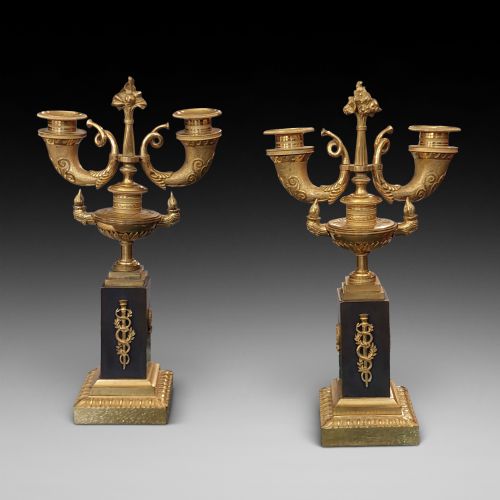
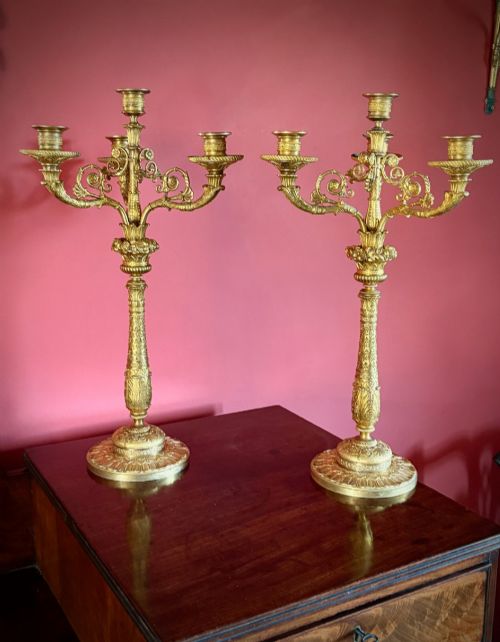
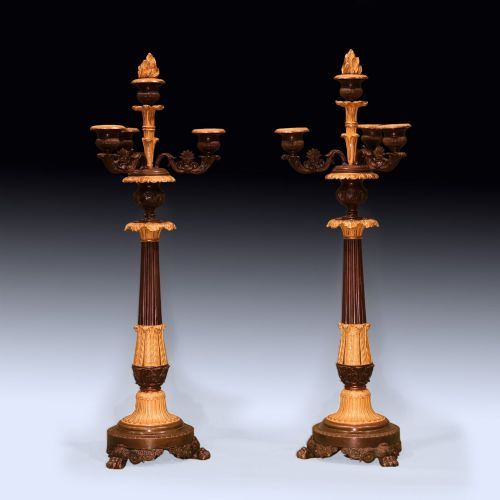
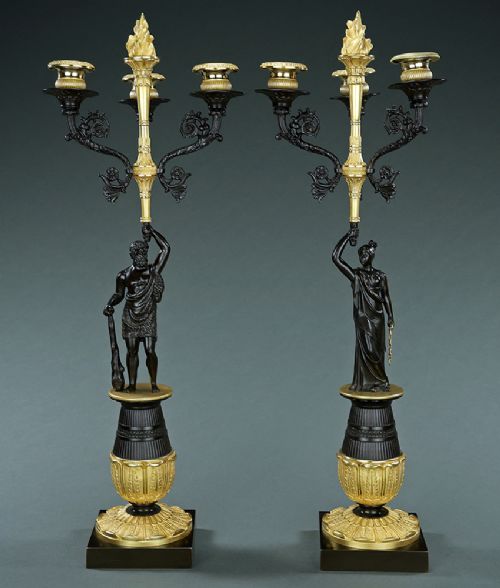
Classical empire style candelabra are substantial lighting fixtures rooted in neoclassical design, most frequently seen here as paired mantel pieces from the nineteenth century. These objects combine figural or architectural standards with multiple branch arms designed to hold candles.
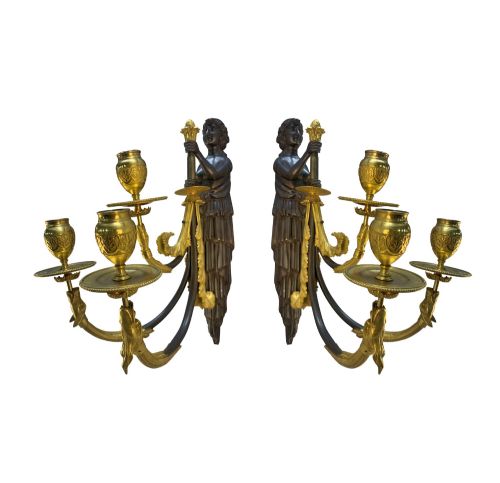
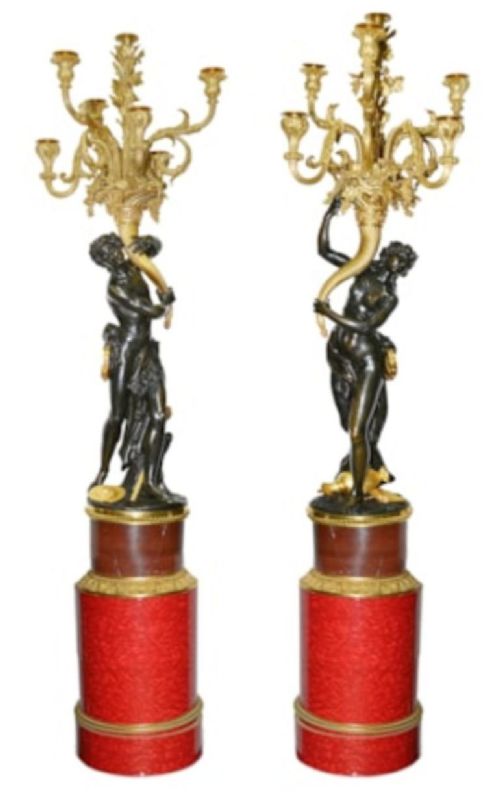
The selection ranges across nineteenth-century interpretations, including French Empire, Regency, and Louis XVI styles. Buyers regularly encounter pairs featuring patinated bronze bodies contrasted with gilded metal mounts, alongside variants incorporating marble or onyx bases.
Materials and Construction
The foundational structures rely on cast bronze, brass, or patinated metal, shaped into classical figures, pedestals, or foliate scrolls. Artisans frequently combined dark patinated bronze with bright ormolu or gilt bronze to create strong visual contrast across the design.
Many examples integrate natural stone elements, utilising white marble, siena marble, or onyx for plinths and bases. Individual components were cast separately and joined mechanically, allowing for complex multi-branch candelabra and articulated wall lights.
Classical Empire Style Candelabra Retail Price Guide 2026
Typical asking prices for classical empire style candelabra among the pieces listed under this phrase on Sellingantiques today, from the lower quarter to the upper quarter. They describe what is for sale here now, not the wider market.
Listings feature nineteenth-century works spanning French Empire, Regency, and Louis XVI styles, executed in bronze, ormolu, marble, and brass.
Distinctions in Quality
The integration of materials also dictates standing. Pieces that combine heavy cast bronze with solid marble bases and well-preserved fire gilding demonstrate superior craftsmanship compared to later, lighter brass iterations.
The Classical Empire Style Candelabra Glossary
- Ormolu
- A technique of applying finely ground high-carat gold to a bronze object using a mercury amalgamation process. This finish provides a warm, durable lustre characteristic of period pieces.
- Patinated Bronze
- Bronze treated with chemical solutions to produce a dark brown or black surface finish. This dark tone highlights the brighter gilt highlights alongside it.
- Clock Garniture
- A set comprising a central mantel clock flanked by matching decorative objects such as candelabra or urns. These matched suites dominated formal nineteenth-century mantelpieces.
- Grand Tour
- The nineteenth-century practice where wealthy travellers collected classical antiquities and souvenirs across Europe. Pieces from this context often incorporate classical maiden figures or architectural motifs.
- Regency
- A British design period spanning the early nineteenth century that drew heavily on classical Roman, Greek, and French Empire aesthetics. Works from this era frequently pair dark bronze with gilt metal.
Classical Empire Style Candelabra: Frequently Asked Questions
How do I clean antique ormolu?
Maintenance requires only very gentle dusting with a soft, dry brush to protect the delicate gold surface. Avoid all commercial metal polishes, as abrasive compounds will strip away the historic gilding.
Moisture should be kept away from both the metal and any integrated stone or marble bases. Professional conservation is recommended if deeper cleaning becomes necessary.
Were these made exclusively for candles?
Nineteenth-century examples were designed entirely for wax candles, providing ambient illumination for formal rooms before the widespread adoption of domestic electricity. Many surviving pieces retain their original socket configurations and drip pans.
While some owners choose to adapt them for electrical wiring, retaining their original form preserves their historical integrity and physical structure.
How do I tell French Empire from Regency style?
French Empire pieces typically exhibit strict adherence to Napoleonic iconography, featuring militaristic motifs, laurel wreaths, and classical deities rendered in heavy gilt and patinated bronze. They lean towards formal, monumental proportions.
Regency examples, produced in Britain during a similar timeframe, often incorporate lighter interpretations of classical forms with distinct local cabinetmaking traditions and occasional use of brass alongside bronze.
What is a clock garniture set?
A clock garniture is a unified decorative ensemble consisting of a central mantel clock accompanied by matching side pieces like candelabra or vases. These suites were manufactured as cohesive decorative statements for prominent display.
Matching materials such as siena marble, onyx, and ormolu link the clock and its flanking candelabra into a single visual composition.