



French Empire Table Light
When you seek a French Empire table light, you look for classical proportion, gilt bronze and substantial weight.
French Empire Table Light
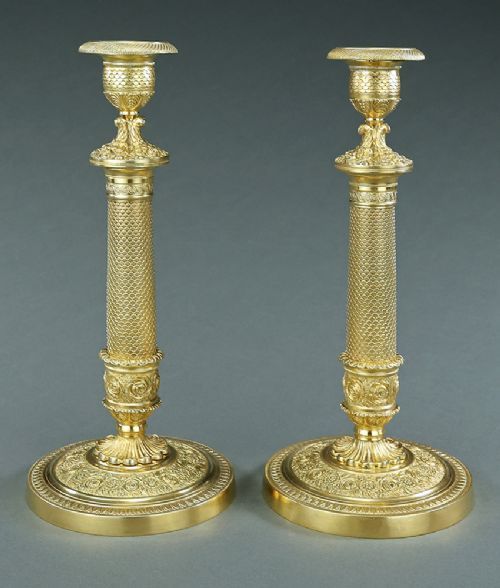
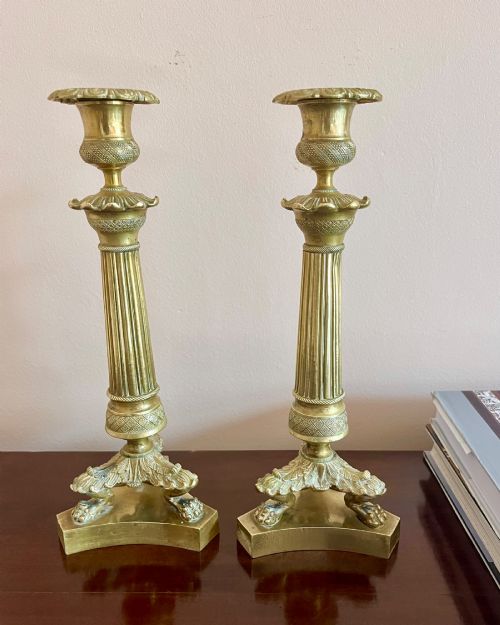
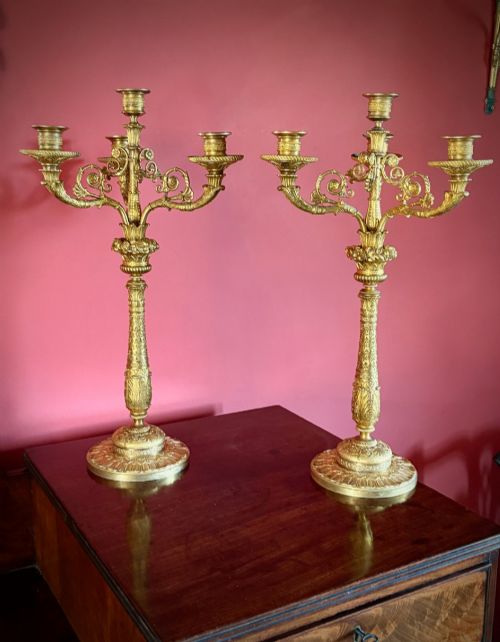
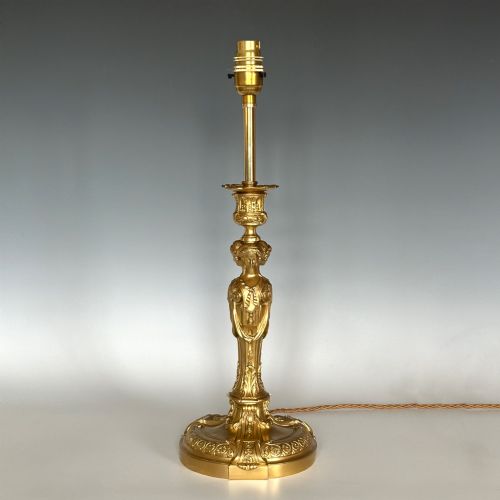
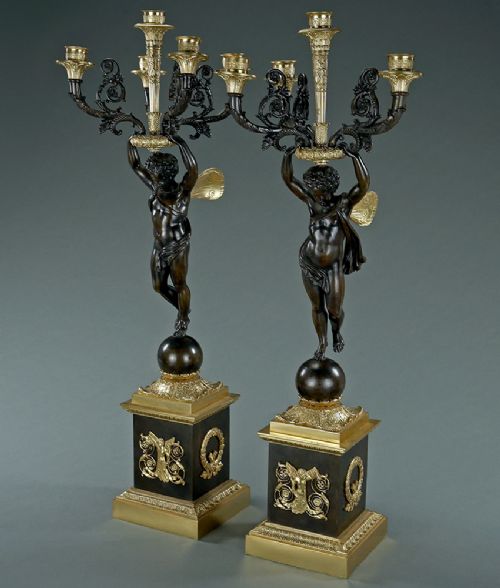
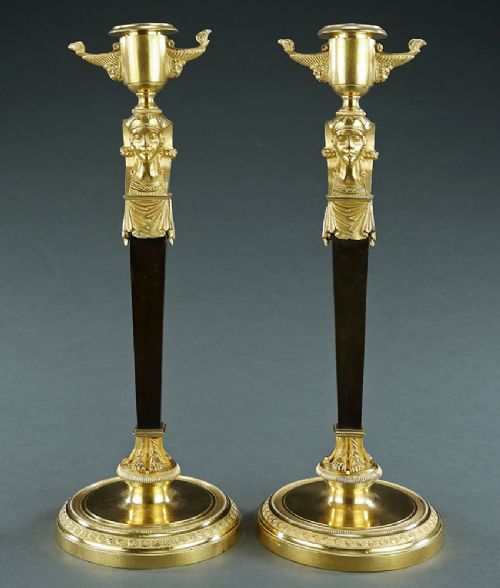
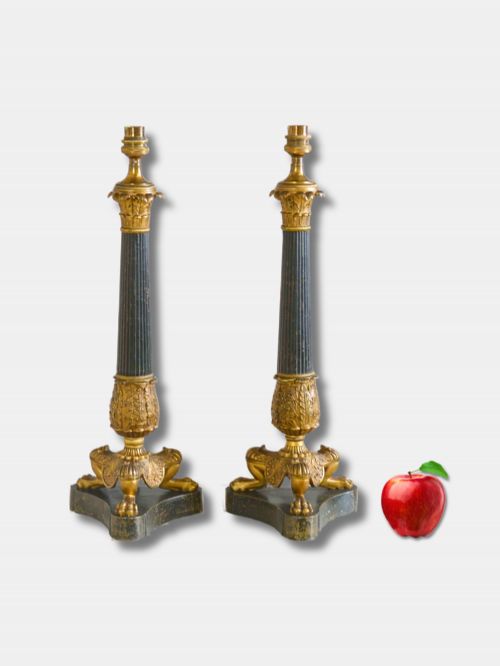
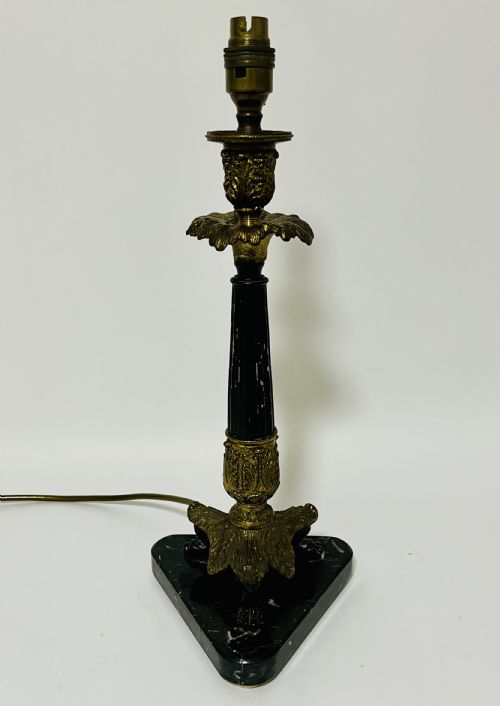
A French Empire table light brings classical architectural form and rich metallic finish to a room, drawing on neoclassical motifs from the early nineteenth century and later revivals. Buyers find an array of candlesticks, candelabra and converted lamps that deploy columns, lions' paws and figural mounts.
The objects appearing on this page span from the nineteenth century into the early twentieth century, including pieces made during the French Empire period itself alongside later Regency, Victorian and revival interpretations. Candlesticks with multiple arms and column lamps form the majority of the selection.
Many items started life as oil lamps or candleholders before receiving later electrical wiring, while others retain their original configuration for candles alone. Symmetrical pairs dominate the offerings, making them suitable for flanking sideboards or mantels.
How they were made
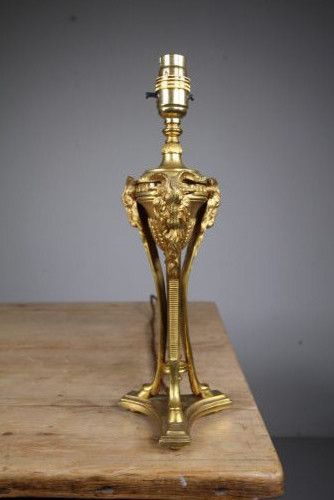
Foundries cast bronze and brass components before applying fire-gilding or ormolu finishes that imparted a bright golden sheen to the metalwork. Artisans frequently combined patinated dark bronze with polished gilt bronze to create strong tonal contrasts across the shaft and base.
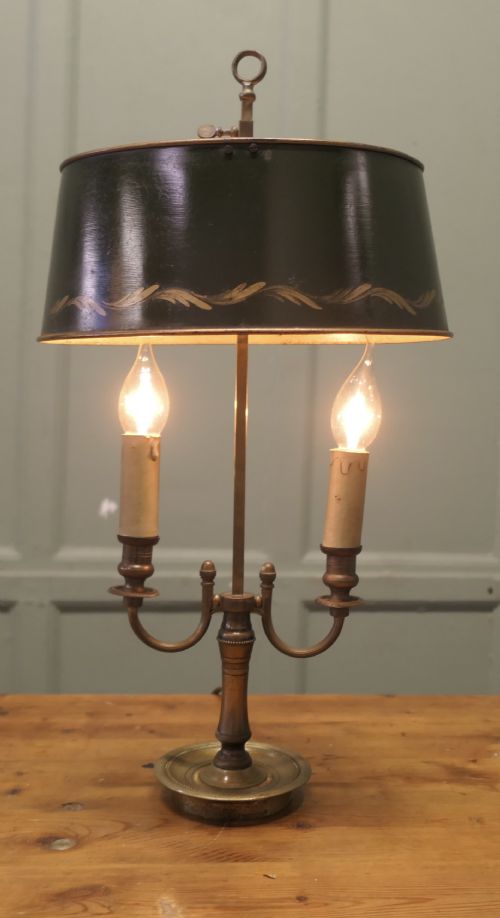
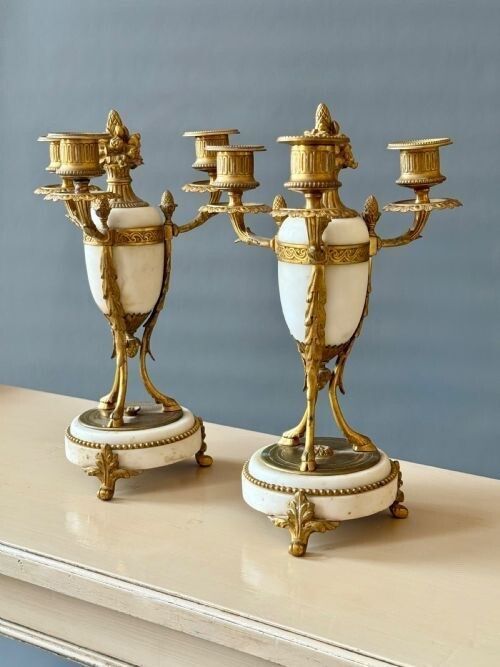
White and coloured marble often served as plinths and bases, providing a stable foundation and a smooth textural contrast to the cast metal elements. Toleware shades appeared on specific desk lamp forms, constructed from painted sheet metal to direct the illumination downwards.
Listings feature materials spanning ormolu, patinated bronze, toleware, silk and white marble.
What varies in quality
Heft and structural integrity distinguish superior castings from lighter, hollow alternatives. The weight of the bronze and the solidity of the marble base reveal the original investment in materials.
Pierre Philippe Thomire·Rabiat·Auguste Cain
The French Empire Table Light Glossary
- Ormolu
- A technique of applying finely ground high-carat gold amalgam to a bronze object, which is then heated to drive off the mercury. The resulting finish provides a durable golden surface that resists tarnish.
- Bouillotte lamp
- A metal desk lamp featuring a central shaft, multiple candle arms and an adjustable painted toleware shade. It takes its name from a French card game played in the eighteenth and nineteenth centuries.
- Candelabra
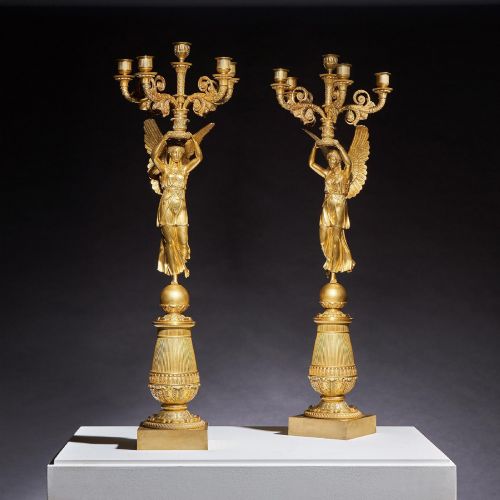
- A branched candlestick designed to hold multiple candles simultaneously. These fixtures often feature removable branches to allow use as simple candlesticks.
- Patinated bronze
- Bronze that has been chemically treated to achieve a dark brown or green surface colour. This contrasts with the bright sections of gilt metal.
- Caryatid
- A sculpted female figure serving as an architectural support in place of a column. They frequently appear supporting the shafts of classical candlesticks.
French Empire Table Light: Frequently Asked Questions
Are these lights wired for electricity?
Many examples on this page have been converted for modern electrical use while retaining their historic metal bodies.
Buyers should inspect the individual listing details to confirm whether a piece functions as an electric lamp or remains configured strictly for candles.
How do I clean gilt bronze safely?
Dusting with a soft dry cloth is the safest way to maintain ormolu and gilt bronze surfaces over time.
Harsh chemical polishes must be avoided entirely, as they strip away the thin layer of gold and expose the base metal underneath.
What is the difference between Empire and Regency?
French Empire style emerged under Napoleon and drew direct inspiration from the art of ancient Rome and Greece, favouring military trophies and classical deities.
Regency is the British equivalent from a similar era, sharing neoclassical roots but incorporating distinct local motifs and cabinet-making traditions.
Can I use standard bulbs in converted lamps?
Converted table lamps typically accept standard modern lamp fittings installed during their conversion process.
It is advisable to consult a qualified electrician to check the internal wiring and ensure compatibility with current safety standards.