


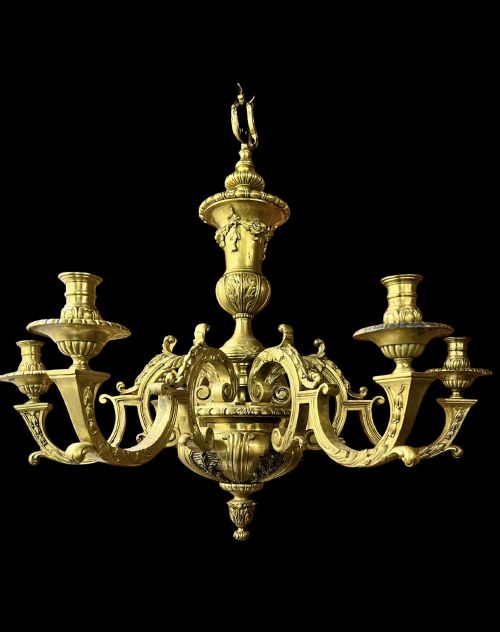


Classical Brass Candelabrum
A classical brass candelabrum brings structured lighting and grand decorative weight to a room through traditional metalwork.
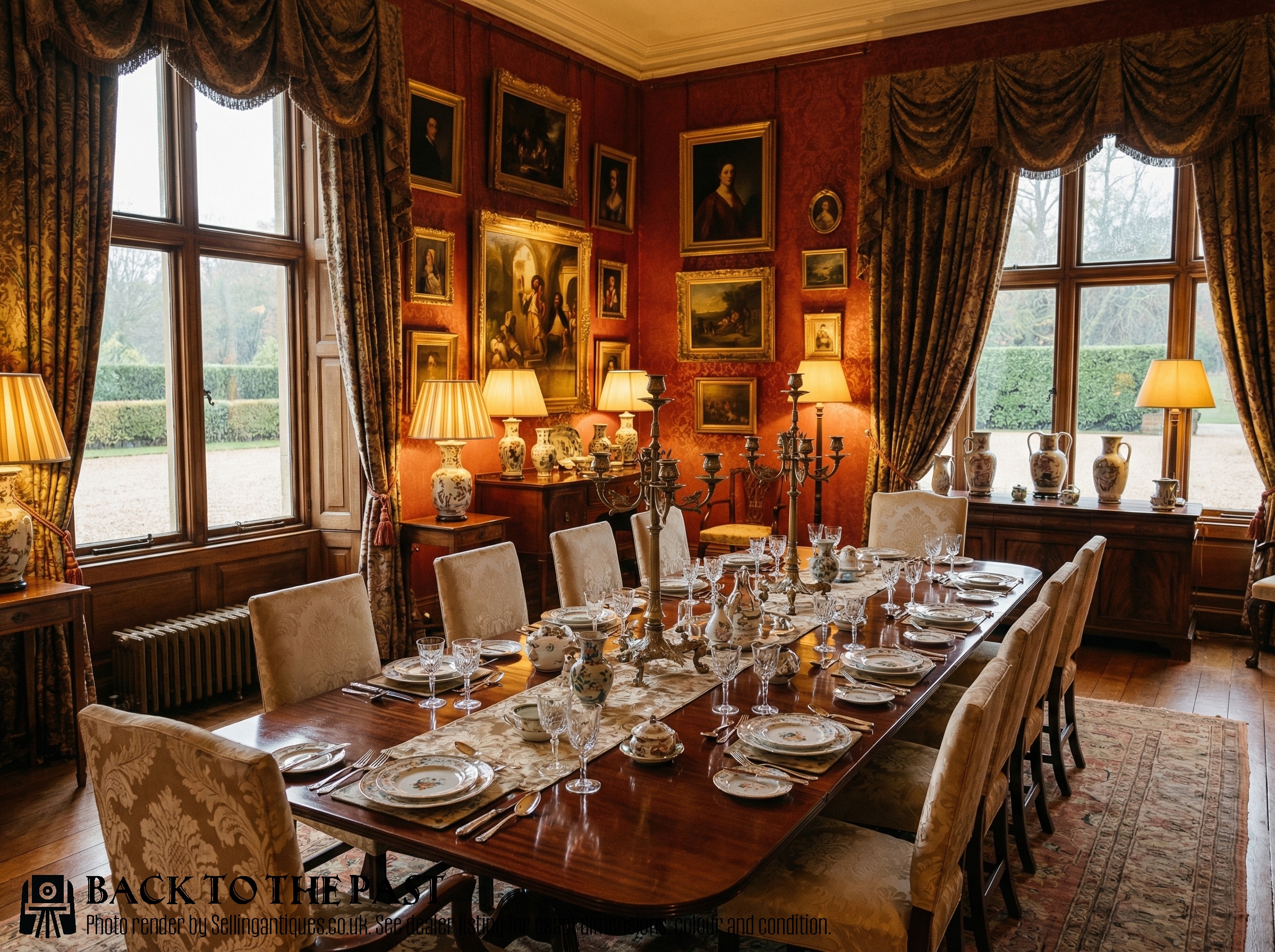
Classical Brass Candelabrum
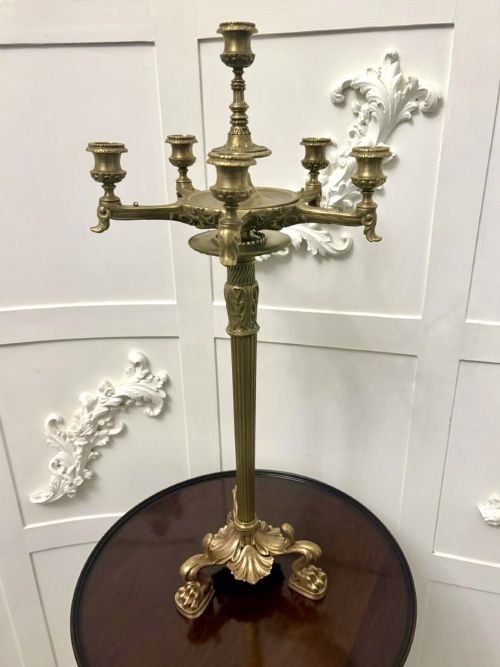
A classical brass candelabrum is a branched lighting fixture designed to hold multiple candles, appearing frequently in nineteenth-century forms.
The selections available here span periods from the Victorian era into the early twentieth century, reflecting styles such as French Empire, Neoclassical, and Louis XVI.
While primarily categorised as candelabra, the listings also reveal related decorative objects including table lamps, clock garnitures, and wall sconces.
Materials and construction methods
Metalworking techniques rely heavily on cast brass, gilt bronze, and ormolu, providing heavy metallic structures with detailed surface finishes.
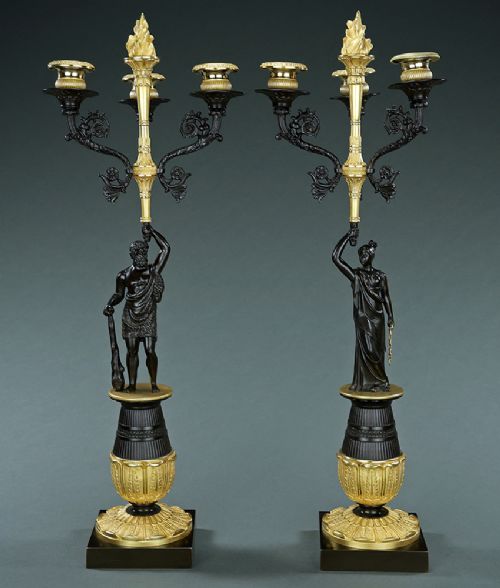
Many pieces incorporate contrasting materials such as marble or onyx bases, alongside patinated bronze and parcel gilt highlights.
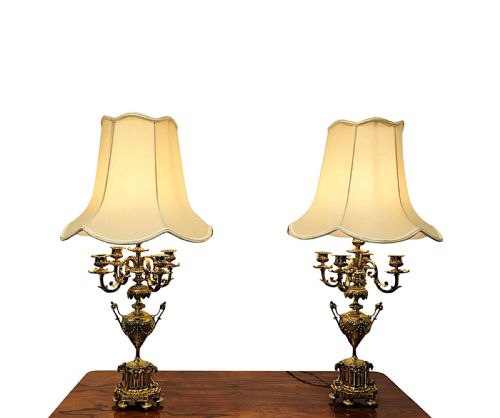
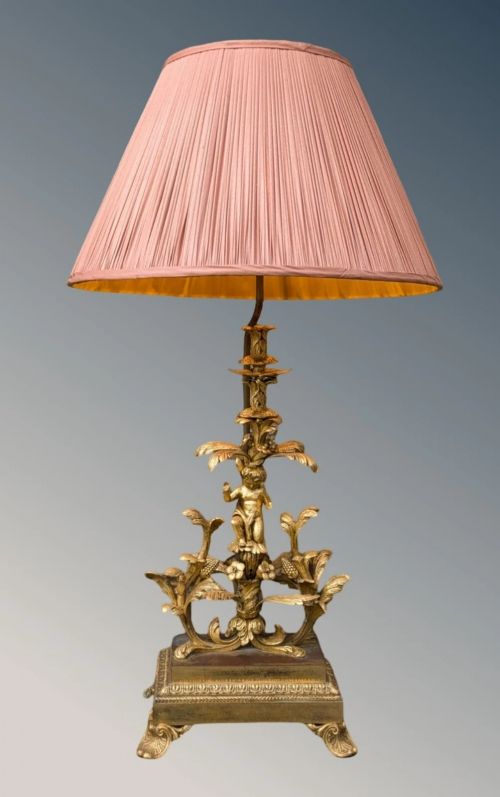
Some examples utilise enamel or incorporate later electrical conversions where candelabra are adapted into table lamps.
Listings feature 19th Century, Victorian, and early 20th Century periods alongside materials such as gilt bronze, ormolu, marble, and cast brass.
Assessing manufacture and design
Superior examples demonstrate crisp definition in cast metal ornament, particularly within figurative elements such as cherubs or mythological subjects.
The integration of secondary materials like marble or green onyx affects the visual balance and overall weight of the piece.
Finer items exhibit careful chasing and mercury gilding or ormolu surface treatments that retain deep lustre across multiple candle branches.
Thiebaut Freres·Deniere Paris
The Classical Brass Candelabrum Glossary
- Ormolu
- A technique of applying finely ground high-carat gold to a bronze or brass object using a mercury amalgam. This imparts a rich, golden finish characteristic of French decorative arts.
- Gilt Bronze
- Copper alloy treated with a gold coating to simulate solid gold metalwork. It appears frequently on nineteenth-century French and English decorative items.
- Clock Garniture
- A matching set consisting of a centre mantel clock flanked by paired side ornaments such as candelabra or urns. These sets dominate formal interior arrangements from the Victorian period.
- Candelabra
- A branched candlestick holder designed to support several candles simultaneously. They range from simple twin-arm designs to large multi-branch focal pieces.
- Patinated Bronze
- Bronze metal that has been chemically treated to produce a darkened surface colour. This dark tone provides contrast against gilt metal details.
Classical Brass Candelabrum: Frequently Asked Questions
What is a classical brass candelabrum?
A classical brass candelabrum is a multi-branched lighting fixture designed for holding candles, rooted in nineteenth-century decorative traditions. These pieces often feature neoclassical ornamentation, figural motifs, and heavy metal casting.
They serve as prominent decorative objects for mantlepieces, sideboards, and large tables. Many historical examples have also been adapted over time to function as table lamps.
How do I identify a Victorian candelabrum?
Victorian examples date from the nineteenth century and frequently combine cast brass or ormolu with marble bases. Their styling borrows heavily from French Empire, Rococo Revival, and Louis XVI aesthetics.
Look for heavy construction, multi-branch configurations, and detailed metalwork depicting cherubs or classical figures. Maker marks or stamps can sometimes confirm the period and origin.
Were these candelabra used for lighting?
Historically, these fixtures provided functional illumination in grand rooms before the widespread adoption of gas and electric lighting. Multiple candle branches allowed them to project significant light across a space.
Today, many survive in their original candle-holding state, while others have been professionally converted to electricity to serve as decorative lamps.
What is a clock garniture set?
A clock garniture is a matching decorative set comprising a central mantel clock accompanied by two matching side pieces. In the recorded items, these matching ornaments are frequently candelabra.
They were manufactured to sit together as a unified centrepiece on a fireplace mantel or large cabinet. The materials typically match across the entire set, incorporating ormolu, bronze, and marble.
How should I care for ormolu metalwork?
Ormolu requires gentle dusting with a soft, dry cloth to protect the thin gold layer from abrasion. Avoid using harsh chemical cleaners, silver polishes, or abrasive cloths that can strip the metallic surface.
Keep the pieces away from direct moisture and extreme temperature fluctuations to preserve both the brass base and the gilt finish.