


Brass Five Light Candelabrum
These brass five light candelabrum pieces bring heavy nineteenth century presence and branching candlelight to a room.
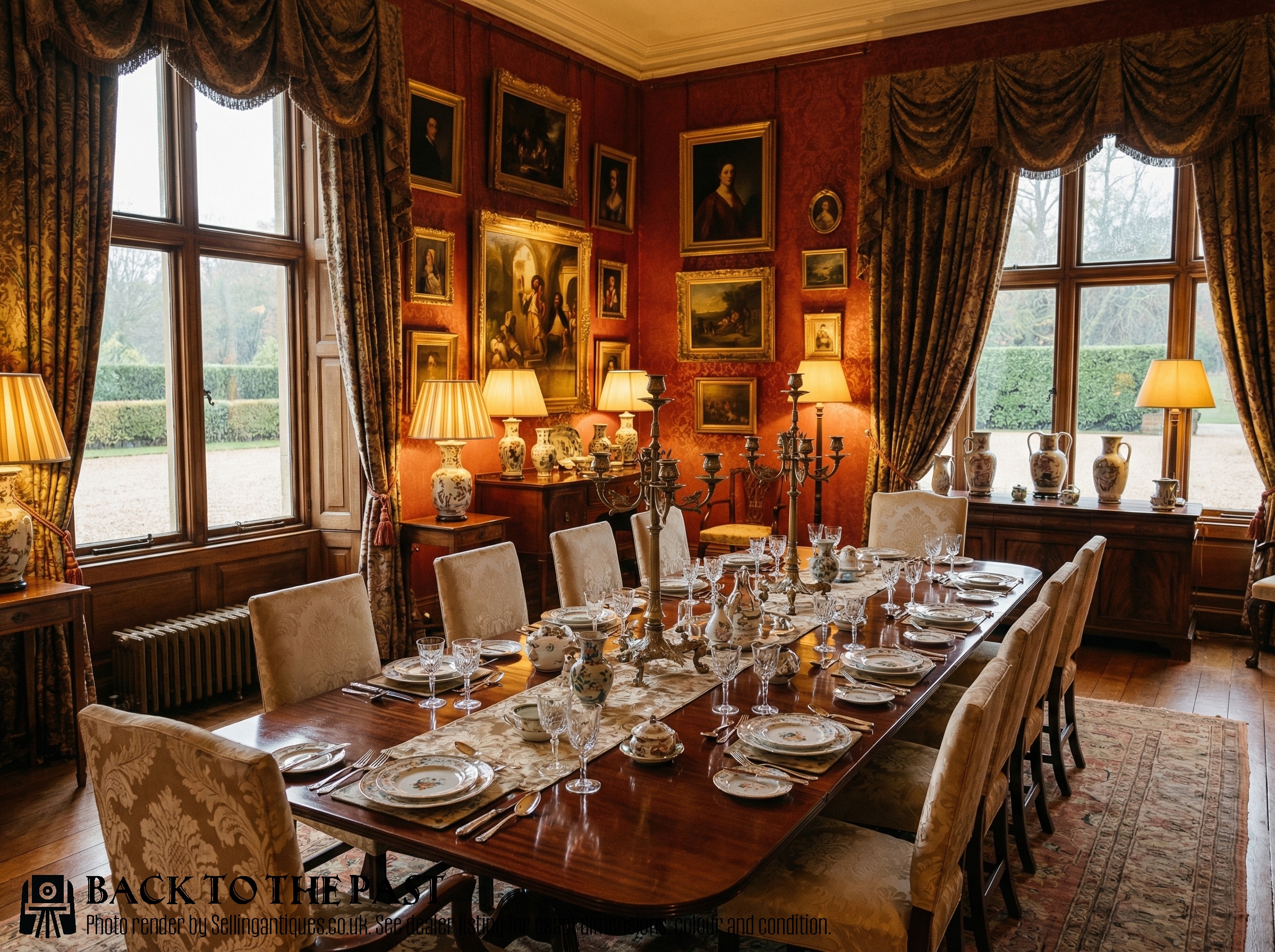
Brass Five Light Candelabrum
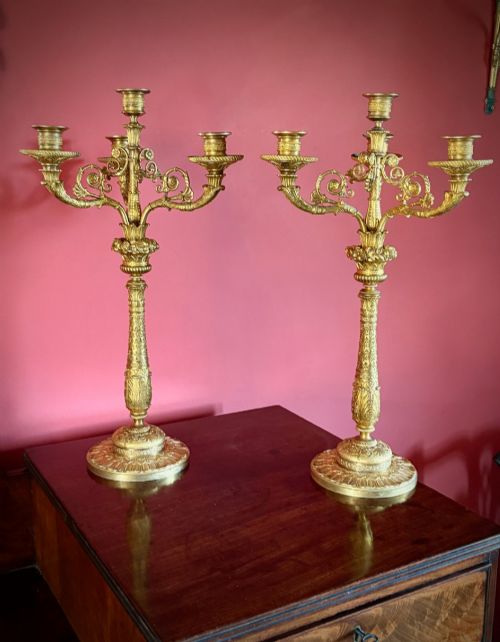
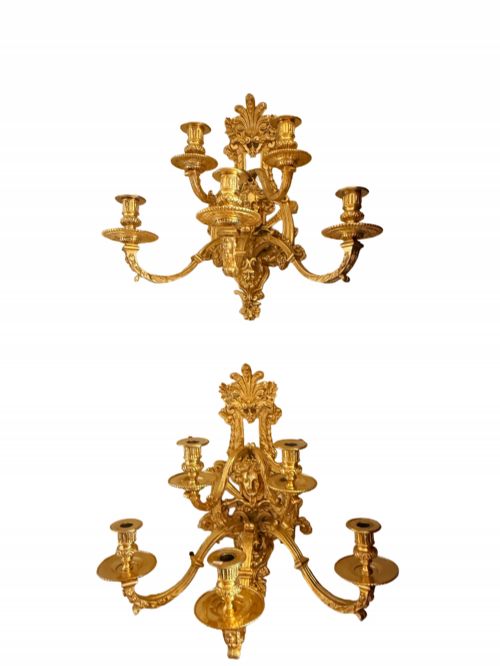
A brass five light candelabrum is a branched lighting fixture designed to hold five candles, appearing frequently as matching pairs across nineteenth century periods. These pieces take the form of freestanding table candelabra, wall sconces, and occasional hanging chandeliers with multiple branches.
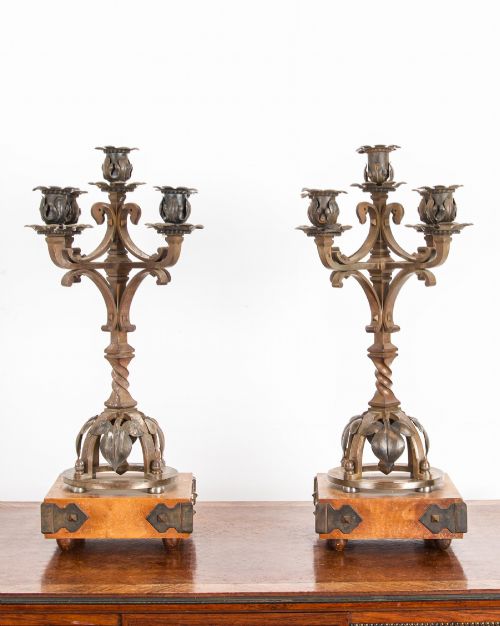
The selection here draws primarily on nineteenth century craftsmanship, featuring French Rococo Revival, Victorian Gothic Revival, and Arts and Crafts designs. Buyers encounter solid brass alongside gilt bronze, ormolu, and combinations incorporating marble bases or wrought iron details.
Origin points span English workshops and French ateliers, bringing distinct stylistic treatments to the arms and drip pans. Most examples present five distinct light positions arranged around a central stem or branching upward from a heavy foot.
How they were made
Foundry workers cast brass, gilt bronze, and ormolu components in sections before assembling the stems, drip pans, and candle nozzles with threaded connectors or pins. Many nineteenth century examples incorporate chased surface details applied by hand after the initial casting process.
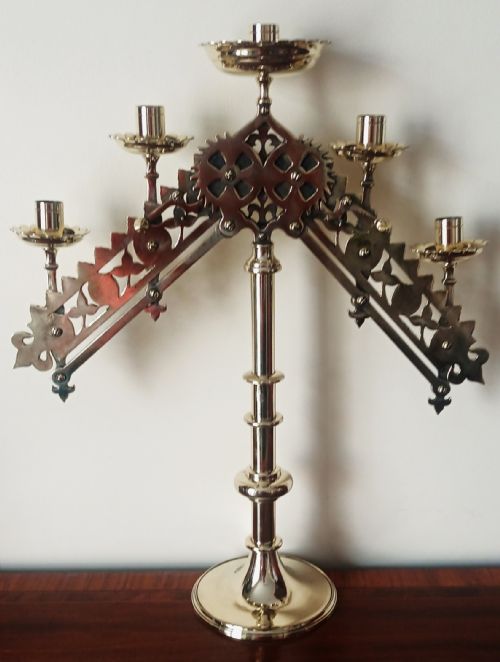
Makers integrated contrasting elements such as green marble plinths, gilt metal mounts, and wrought iron supports to vary the weight and silhouette of the branching arms. Articulated models utilised pivoting joints that allowed the candle arms to shift position.
Current listings span the nineteenth and early twentieth centuries, utilising brass, gilt bronze, ormolu, and green marble.
What varies in quality
The crispness of the casting and the depth of the hand-chased surface work separate standard production from exceptional examples. Heavier gauge metal provides structural stability to the branching arms, preventing the slight sagging seen in lighter pieces.
The integration of secondary materials, such as polished green marble bases or finely gilded ormolu finishes, dictates the visual authority of the piece. Matching pairs with intact original patination command greater attention than mismatched components or stripped surfaces.
The Brass Five Light Candelabrum Glossary
- Ormolu
- Finely ground high-carat gold applied to a bronze base using a mercury amalgam technique. This finish creates a warm, enduring lustre characteristic of French neoclassical and revival pieces.
- Candelabra
- A branched lighting fixture designed to hold multiple candles simultaneously. These objects feature a central column dividing into distinct arms ending in candle nozzles.
- Gilt Bronze
- Bronze metal coated with a layer of gold leaf or gold paint. It provides the rich appearance of solid gold while utilising a strong base metal.
- Drip Pan
- A small circular plate positioned beneath the candle nozzle to catch melting wax. These elements protect the arms and lower portions of the fixture during use.
- Gothic Revival
- An architectural and decorative style inspired by medieval forms. Pieces in this aesthetic often incorporate pointed arches, heavy tracery, and robust iron or brass construction.
Brass Five Light Candelabrum: Frequently Asked Questions
How do I clean antique brass candelabra?
Dust the piece regularly with a soft, dry cloth to prevent grime accumulation in the chased crevices.
Avoid chemical polishes that strip away historical patination and weaken the underlying metal surface.
Are these candelabra wired for electricity?
Most examples remain in their original candle-holding configuration designed for wax illumination.
Some wall sconces and chandeliers have undergone past conversions to electricity by previous owners.
How do I identify French styles?
French Rococo and Empire pieces display flowing organic asymmetry or strict classical symmetry with cast cherub and acanthus motifs.
English Victorian examples tend toward heavier geometric lines and distinct Gothic or Arts and Crafts influences.
Can articulated arms move safely?
Articulated brass models feature functional joints designed to pivot the branching arms into different configurations.
Careful handling ensures the internal pins and pivots remain secure over years of adjustment.