

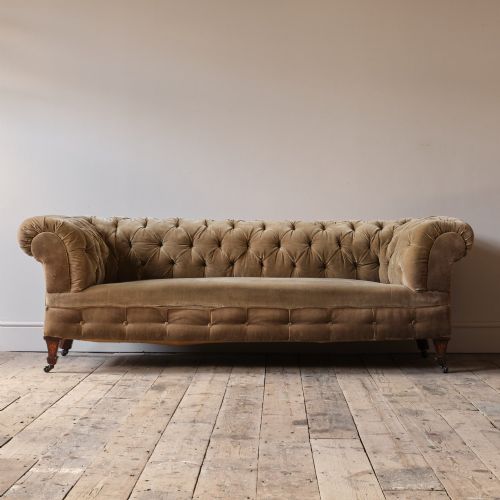
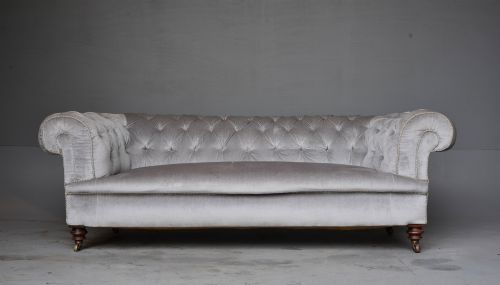


Classic Buttoned Sofa
A classic buttoned sofa brings deep comfort and formal presence into a room, offering enduring style through traditional tufting and rich upholstery.
Classic Buttoned Sofa
When you search for a classic buttoned sofa, you encounter substantial seating options primarily styled as Chesterfields, lounge suites, and settees from the nineteenth and early twentieth centuries. These pieces typically originate from periods such as the Victorian era, the nineteen-twenties, and the nineteen-thirties, showcasing traditional English craftsmanship.
The versions you are most likely to meet on this page feature deep buttoning and generous proportions designed for formal reception rooms or libraries. They span various forms including grand country house sofas, two-seat couches, and larger suites complete with matching chairs.
The construction reflects the heavy-duty domestic requirements of their time, employing sturdy hardwood frames built to withstand decades of daily use. Their enduring appeal lies in the combination of supportive interior stuffing and distinguished exterior coverings.
How they were made
The foundation of these sofas relies on robust timber frameworks constructed from hardwoods and mahogany, providing the essential skeleton for the heavy upholstery. Artisans built up the interior using traditional materials like horsehair and coil springing to ensure lasting resilience.
The distinctive tufted appearance is achieved through careful hand-buttoning, which pulls the covering deep into the padding to secure the shape. Upholstery choices range from traditional leather hides to tactile fabrics like velvet, secured with metal tacking where appropriate.
Classic Buttoned Sofa Retail Price Guide 2026
Typical asking prices for classic buttoned sofa among the pieces listed under this phrase on Sellingantiques today, from the lower quarter to the upper quarter. They describe what is for sale here now, not the wider market.
Some nineteenth-century models arrive bearing the distinct scent of old leather and horsehair, whispering tales of Victorian libraries.
What varies in quality
The standard of a piece is largely determined by the integrity of its internal stuffing and the original construction of the coil springing. Sofas retaining their authentic horsehair filling and tight hand-tied coils represent a higher tier of traditional craftsmanship.
The grade and condition of the leather or fabric covering also dictate the overall standard, with hand-dyed hides and period-appropriate materials holding greater appeal. Furthermore, the subtlety of the woodwork and the precision of the deep buttoning separate standard workshop output from exceptional examples.
Robert Strahan and Co·Howard and Sons
The Classic Buttoned Sofa Glossary
- Chesterfield
- A traditional style of sofa characterised by equal height arms and back, featuring deep button tufting throughout the inner panels. This form has remained a staple of British interior design for generations.
- Buttonback
- An upholstery method where buttons are pulled tight through the padding to create a uniform pattern of indentations. This technique secures the internal filling while providing a decorative textured finish.
- Horsehair
- A traditional stuffing material gathered from the manes and tails of horses, valued for its natural springiness and durability. Artisans utilised it extensively to pad quality seating before the advent of synthetic foams.
- Coil springing
- A system of interconnected steel wire springs mounted to the sofa frame to absorb weight and provide bounce. Traditional versions are hand-tied with twine to maintain even support across the seat.
- Hardwood
- Dense timber derived from broad-leaved deciduous trees, chosen for internal frames to prevent warping and ensure structural longevity. It provides the heavy, stable skeleton necessary for large upholstered furniture.
Classic Buttoned Sofa: Frequently Asked Questions
What is a Chesterfield sofa?
A Chesterfield is a traditional upholstered seat defined by its low back and arms that sit at the exact same height. The characteristic deep buttoning runs along the interior back and arms, creating a formal yet inviting silhouette.
Historically associated with gentlemen's clubs and country houses, this design has evolved into a versatile centrepiece for domestic living spaces. Its enduring popularity stems from the combination of generous proportions and robust internal framing.
How do I care for leather upholstery?
Leather upholstery requires regular dusting with a soft, dry cloth and occasional treatment with appropriate conditioners to prevent the hide from drying out. Keeping these pieces away from direct sunlight and strong heat sources protects the natural finish from fading.
Over decades of use, leather develops a natural patina that reflects its age and handling. Gentle maintenance preserves this surface character without stripping away the historical depth of the material.
Where were these sofas used?
These substantial seating pieces traditionally furnished the reception rooms, libraries, and drawing rooms of large British country houses and town residences. Their imposing scale and durable construction made them ideal for communal social areas.
Today, they transition easily into modern drawing rooms, studies, and open-plan living spaces. Their classic forms allow them to anchor both traditional period interiors and contemporary room schemes.
How do I identify the period?
Identifying the era involves examining the timber framework, the style of the feet, and the specific stitching techniques used beneath the upholstery. Victorian examples often display heavier proportions and turned wooden legs, while later twentieth-century pieces may show sleeker lines.
Materials such as horsehair stuffing and traditional coil springing point toward earlier manufacturing methods. Comparing the upholstery style with known design trends helps narrow down the decade of production.