
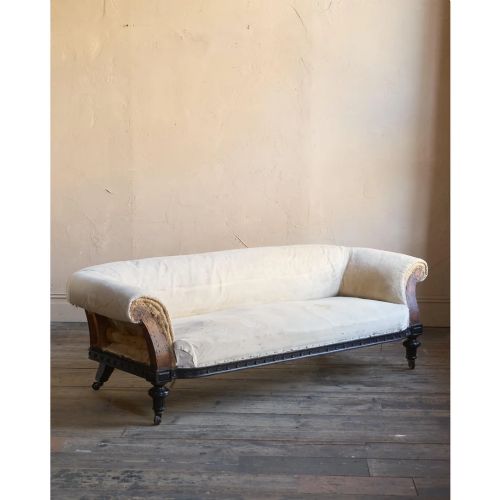
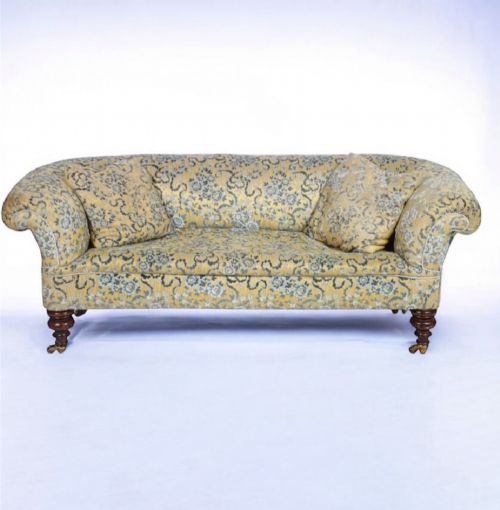
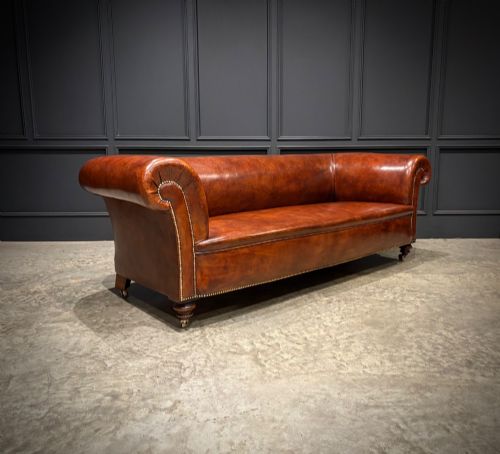


Traditional Chesterfield Settee
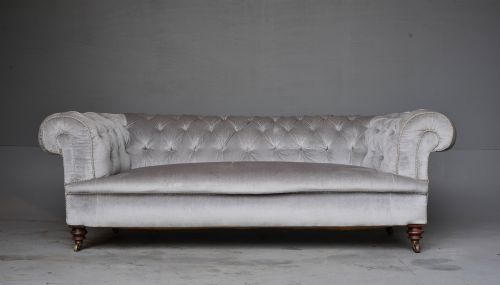
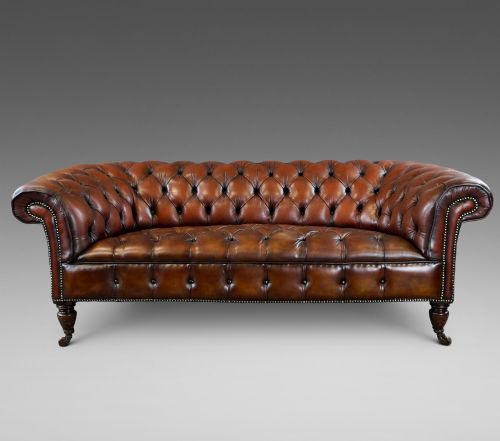
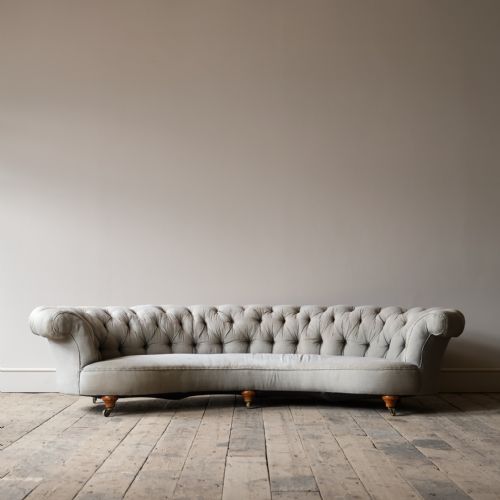
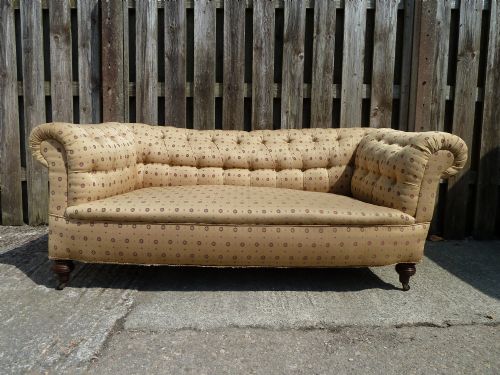
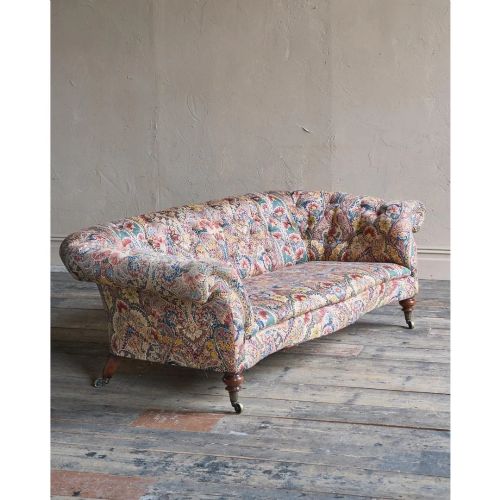
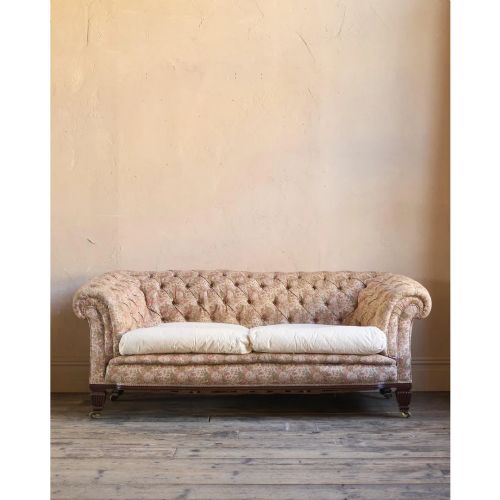
A traditional chesterfield settee offers deep buttoning and rolled arms, grounding a room with nineteenth-century character and robust seating.
Traditional Chesterfield Settee
A traditional chesterfield settee brings deep buttoning and low rolled arms to a drawing room or study, anchoring the space with nineteenth-century proportion. Buyers searching this phrase encounter nineteenth-century pieces alongside Edwardian, Regency, and nineteen-thirties examples.
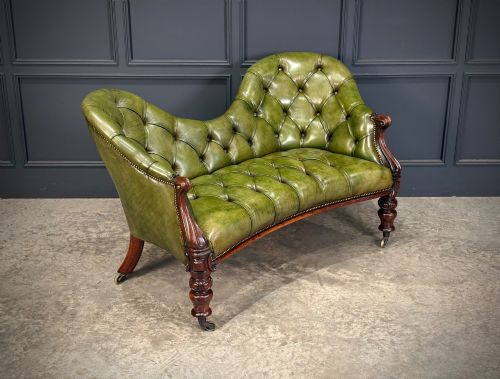
The form appears as large sofas, shorter two-seat settees, and occasional chaise longues. Victorian examples dominate the selection, often upholstered in rich leather or calico linen.
Makers such as Howard and Sons, Hampton and Sons, Jas Shoolbred, and Gillows appear among the listings, alongside country house pieces bearing distinct regional character.
Materials and construction
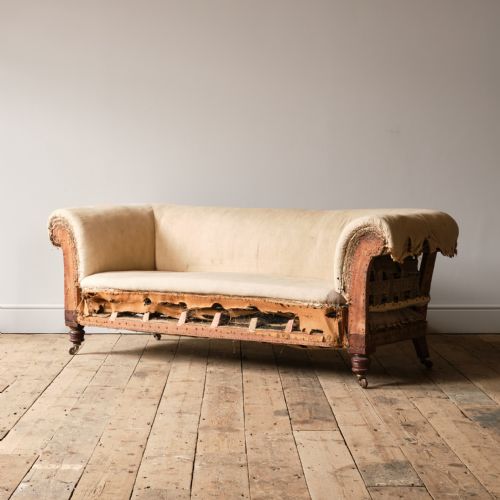
Frames rely on sturdy timber and hardwood, supporting coil springing and horsehair stuffing within the seat and back. Leather or fabric upholstery is secured by hand, utilising brass tacks along the borders.
Deep buttoning requires precise tensioning through the stuffing layers to create the characteristic geometric folds across the back and arms.
Listings span the nineteenth century through the nineteen-thirties, utilising mahogany, timber, brass, leather, and fabric.
Distinguishing quality in a traditional chesterfield settee
Quality rests upon the integrity of the underlying hardwood frame and the resilience of the traditional coil springing. Finer examples retain their original maker stamps and untouched structural webbing.
The choice of leather, whether hand-dyed or preserved in its raw state, alters the tactile weight of the piece. Superior buttoning maintains even depth and firm anchorage across the entire backrest.
Howard and Sons·Hampton and Sons·Jas Shoolbred·Gillows
The Traditional Chesterfield Settee Glossary
- Chesterfield
- A deep-buttoned upholstered sofa featuring arms of the same height as the back. This form provides formal upright seating combined with padded armrests.
- Deep buttoning
- An upholstery technique where buttons are pulled tight through the stuffing to create a diamond pattern. This method secures the internal padding and defines the visual texture.
- Coil springing
- A system of interconnected metal springs tied within the frame to support the seat. It distributes weight evenly and maintains resilience over decades of use.
- Horsehair
- A traditional stuffing material gathered from horse manes and tails, valued for its springiness and breathability. It packs tightly into frames to hold shape without collapsing.
- Calico linen
- A plain-woven cotton fabric used historically as a tight under-upholstery layer before final covering. It provides a stable base for buttoning and padding.
Traditional Chesterfield Settee: Frequently Asked Questions
What defines a traditional chesterfield settee?
A traditional chesterfield settee is characterised by low rolled arms and deep buttoning across the backrest. The silhouette remains uniform from arm to back, creating a distinct profile.
Most examples date from the nineteenth century, utilising leather or fabric upholstery stretched over heavy wooden frames.
How do I care for leather upholstery?
Leather upholstery requires regular dusting and occasional treatment with appropriate leather balms to maintain suppleness. Keeping the piece away from direct heat sources prevents the hide from drying out.
Hand-dyed finishes benefit from gentle cleaning methods that preserve the natural character of the leather.
Are these settees comfortable for daily use?
These settees use traditional coil springing and horsehair stuffing, which provide firm and supportive seating. The deep proportions allow for relaxed lounging while maintaining structural support.
Over time, the internal springs adapt to use while retaining their underlying tension.
How do I identify a Victorian chesterfield?
Victorian examples typically feature robust hardwood frames, hand-tied coil springs, and deep buttoning in dark leather or calico linen. Specific makers often stamp their timber frames or casters.
Proportions tend to be generous, reflecting the room scales of nineteenth-century country houses and town residences.