
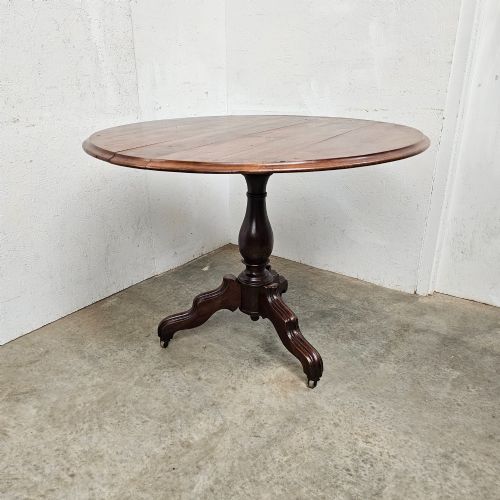

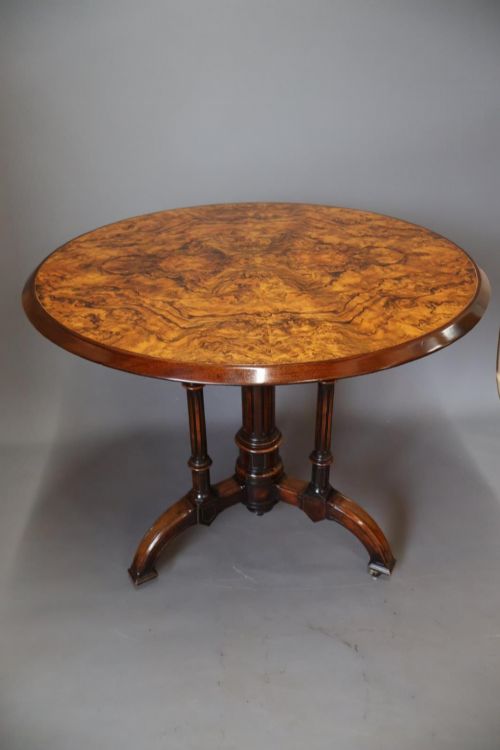
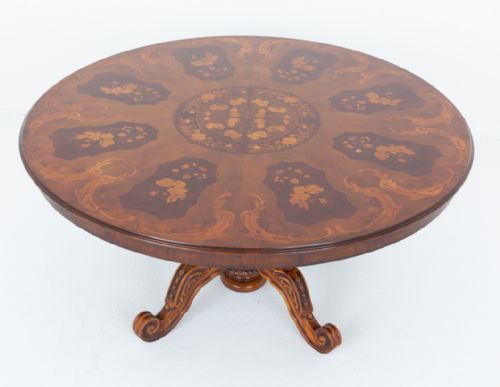


Circular Walnut Centre Table
A circular walnut centre table stands as the focal point of a room, combining rich timber grain with practical surface space.
Circular Walnut Centre Table
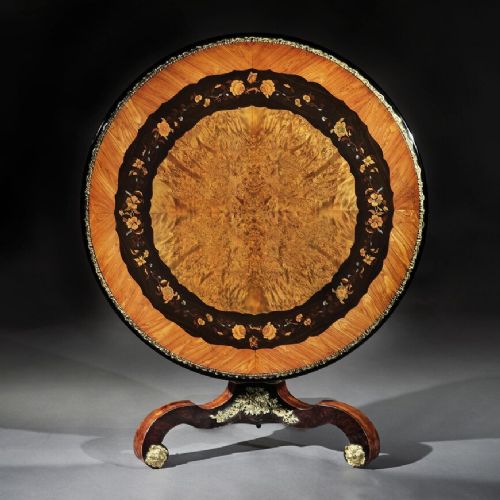
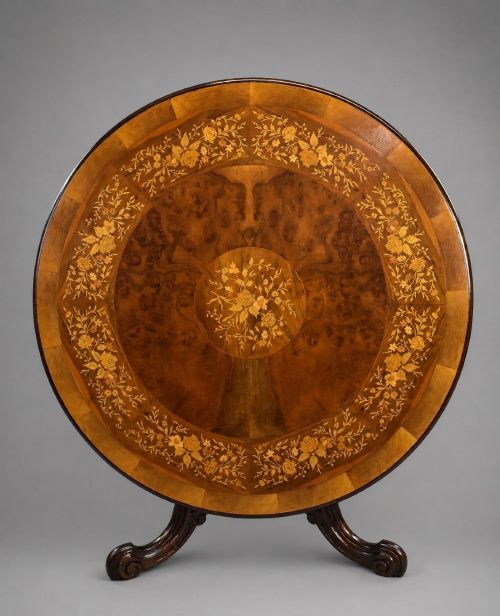
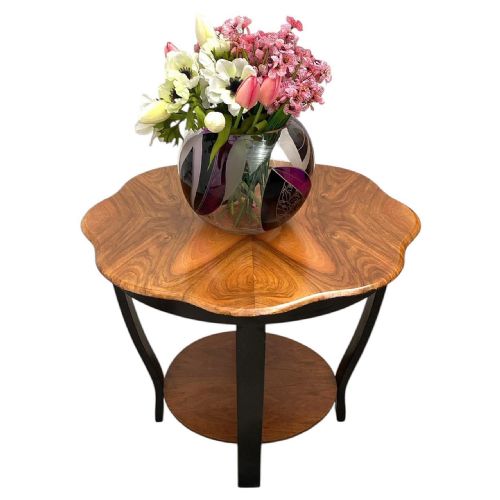
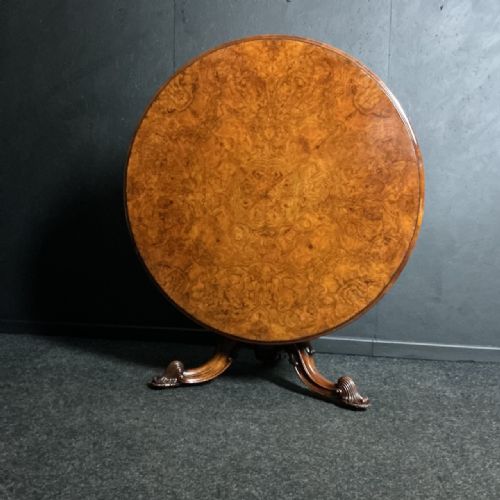
A circular walnut centre table brings warmth and presence to a room, functioning as a freestanding piece designed to be viewed from all sides. These tables appear most frequently from the nineteenth century and the Victorian period, alongside later twentieth-century iterations.
The form spans standard centre tables, pedestal tripod models, tilt-top breakfast tables, and lower coffee table heights. Many examples incorporate marquetry inlay, secret drawers, or tiered shelving beneath the primary top.
How They Were Made
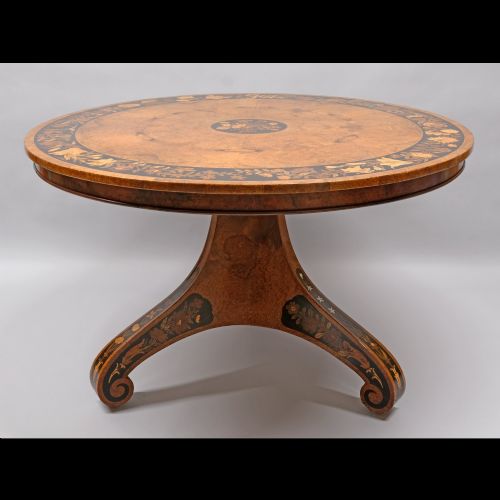
Cabinet makers utilised solid timber alongside burr walnut and figured walnut veneers to create striking grain patterns across the circular tops. Marquetry inlay, fruitwood, and occasional contrasting woods such as mahogany or coromandel added decorative geometric and floral detail.
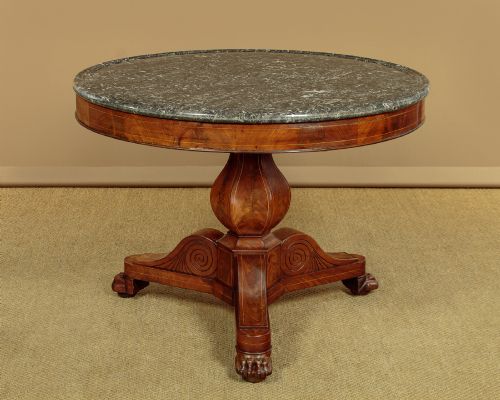
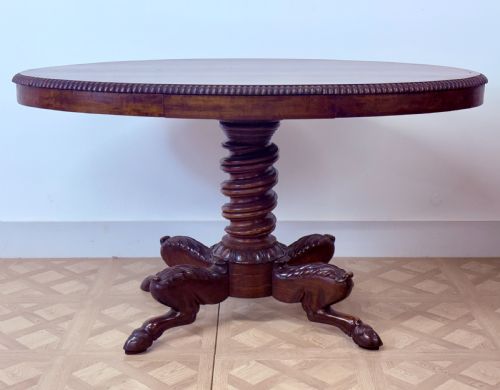
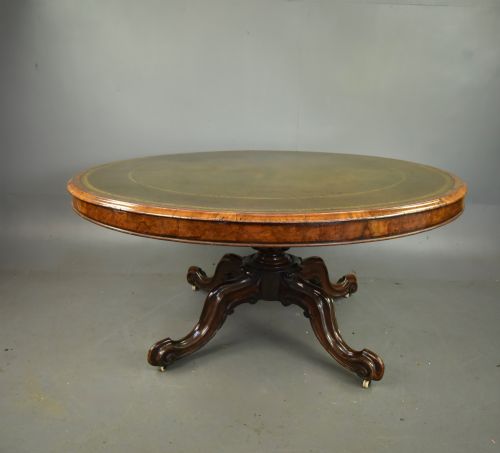
Structural support relied on central pedestals with tripod or carved bases, frequently integrating brass fittings, marble inserts, or leather writing surfaces into the top.
Several Victorian tables hide secret drawers beneath their tops, perfect for keeping stray keys out of sight.
What Varies in Quality
The selection of timber veneer dictates much of the visual impact, with densely figured burr walnut commanding attention over plainer stock. Precision in the marquetry inlay and the crispness of carved wooden details separate standard production from exceptional execution.
Engineering integrity within the pedestal base and the smooth operation of tilt mechanisms or concealed drawers reflect the original maker's skill.
Edward Holmes Baldock
The Circular Walnut Centre Table Glossary
- Burr walnut
- A timber derived from tree growths that produces highly figured, swirling grain patterns. Cabinet makers prized this wood for veneering prominent table tops.
- Gueridon
- A small French occasional table, typically round and supported by a central column or figures. These pieces often feature marble tops.
- Marquetry inlay
- Decorative patterns formed by fitting contrasting pieces of wood veneer into a prepared ground. Artisans used this technique to create elaborate floral or geometric borders.
- Tilt top
- A hinged table surface that tips into a vertical position when not in use. This mechanism allowed large tables to stand against walls to save space.
Circular Walnut Centre Table: Frequently Asked Questions
What is a circular walnut centre table used for?
These tables serve as central display surfaces in principal rooms, holding lamps, decorative objects, or books. Larger examples functioned historically for dining, tea, or library tasks.
Their freestanding nature means they command the middle of a floor space rather than pushing against a wall.
How do I identify a Victorian circular walnut table?
Victorian examples frequently feature heavy burr walnut veneers, inlaid marquetry decoration, and robust pedestal tripod bases. Many incorporate tilt-top mechanisms or concealed drawers beneath the top.
Construction methods and timber selection from the nineteenth century help distinguish these from later twentieth-century revivals.
Where does a centre table fit in a modern room?
A circular table anchors an open room layout, breaking up the linear lines of surrounding upholstery and architecture. Lower coffee table variants suit seating areas, while pedestal versions work effectively in entrance hallways.
Their round shape encourages natural movement and conversation flow around the perimeter.
What is the difference between a centre table and a coffee table?
Traditional centre tables stand at standard table height for display, dining, or reading. Twentieth-century designs adapted the form into lower coffee tables suited for modern seating heights.
Both utilise walnut and circular tops, but their proportions reflect different historical domestic uses.