

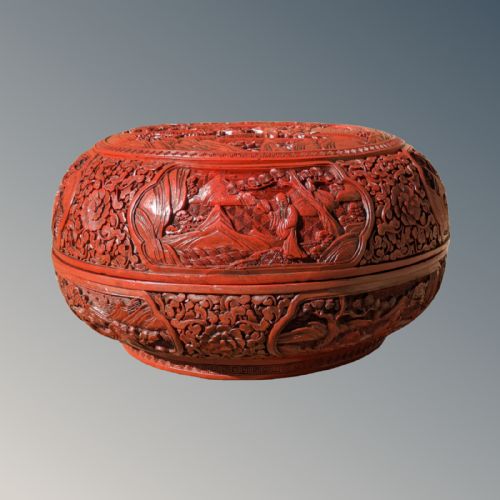


Circular Trinket Box
When you handle a circular trinket box, you are holding a pocket-sized container designed to hold small valuables, powder or snuff.
Circular Trinket Box
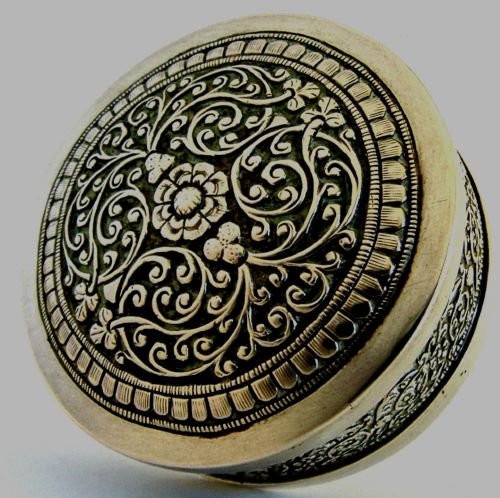
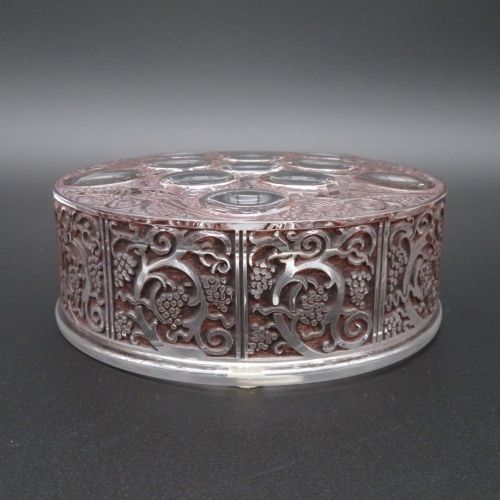
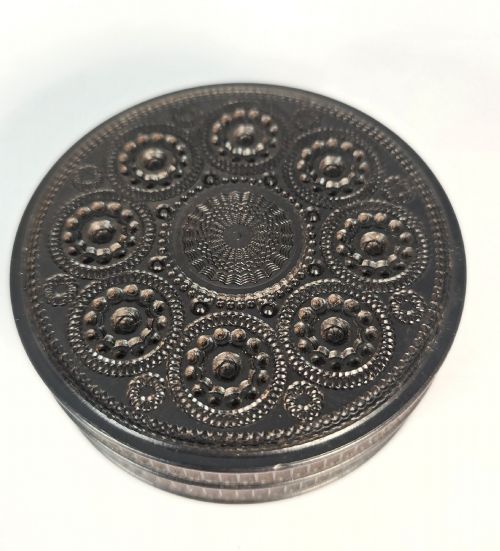
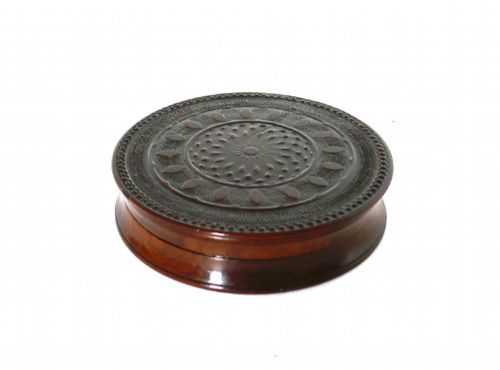
A circular trinket box is a small lidded container shaped in the round, frequently encountered as silver, wood, or lacquer vessels spanning several centuries. The pieces on this page include snuff boxes, powder boxes, patch boxes, and small storage boxes designed for vanities and pockets.
Makers shaped these objects from materials ranging from solid silver and gold to laburnum, ebony, maple, tortoiseshell, and crystal. Geographic origins stretch across England, Scotland, France, Sweden, China, India, and Japan.
Victorian and Edwardian silver examples predominate the available selection, often marked with hallmarks from Birmingham and Chester, alongside earlier Georgian wooden pieces and Asian export wares.
How they were made
Silversmiths utilised stamping, embossing, casting, and engine-turning to shape precious metals into lidded vessels, frequently adding chased rose motifs or engraved swags.
Woodworkers turned laburnum, mahogany, and ebony on lathes to create intricate engine-turned surfaces, whilst papier-mâché and pressed maple offered alternative moulded bases.
Asian workshops combined carved cinnabar, cloisonné enamel, and mixed metal inlay of silver, gold, and bronze on bronze and wooden structures.
Listings feature materials spanning solid silver, gold, tortoiseshell, crystal, ebony, laburnum, pressed maple, and carved cinnabar.
What varies in quality
The precision of the lid's closure and the crispness of the surface decoration separate standard utility items from finer works. Engine-turned patterns and hand-chased motifs demand steady execution from the maker to retain sharp geometric clarity.
Material choice dictates distinction, moving from basic turned wood to unmarked 15-carat gold, sterling silver with clear assay office marks, and signed crystal or export works.
Wang Hing And Company·Atkin Brothers·Lalique·Wedgwood
The Circular Trinket Box Glossary
- Engine turned
- A method of mechanical ornamentation used on wood and metal to produce intricate geometric patterns. This technique relies on specialised lathe work.
- Treen
- Small handmade wooden domestic objects. The term derives from the old English word for tree.
- Jasper dip
- A fine stoneware developed by Josiah Wedgwood involving a coloured clay body with applied white relief ornaments. It is frequently seen on small patch boxes.
- Cloisonné
- An enamelwork technique where thin metal strips are soldered to a base to form compartments filled with paste and fired. These compartments hold the coloured glass designs.
- Piqué
- A method of decorating tortoiseshell or ivory with tiny gold or silver pins and inlaid strips. Artisans heat the metal to press it directly into the shell.
Circular Trinket Box: Frequently Asked Questions
What were circular trinket boxes originally used for?
These small vessels originally held dry snuff, cosmetic patches, or face powder before evolving into general containers for rings and small personal valuables.
Their compact size suited waistcoats, pockets, and dressing tables alike.
How can I tell the age of a silver box?
British silver pieces usually carry hallmarks indicating the assay office, such as Birmingham or Chester, alongside date letters.
Stylistic cues like Art Deco geometric lines or Victorian embossed floral motifs also point to specific decades.
Are wooden boxes prone to damage?
Woods like laburnum, mahogany, and ebony remain durable if kept away from excessive moisture and direct heat sources.
Turned lids should fit snugly without forcing the grain.
What is the difference between treen and standard wood boxes?
Treen refers specifically to small turned or carved wooden utilitarian items made before the mass production era.
These pieces showcase the skill of the woodturner rather than precious metalwork.