
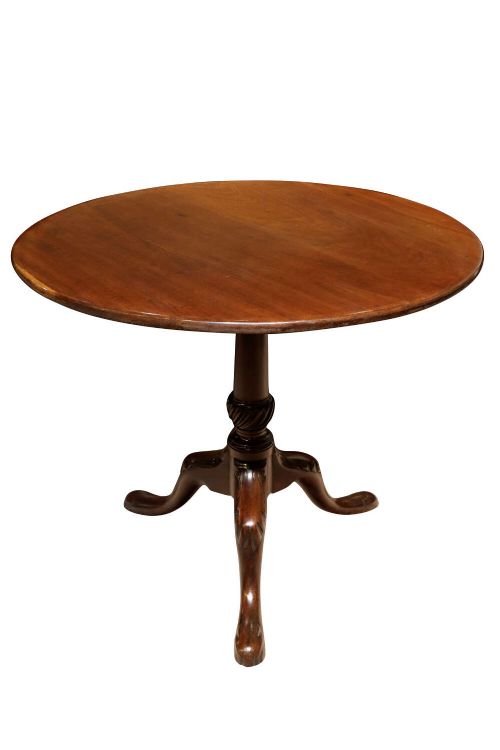
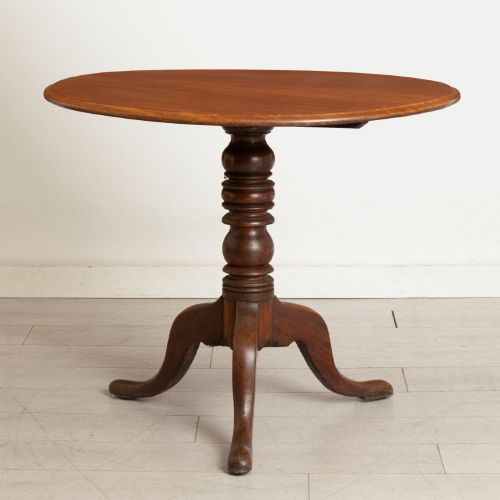
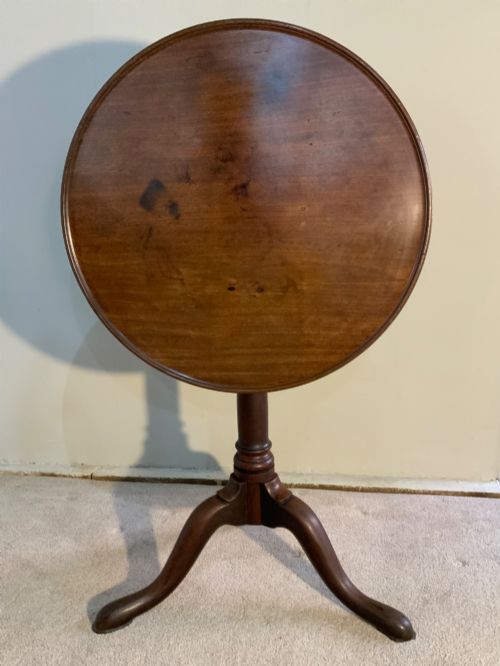
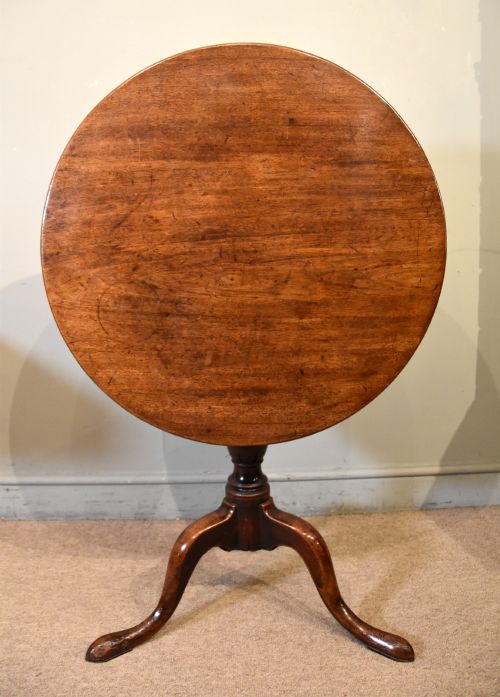

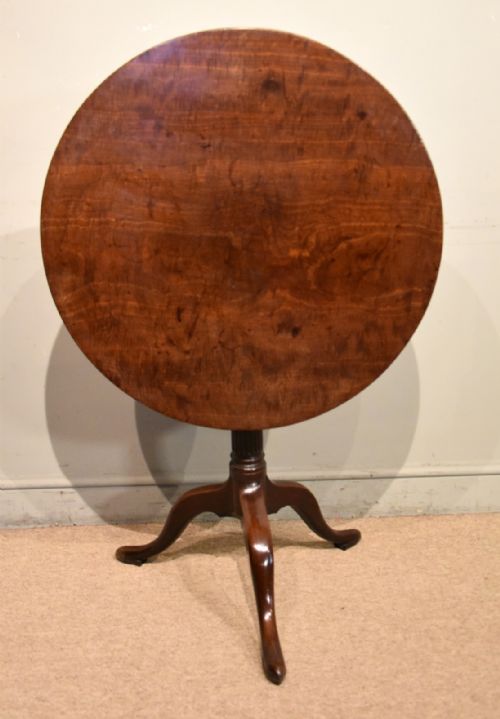
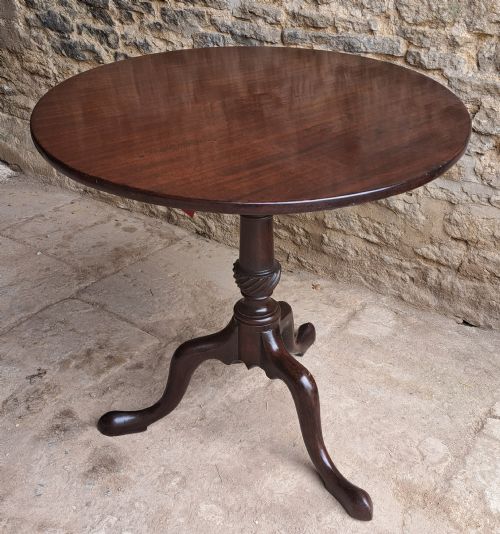
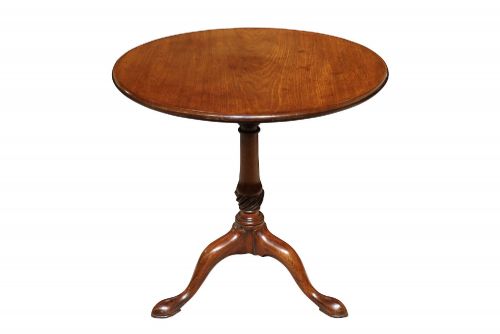
Circular Snap Top Table
A circular snap top table tilts upright when not in use, offering clever space-saving utility alongside timber construction.
Circular Snap Top Table
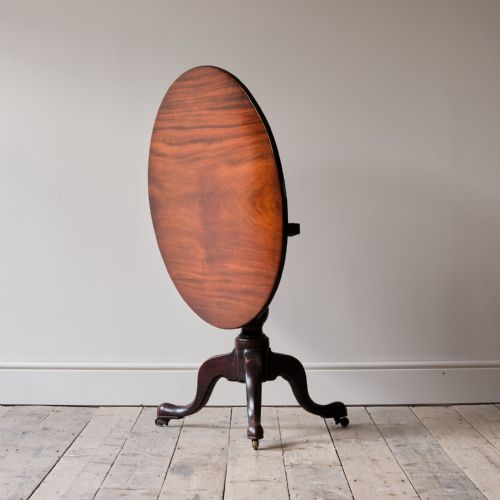
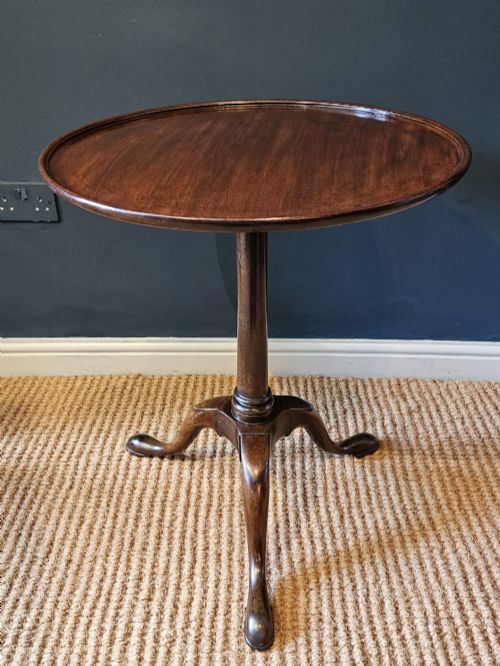
A circular snap top table functions as an occasional, tea, or breakfast table that pivots on its central pillar to store flat against a wall.
The pieces appearing on this page span the eighteenth century, Georgian, Regency, and Victorian periods, alongside later twentieth-century interpretations.
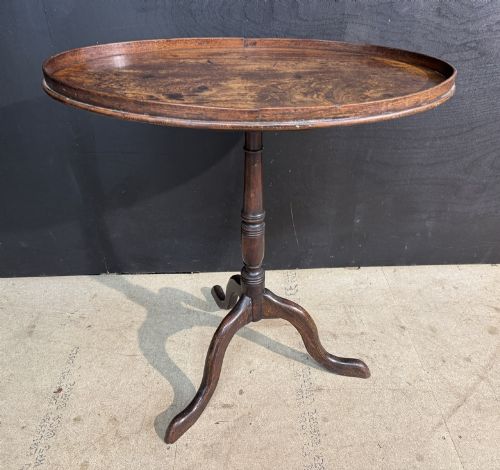
Common regional variations and forms include tripod bases, birdcage mechanisms, and occasional tables rendered in timber.
Materials and construction methods
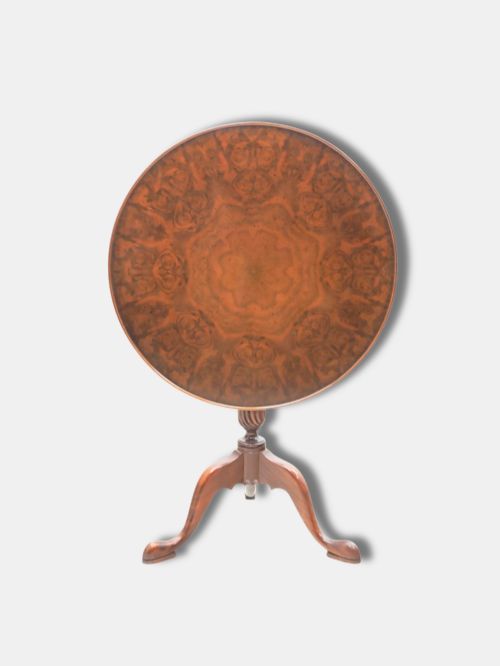
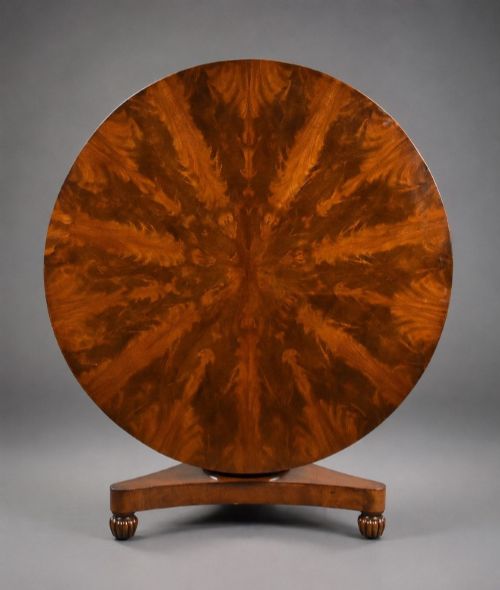
Cabinetmakers utilised dense timbers including mahogany, walnut, oak, rosewood, and fruitwood, often selecting flame mahogany veneer or burr wood for decorative surfaces.
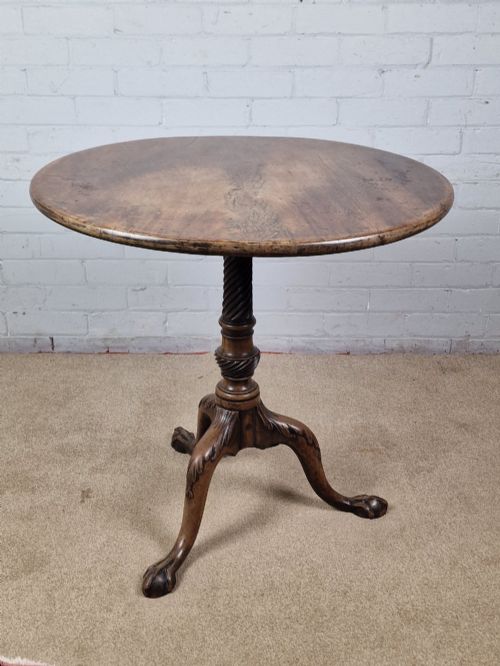
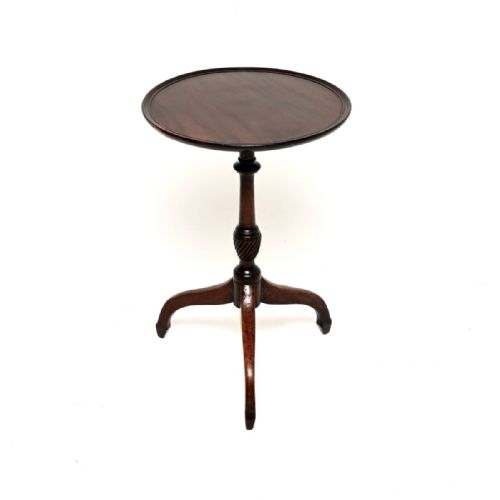
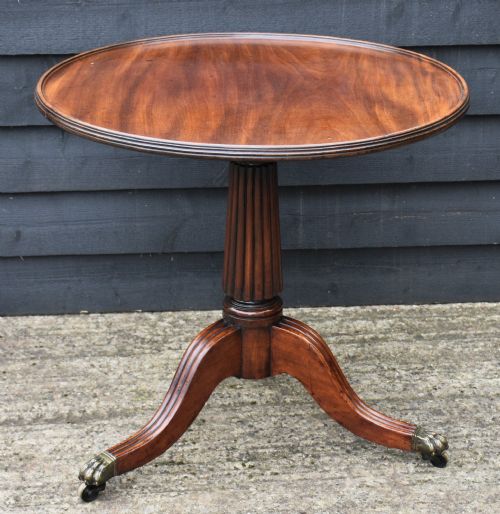
Supports incorporate brass elements, iron fixtures, and carved wooden tripod columns, sometimes featuring spiral twist designs.
Several Victorian surfaces bear later painted floral and petal designs applied long after the original timber was polished.
Distinctions in quality
Superior examples display a singular piece of timber for the circular top rather than joined boards, alongside crisp carving on the pillar and legs.
The catch mechanism and pivot joint determine how securely the top locks into the horizontal position without wobble.
The Circular Snap Top Table Glossary
- Snap-top
- A mechanism allowing the tabletop to tilt into a vertical position for storage. This clever design saved valuable floor space in historical rooms.
- Birdcage
- A wooden frame beneath the tabletop that permits both tilting and revolving. It connects the surface to the central pillar.
- Tripod base
- A three-legged support structure resting on cabriole or straight legs. This arrangement maintains stability on uneven historical floors.
- Flame mahogany
- A wood veneer showing a distinct fiery, flamelike grain pattern. Cabinetmakers prized this figure for prominent furniture surfaces.
Circular Snap Top Table: Frequently Asked Questions
How did people use these tables historically?
Historical households utilised these tables for tea service, dining, and reading in parlours. The tilting mechanism allowed servants to tuck the furniture away against the wall when the room needed to clear.
Today, the same function suits compact modern spaces where an occasional surface is required without permanent floor obstruction.
What is a birdcage mechanism?
A birdcage is an assembly of small wooden posts and blocks positioned beneath the circular top. It connects the table surface to the central column.
This construction enables the top to rotate fully in a horizontal circle as well as tilt vertically.
How do I distinguish Georgian from Victorian pieces?
Georgian tables typically exhibit restrained classical proportions, elegant tripod legs, and dense mahogany or walnut timber. Construction often dates from the eighteenth or early nineteenth century.
Victorian examples frequently utilise rosewood or walnut, sometimes incorporating bolder carving, later painted floral decorations, or heavier pedestal bases.
Can I leave a snap top table tilted?
Leaving the table tilted displays the underside, the catch mechanism, and the pillar construction to visitors. Many historical interiors stored them this way permanently.
Ensure the brass or wooden catch is fully engaged so the top remains secure in whichever position you choose.