



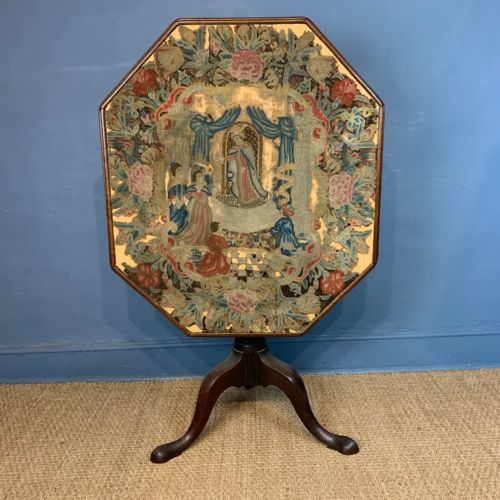
George II Wine Table
A george ii wine table brings eighteenth-century proportion to a room, offering a sturdy surface designed for holding drinks or lighting.
George II Wine Table
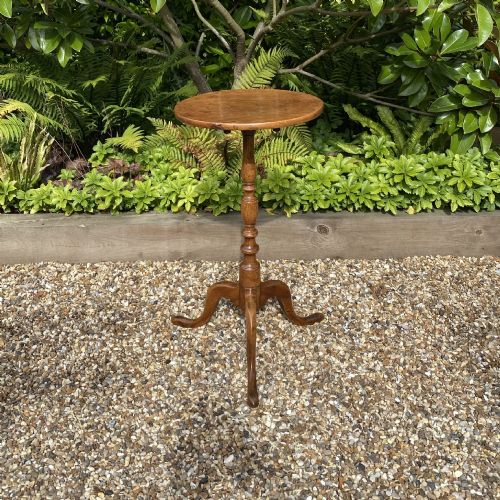
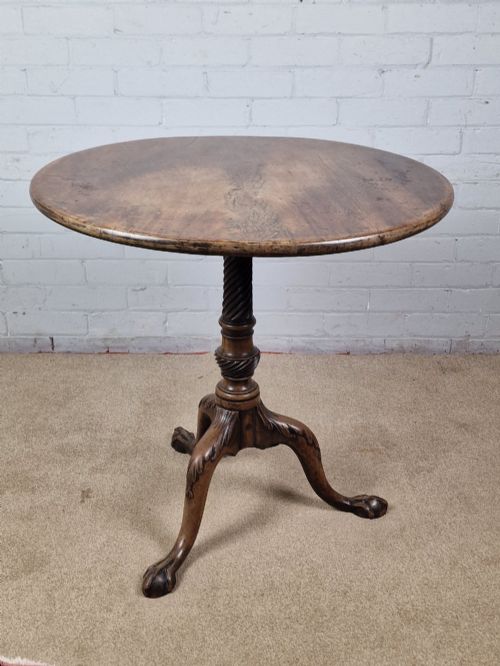
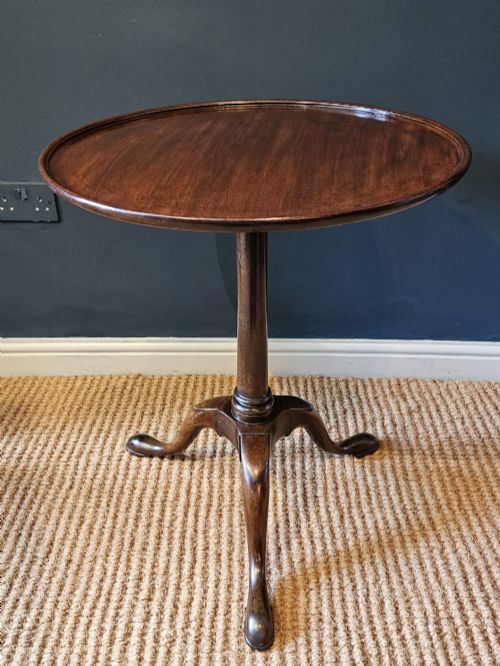
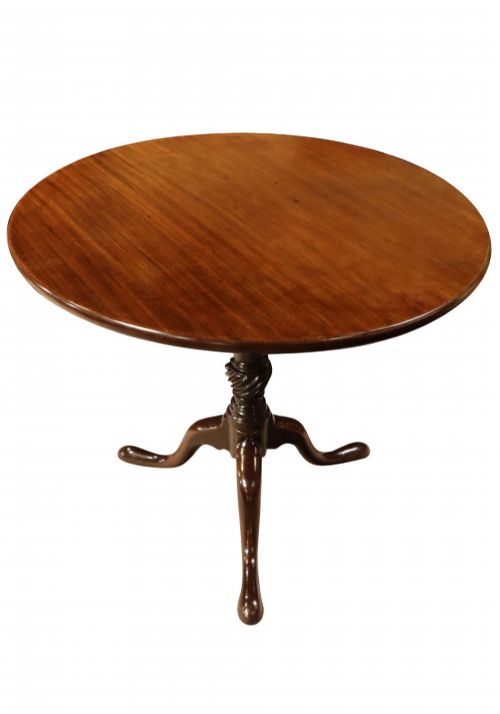
A george ii wine table is typically encountered as a compact circular, octagonal, or square top table supported by a central pillar and tripod base. These pieces span the eighteenth century and encompass regional variants from Scotland and Ireland alongside country pieces in walnut, red walnut, and oak.
Makers of the mid-eighteenth century designed these tables for versatility, using them as occasional tables, kettle stands, or supper tables. The tilting top mechanism, often mounted on a birdcage action, allowed the surface to fold flat against the support when not in use.
Examples on this page reflect both formal urban cabinet-making and robust provincial construction. Buyers meet walnut and mahogany pieces alongside elm and oak country variants dating from the seventeen-fifties onward, plus later nineteenth and twentieth-century interpretations.
Materials and Construction Methods
Cabinet-makers utilised dense timbers like mahogany, walnut, and red walnut for formal tables, while regional workshops employed oak, elm, and yew. Timber selection dictated the structural integrity of the slender tripod legs and the turned central column.
The top frequently connected to the pillar via a birdcage mechanism or a snap-top latch, permitting rotation and tilting. Joinery relied on precise turning, dovetailing, and tenoning to ensure the single pedestal could bear weight without wobble.
Form variations include occasional tables, kettle stands, supper tables, and cellarettes with tilting or fixed top actions.
Distinctions in Quality and Execution
Quality rests in the harmony of proportions between the top and the supporting tripod base, together with the crispness of turning on the column. Superior pieces demonstrate refined execution in details such as piecrust rims, pierced galleries, or spiral twist columns.
The tactile nature of the surface depends upon the preservation of original timber figure and rich patination accumulated over centuries. Master timber selection and sophisticated movement mechanisms separate bespoke urban commissions from plain provincial workshop output.
The George II Wine Table Glossary
- Tripod table
- A small freestanding table supported by a pillar on three legs. This arrangement provided stable placement on uneven eighteenth-century floors.
- Tilt-top table
- A table with a hinged top that pivots to a vertical position. This allowed convenient storage against a wall when the room served other purposes.
- Birdcage
- A timber framework beneath the table top that permits the surface to rotate and tilt. It adds height and mechanical complexity to the central column.
- Kettle stand
- A small low table designed to hold a heated water vessel for tea preparation. They share identical tripod forms with wine tables.
- Patina
- The surface sheen and colour developed by timber through age, light exposure, and handling. Original patination indicates minimal chemical stripping or harsh sanding.
George II Wine Table: Frequently Asked Questions
What is a george ii wine table used for?
These tables served primarily to hold bottles, glasses, or lighting in eighteenth-century reception rooms. Their compact footprint made them easily movable beside seating.
Today they function effectively as lamp tables or decorative accent pieces in contemporary living spaces. The tilting mechanism remains practical for tucking the table away when floor space is needed.
How do I identify a george ii wine table?
Look for structural characteristics typical of the mid-eighteenth century, such as tripod legs terminating in pad or snake feet and turned central pillars. Timber choice often includes dense mahogany or figured walnut.
Construction methods like hand-cut joinery and pegged joints assist in separating eighteenth-century production from later revival styles. Regional pieces may utilise native timbers like oak or elm while retaining the classic tripod silhouette.
What does tilt-top mean on these tables?
A tilt-top incorporates a hinged block or birdcage mechanism allowing the horizontal surface to pivot vertically. This clever engineering saved floor space when the furniture was not in active use.
Checking the underside reveals the wooden catch or latch securing the top in the flat position. Original mechanisms operate smoothly without excessive play in the hinge.
Are all george ii wine tables made of mahogany?
While mahogany and walnut dominate formal urban examples, provincial workshops utilised local woods. Evidence shows country pieces constructed from elm, oak, and yew.
These alternative timbers offer distinct grain patterns and lighter tones while following identical tripod forms. Red walnut also appears among high-status examples from the period.