



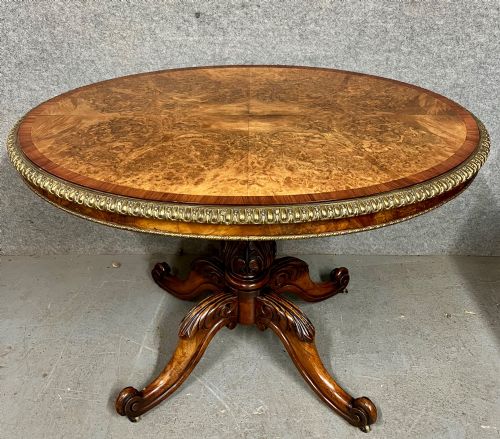

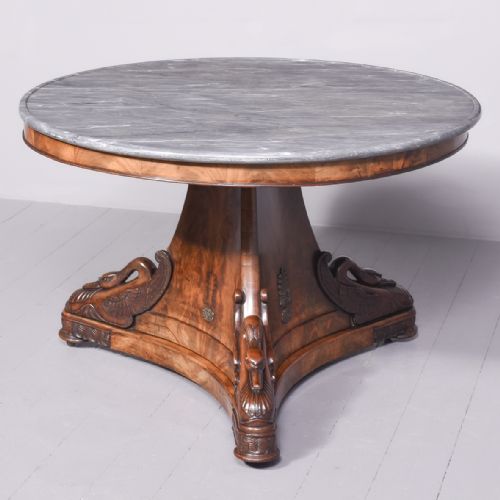

Circular Pedestal Entry Table
A circular pedestal entry table grounds a hallway with architectural presence and offers a surface for your daily essentials.
Circular Pedestal Entry Table
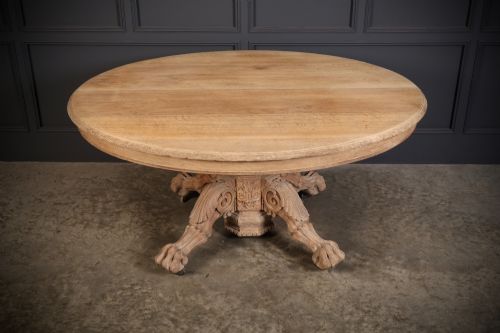
A circular pedestal entry table sits on a central pillar or base rather than four corner legs, making movement around the piece straightforward in a hallway or landing. The examples collected under this search phrase span the nineteenth century and the early twentieth century, taking forms such as French gueridons, centre tables, and hall tables.
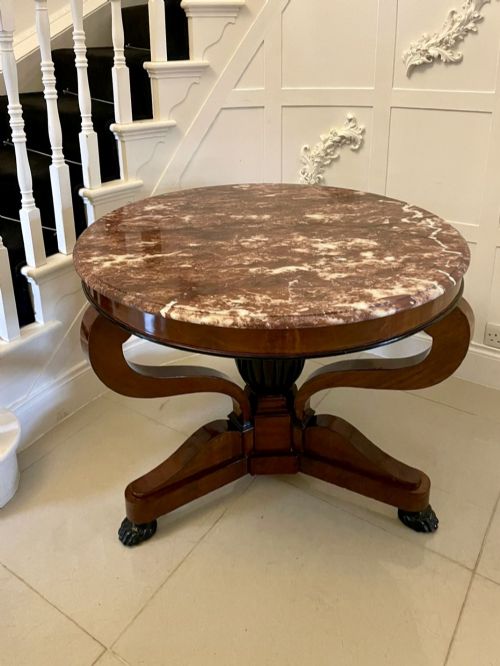
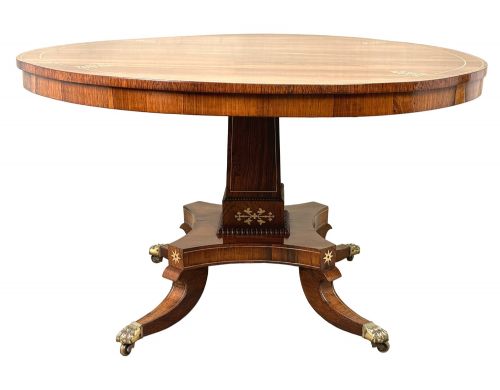
You will most frequently encounter nineteenth-century mahogany, marble-topped designs and rosewood models on this page. Makers across Britain, France, Germany, Sweden, and India produced these tables in styles ranging from Regency and French Empire to Victorian and Art Deco.
The objects serve primarily as central display surfaces in entrance halls, libraries, or reception rooms. Their round configuration allows them to anchor an open space without dominating the traffic flow.
How they were made
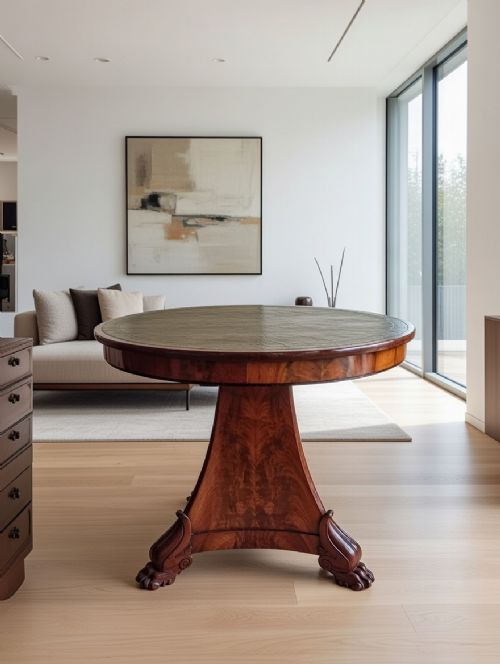
Cabinetmakers constructed these tables using dense timbers like mahogany, flame mahogany, rosewood, walnut, pollard oak, satinwood, and birch veneer over sturdy structural cores. Many pieces incorporate inset marble tops or leather surfaces to provide a hard-wearing or tactile top plate.
Decoration relied on contrasting veneers, brass inlay, and painted finishes rather than heavy carving. French and Scandinavian workshops often utilised gueridon forms with stone or polished wood circular tops balanced on turned or pillar pedestals.
Circular Pedestal Entry Table Retail Price Guide 2026
Typical asking prices for circular pedestal entry table among the pieces listed under this phrase on Sellingantiques today, from the lower quarter to the upper quarter. They describe what is for sale here now, not the wider market.
Listings feature circular pedestal entry tables spanning the nineteenth century through the Art Deco era, utilising mahogany, marble, brass, and birch veneer.
What varies in quality
The distinction between standard production and exceptional work rests on the selection of timber figures and the integration of decorative elements like brass inlay and marble slabs. Better examples exhibit precise grain matching in flame mahogany and rosewood, alongside stones that sit flush within their wooden surrounds.
Structural integrity of the central pedestal and its footing dictates the longevity of a circular table. Superior workshops engineered weight distribution carefully so the round top remains stable on its single column without listing.
Peters of Genoa
The Circular Pedestal Entry Table Glossary
- Veneer
- A thin layer of figured wood, such as flame mahogany or birch, applied to a secondary timber base. This technique allowed cabinetmakers to display striking grain patterns economically.
- Pedestal
- A central vertical column or support that replaces traditional corner legs. It underpins the top plate and anchors the base of the table.
- Inlay
- The technique of embedding contrasting materials like brass or lighter woods into the surface of a primary timber. It creates geometric or decorative patterns across the top.
Circular Pedestal Entry Table: Frequently Asked Questions
What is a circular pedestal entry table?
A circular pedestal entry table is a round furniture piece supported by a central column, designed to sit in a hallway or reception space. These items provide a practical surface for dropped keys or decorative objects while occupying minimal floor space.
Such tables appear in various historical styles, including Regency, French Empire, and Victorian. Their central pillar construction distinguishes them from standard four-legged tables.
How do I style an entry table?
An entry table works best when kept uncluttered so the timber grain or marble top remains visible. Placing a single lamp, a tray for small items, or a vase of flowers creates a balanced focal point.
Because these tables are round, items placed on top look most natural when arranged towards the centre rather than crowded at the edges. This leaves the perimeter free to show off the woodworking or inlay.
What woods were used for these tables?
Cabinetmakers relied on dense, attractive hardwoods such as mahogany, flame mahogany, rosewood, walnut, and pollard oak. Scandinavian and continental makers also utilised birch and satinwood for lighter, figured surfaces.
Many examples combine these timbers with contrasting brass inlay or solid marble tops. The choice of material often points to the geographical origin and period of the workshop.
How do I tell periods apart?
Differentiating periods relies on observing the specific combination of materials, silhouettes, and decorative motifs. Regency and French Empire pieces often feature dark mahogany, brass mounts, and clean classical proportions, whereas later Victorian examples can be heavier in build with varied turned pedestals.
Art Deco and Scandinavian pieces from the early twentieth century introduce simplified birch surfaces and geometric restraint. Comparing the structural base and veneer choices helps narrow down the decade of manufacture.