



Empire Triform Pedestal Table
An empire triform pedestal table brings striking architectural presence and neoclassical grandeur to any interior through its distinctive three-sided base.
Empire Triform Pedestal Table
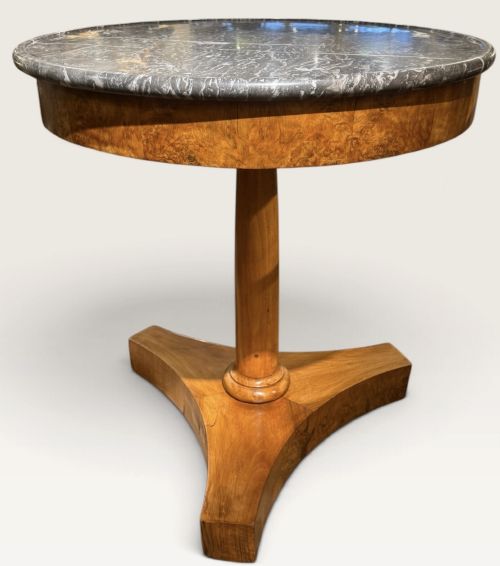
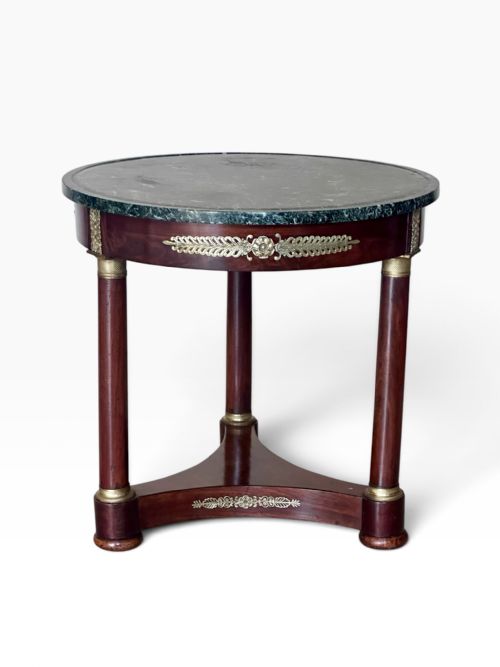
An empire triform pedestal table centres around a circular top supported by a three-sided column or pedestal base, often taking the form of a guéridon or centre table. These pieces draw heavily on neoclassical design principles, frequently appearing in French and Swedish interpretations spanning the nineteenth century.
Most examples found here function as centre tables, occasional tables, or bedside vide-poches, designed to stand freely in a room rather than against a wall. The forms range from straightforward nineteenth-century mahogany pieces to grander revival styles featuring marble tops and decorative mounts.
Buyers encountering this search phrase will primarily discover nineteenth-century French and Swedish specimens, alongside later revival iterations from around nineteen hundred. These tables combine compact footprints with solid architectural weight, making them versatile for modern placement while retaining their historical character.
How they were made
Cabinetmakers constructed these tables using dense timbers such as mahogany, flame mahogany, burr elm, and occasionally coromandel, often applied over sturdy secondary woods. Surface enrichment frequently involved contrasting marble slabs fitted neatly into the circular wooden tops.
Metal detailing played a significant structural and decorative role, with cast brass and ormolu mounts highlighting the architectural lines of the triform pedestals. Giltwood, paint, and parcel silvering also appear on specific revival pieces to accentuate the neoclassical motifs.
Empire Triform Pedestal Table Retail Price Guide 2026
Typical asking prices for empire triform pedestal table among the pieces listed under this phrase on Sellingantiques today, from the lower quarter to the upper quarter. They describe what is for sale here now, not the wider market.
Some nineteenth century bedside tables carry the charming title vide-poche, literally reminding gentlemen where to drop their pocket change before sleep.
What varies in quality
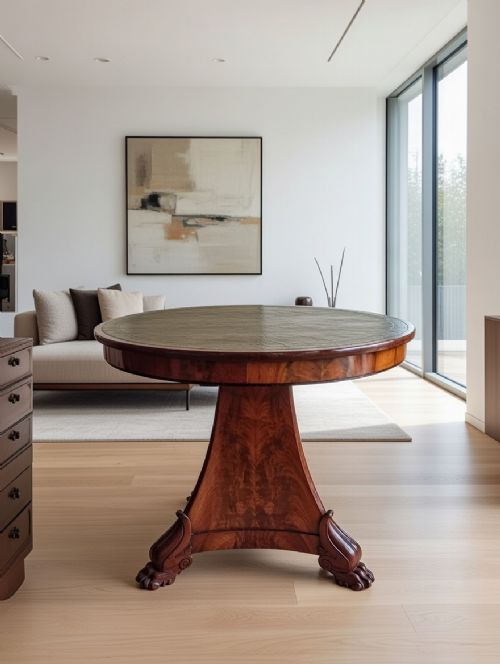
The sophistication of the timber selection dictates much of the visual appeal, where richly figured flame mahogany or burr elm marks out superior cabinet work. Plain mahogany surfaces rely entirely on proportion and timber density for their success.
The integration and finish of the top materials create a clear distinction between standard and finer examples. Heavy marble slabs must fit with absolute precision, and metal ormolu mounts require crisp chasing rather than soft, blurred casting details.
The Empire Triform Pedestal Table Glossary
- Guéridon
- A small French round table supported by a central column or pillar. These tables often stand on three-footed bases.
- Triform
- Having three sides or three divisions arranged symmetrically around a central axis. This geometric configuration provides the characteristic stability for the pedestal base.
- Ormolu
- Gilded bronze applied as a decorative mount on furniture. The technique was widely utilised during the nineteenth century to highlight neoclassical designs.
- Vide-poche
- A small bedside or occasional table designed to hold small personal items. The term translates literally as empty pocket.
- Flame mahogany
- Mahogany veneer exhibiting a distinctive flickering flame pattern. Cabinetmakers selected these cuts for the most prominent surfaces of elite tables.
Empire Triform Pedestal Table: Frequently Asked Questions
What is an empire triform pedestal table used for?
These tables traditionally served as centre pieces in salons or as occasional stands for lamps and decorative objects. Their freestanding design allows them to sit comfortably in the middle of a room.
Smaller iterations function effectively as bedside tables or vide-poches, offering practical surface space combined with distinct neoclassical style.
How do I identify a nineteenth century piece?
Dating relies on examining the timber construction, joinery methods, and the specific materials integrated into the top. Nineteenth century examples frequently utilise solid mahogany frames and heavy marble inserts.
Stylistic cues such as French Empire or Swedish neoclassical details help narrow down the period of manufacture.
Are these tables suitable for everyday use?
Solid construction and durable hardwood frames make these tables well-suited for daily placement in modern interiors. Marble tops offer a resilient surface for lamps and drinks.
Care should be taken with polished wood finishes to avoid moisture damage and direct sunlight.
What distinguishes French empire style?
French empire design draws heavily on classical antiquity, featuring strict symmetry, architectural columns, and restrained ornamentation. Ormolu mounts of classical figures or geometric patterns often accent the timber.
Triform bases reflect this monumental, balanced aesthetic popularised during the early nineteenth century.