



Circular Marquetry Table
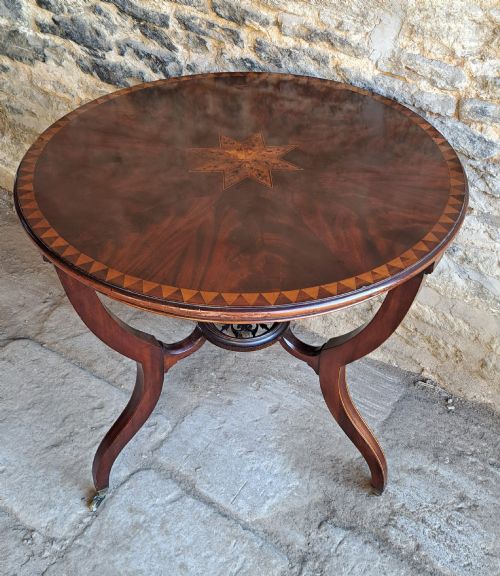
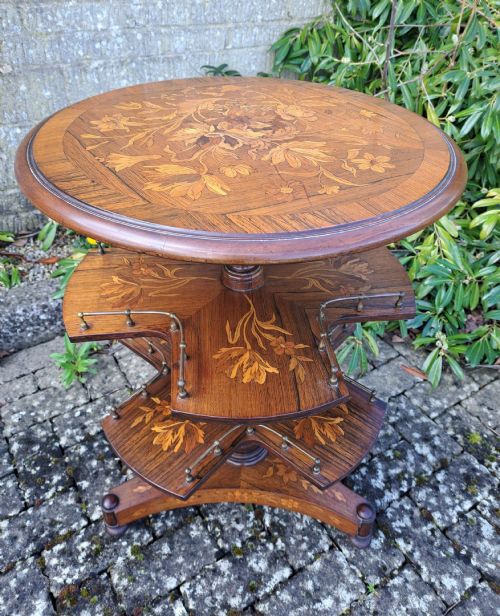
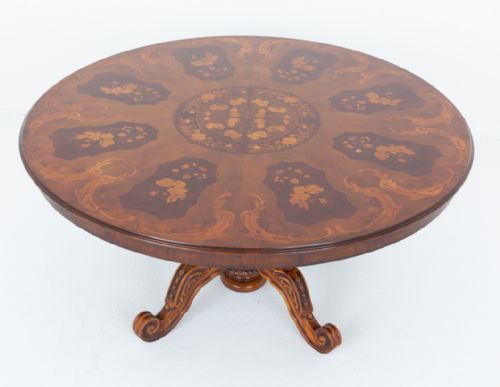
A circular marquetry table brings intricate timber work and flowing floral detail to the centre of a room.
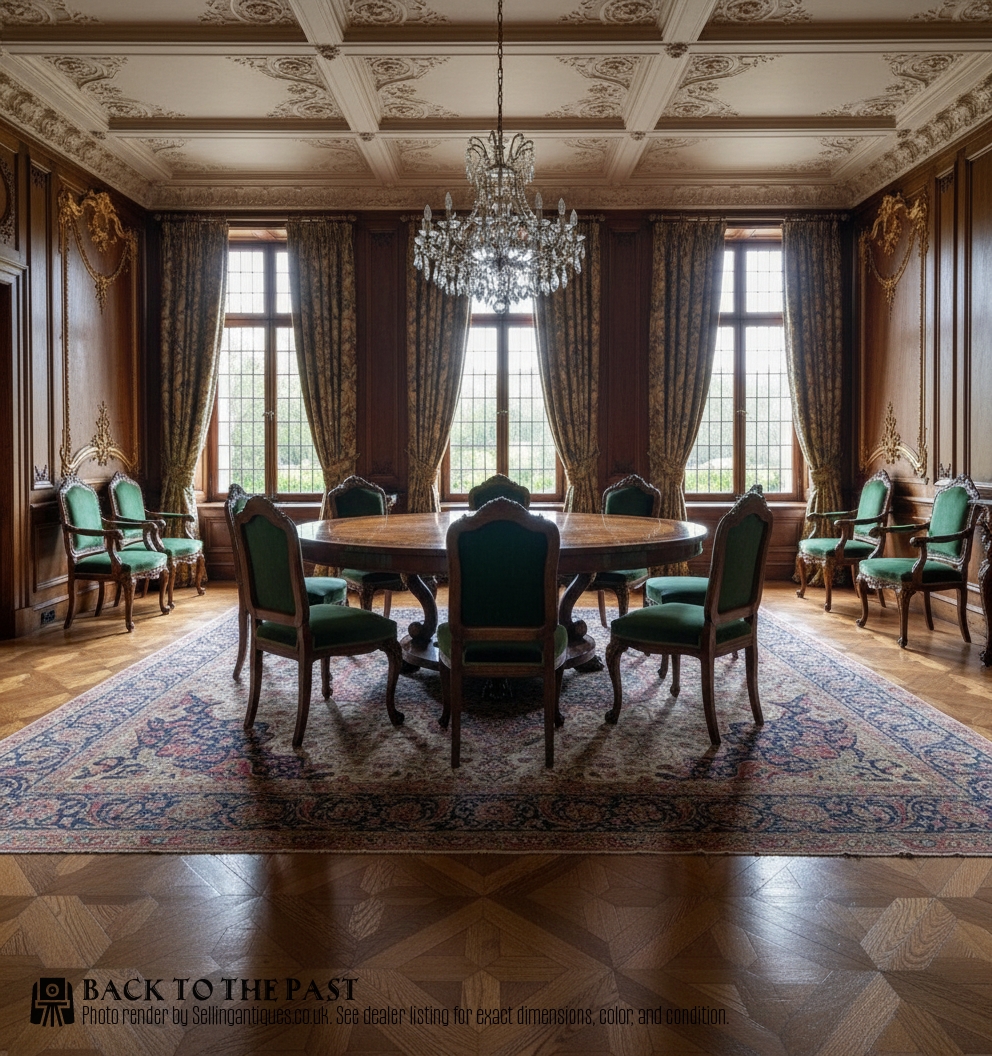
Circular Marquetry Table
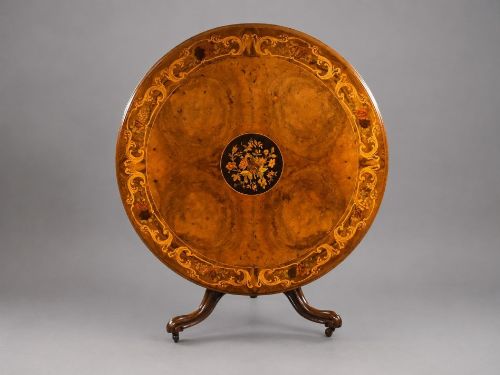
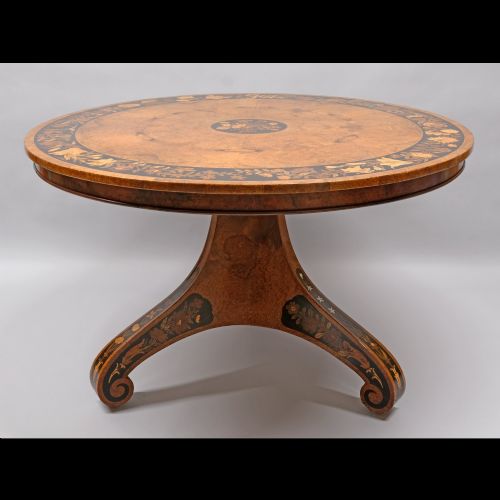
A circular marquetry table serves as a striking centrepiece or occasional surface, defined by elaborate wood inlay applied to a round top. When searching this phrase, buyers encounter pieces ranging from compact Victorian lamp tables to large breakfast and dining versions.
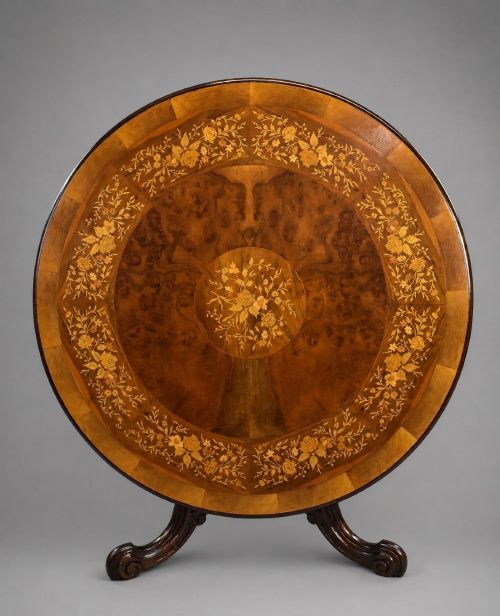
The surviving examples draw heavily on Victorian craftsmanship, alongside Edwardian, Regency, and 18th-century pieces. Walnut and burr walnut dominate the forms, frequently paired with floral or geometric marquetry patterns.
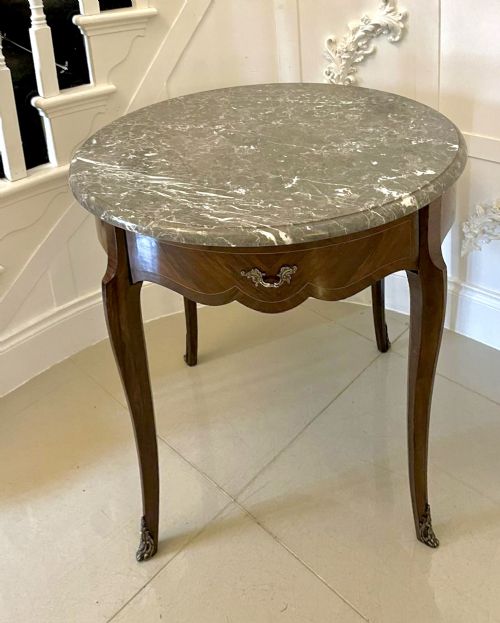
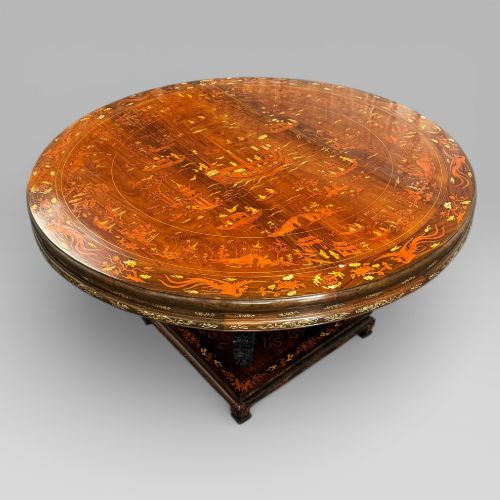
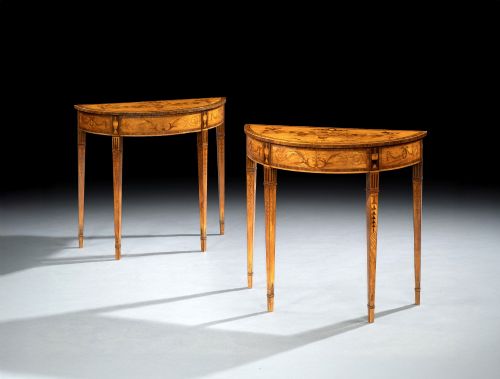
Beyond standard centre tables, the selection includes tilt-top breakfast tables, tripod wine tables, and occasional variants. French and Dutch influences appear regularly, alongside English interpretations of Louis XVI Revival and Sheraton styles.
Materials and construction
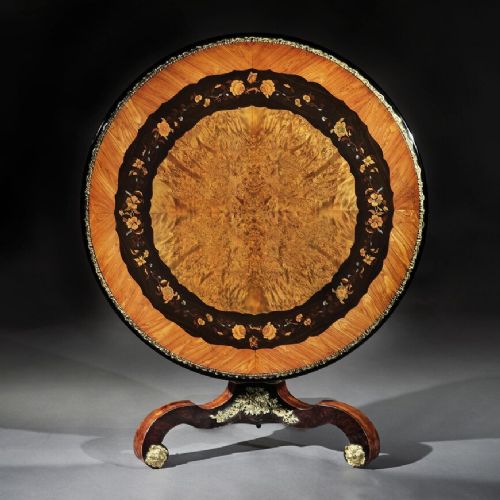
Cabinet makers utilised dense primary timbers such as mahogany, rosewood, walnut, and satinwood to form the structural carcasses and table tops. Burr walnut veneers provided highly figured, swirling grain backgrounds for intricate inlay work.
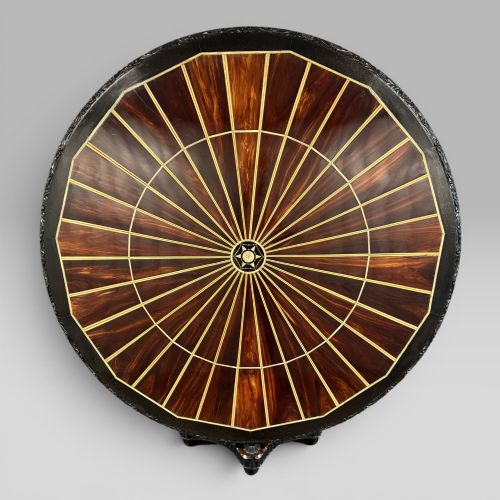
Marquetry patterns were assembled using fine slices of contrasting woods, often incorporating lighter satinwood and fruitwoods to achieve floral, scroll, or architectural motifs. Brass stringing, ormolu mounts, and occasional marble tops completed the more elaborate productions.
Tilt-top mechanisms allowed breakfast tables to hide against drawing room walls like giant wooden shields when the morning meal finished.
Assessing quality
Quality rests primarily on the crispness and complexity of the timber inlay rather than simply the age of the piece. Superior examples display tightly fitted veneers without excessive filler, maintaining sharp botanical or geometric lines across the entire circular top.
The choice of secondary woods and the refinement of the carved pedestals and tripod bases further separate standard workshop production from exceptional cabinet work. Well-executed bases maintain rigid stability, while lesser pieces show looseness in the pillar joints or tilt mechanisms.
Edward Holmes Baldock·Edwards and Roberts·François Linke·A Hugnet Paris
The Circular Marquetry Table Glossary
- Marquetry
- Decorative veneer work arranged in pictorial or geometric patterns across a surface. Artisans cut various coloured woods to fit tightly together before gluing them to the carcass.
- Burr walnut
- A highly prized timber grain obtained from walnut tree growths or burls. It yields swirling, marbled patterns that form rich backgrounds for table tops.
- Guéridon
- A small French occasional table supported by one or more columns. These tables often feature round tops suited for display or holding lamps.
- Tilt-top
- A table mechanism allowing the top to pivot vertically when not in use. This practical design saved floor space in period drawing rooms.
- Ormolu
- Gilded bronze mounts applied to furniture edges and legs. This technique added decorative metallic contrast to dark woods during the 19th century.
Circular Marquetry Table: Frequently Asked Questions
How do I use a circular table in a small room?
A round silhouette removes sharp corners, allowing easier movement through compact spaces. Placing one in the middle of a room creates a natural focal point without blocking pathways.
Smaller variants function effectively as lamp tables or occasional surfaces next to seating. Their central pedestal design offers maximum legroom compared to four-legged alternatives.
What is the difference between a centre table and a breakfast table?
Centre tables are designed to stand permanently in the middle of a room, often featuring fixed bases and highly decorative tops intended to be viewed from all sides. They serve as display surfaces for books, lamps, or decorative objects.
Breakfast tables traditionally featured tilt-top mechanisms so they could be stored against a wall when dining was finished. Many retain this pivoting structure today, though they are rarely tipped up in modern homes.
How do I distinguish Victorian pieces from 18th-century ones?
Eighteenth-century examples often employ tighter, more restrained satinwood or mahogany veneers with classical stringing. The cabinet work prioritises understated elegance over dense floral displays.
Victorian production frequently embraced heavier burr walnut grounds and elaborate, multi-coloured floral marquetry. Carved pedestals from this era tend to be bolder and more robustly ornamented.