

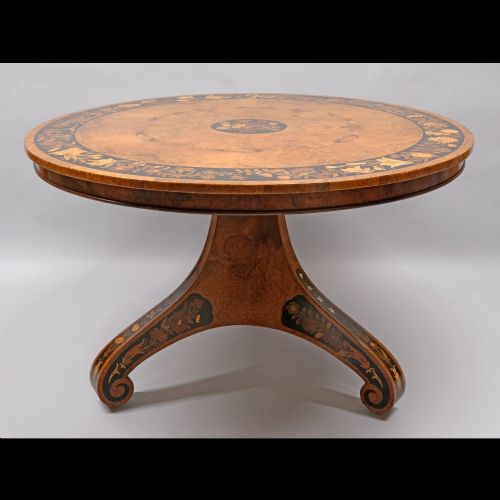
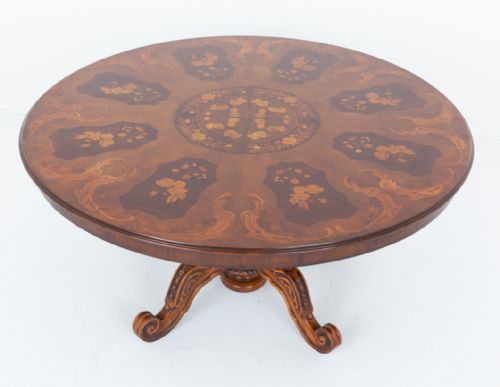


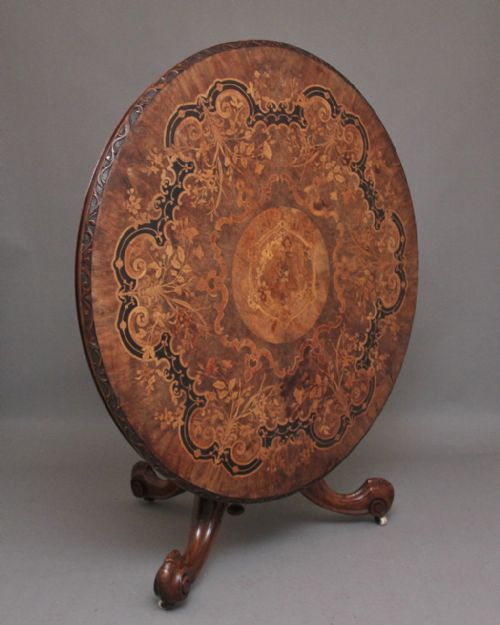


Floral Marquetry Tilt Top Table
A floral marquetry tilt top table brings patterned wood surfaces and ingenious folding mechanisms together into a single decorative centrepiece.
Floral Marquetry Tilt Top Table
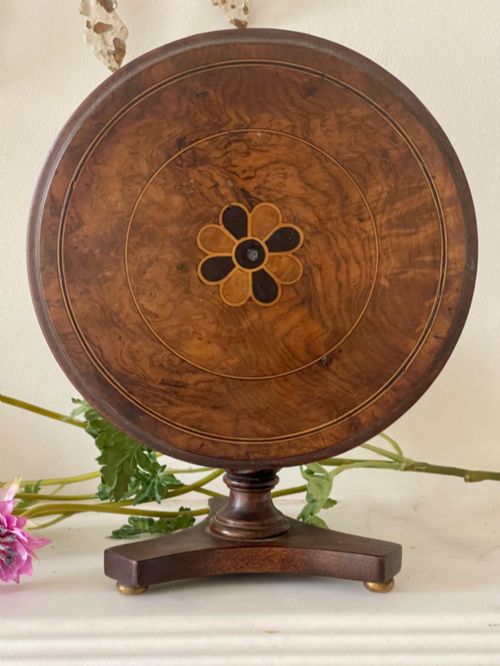
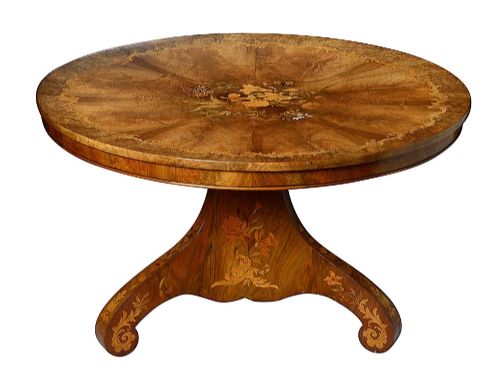
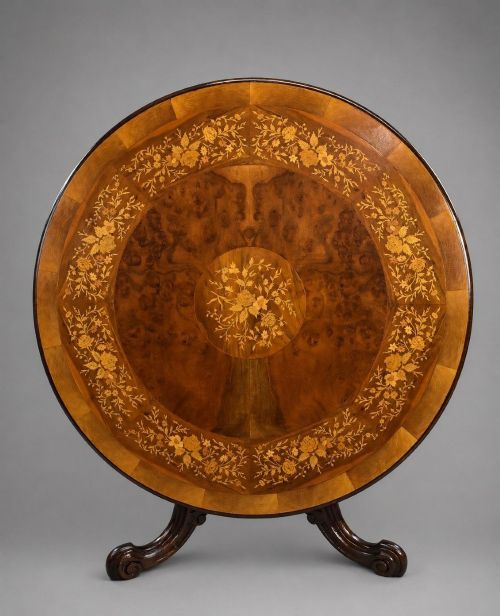
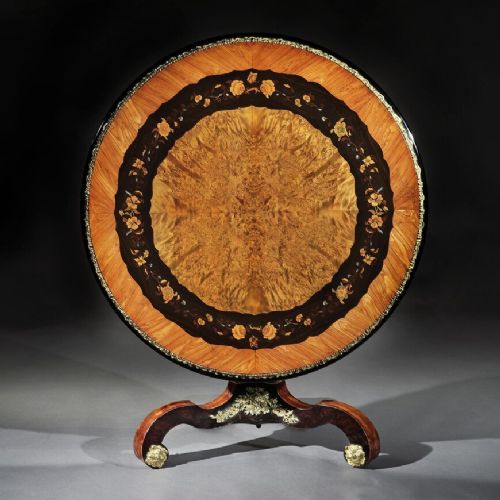
A floral marquetry tilt top table combines intricate patterned wood inlay with a surface designed to pivot into a vertical position when not in use. The examples found here span the eighteenth and nineteenth centuries, taking the form of occasional, breakfast, and centre tables.
Makers drew on Victorian, French Revival, and Dutch Baroque styles, often employing round tops supported by pillar and tripod bases. Burr walnut, kingwood, and rosewood serve as the primary timbers for these decorative surfaces.
While many listings describe centre or breakfast tables rather than pivoting surfaces, the underlying tradition of floral inlay remains consistent across the period. Buyers will encounter both modest small tables and larger exhibition pieces originating from nineteenth-century workshops.
Materials and construction
Cabinetmakers constructed these tables using a solid carcase of walnut, burr walnut, or mahogany to provide structural stability. Fruitwood, kingwood, and mixed woods were then sliced into thin veneers for the patterned tabletops.
Craftsmen cut floral designs by hand using contrasting wood veneers, assembling the pictorial motifs before pressing them into the solid ground. Brass hardware often secured the tilting mechanism beneath the top, allowing the surface to swivel and lock into place.
Floral Marquetry Tilt Top Table Retail Price Guide 2026
Typical asking prices for floral marquetry tilt top table among the pieces listed under this phrase on Sellingantiques today, from the lower quarter to the upper quarter. They describe what is for sale here now, not the wider market.
Architects once used specialised tilt top tables to draft plans while standing, long before these surfaces found a home in Victorian drawing rooms.
Qualities of distinction
The sophistication of the timber selection determines the visual impact of the piece, with burr walnut and figured kingwood offering richer natural grain patterns. The intricacy and precision of the marquetry cutting dictate the artistry of the floral display.
Structural integrity in the tilting mechanism and the stability of the pillar and claw base separate superior pieces from simpler utilitarian examples. Maker attribution also elevates certain tables, particularly those associated with recorded nineteenth-century cabinetmakers.
Edward Holmes Baldock·John Kendal·Jackson and Graham
The Floral Marquetry Tilt Top Table Glossary
- Marquetry
- The art of applying pieces of veneer to a structure to form decorative patterns and pictorial designs. Craftsmen carefully cut contrasting timbers to fit together precisely.
- Tilt top
- A table construction featuring a hinged mechanism that allows the top to rotate and rest vertically. This design enabled tables to stand flat against walls to save space.
- Burr walnut
- Wood taken from a walnut tree growth where the grain has grown in a deformed swirl. This timber is prized for its highly figured and mottled appearance.
- Kingwood
- A dense, heavy tropical wood featuring rich dark violet-brown colouring with lighter streaks. Cabinetmakers utilised it extensively for fine nineteenth-century veneered furniture.
- Centre table
- A freestanding piece designed to be viewed from all sides rather than pushed against a wall. These typically occupied the middle of Victorian drawing rooms.
Floral Marquetry Tilt Top Table: Frequently Asked Questions
How do I tilt the table top?
Most tables feature a brass catch or release mechanism beneath the surface that unlocks the pivoting top from its horizontal position.
Lifting this catch allows the table surface to swing vertically down against the central pillar for storage.
Where should I place a marquetry table?
These decorative tables suit reception rooms or drawing spaces where natural light can highlight the detailed wood inlay.
Keep them away from direct sunlight and strong heat sources to prevent the delicate veneers from fading or drying out.
How do I clean floral inlay?
Dust the surface regularly with a soft, dry cloth to prevent dirt from settling into the fine joints of the marquetry.
Apply a quality beeswax polish sparingly to nourish the timber and maintain the sheen of the nineteenth-century polish.
Are these tables sturdy enough for dining?
Breakfast and occasional tables were built to support everyday domestic use, including light meals and writing.
However, the tilting mechanism means the joint should be handled with care to avoid straining the central pillar over time.