






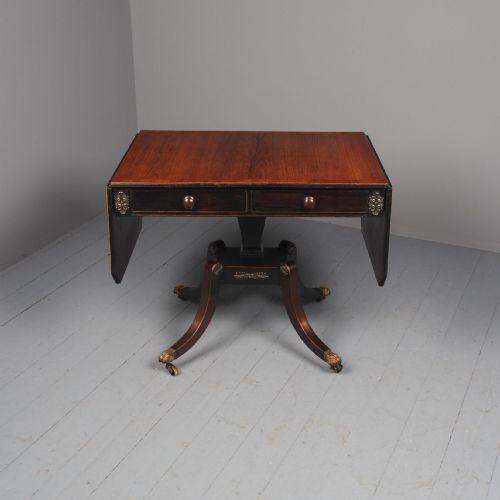

Sabre Leg Occasional Table
A sabre leg occasional table brings clean Regency and Georgian lines into a room, offering practical surface space atop sweeping outward-curving supports.
Sabre Leg Occasional Table
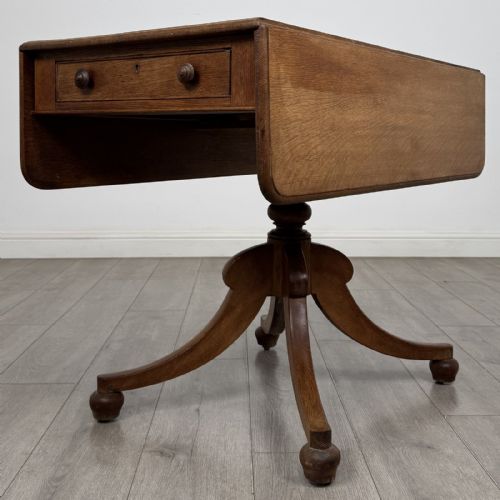
A sabre leg occasional table represents a refined form of small-scale domestic furniture, most commonly appearing as a sofa table, Pembroke table, or side table. The pieces found here span the Regency and Georgian periods alongside later nineteenth-century examples and twentieth-century interpretations.
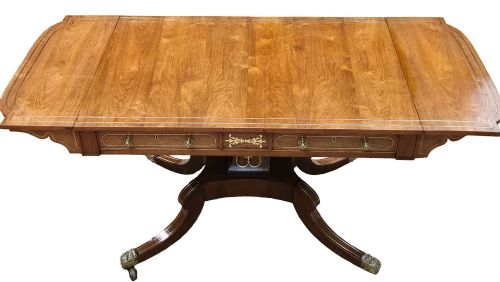
Buyers will most frequently encounter mahogany and rosewood versions featuring drop leaves, brass inlays, or satinwood details. These tables served various functions in period homes, acting as serving surfaces, reading desks, or central display pieces.
The defining characteristic remains the sweeping backward curve of the leg, reminiscent of a cavalry sabre. This design gives the furniture an outward-balanced stance that elevates simpler occasional and side tables.
How they were made
Cabinet makers utilised dense timber stocks like mahogany, rosewood, and satinwood, often applying contrasting veneers and fine stringing. Secondary timbers supported structural frames while decorative surfaces received hand-rubbed finishes.
Brass featured prominently both as structural casters on the sabre legs and as intricate inlay work across tabletops. Drop leaves and tilt-top mechanisms relied on precision joinery, brass hinges, and pivoting wooden catches.
Sabre Leg Occasional Table Retail Price Guide 2026
Typical asking prices for sabre leg occasional table among the pieces listed under this phrase on Sellingantiques today, from the lower quarter to the upper quarter. They describe what is for sale here now, not the wider market.
Early nineteenth-century dining tables sometimes doubled as supper tables, proving that ancestors enjoyed a midnight snack just as much as modern buyers.
What varies in quality
The refinement of the leg curvature and the fluidity of the sweep set superior examples apart from stiffer, heavier interpretations. Cabinet makers achieved grace through precise taper and proportion rather than heavy ornamentation.
Timber selection dictates visual depth, where figured mahogany or rich rosewood grain enhances the overall presence of a sofa or lamp table. The integration of brass inlay and the crispness of edge banding further separate standard production from finer workshop output.
The Sabre Leg Occasional Table Glossary
- Sabre leg
- A concave curving furniture leg that tapers toward the foot, typical of Regency design. This form draws inspiration from classical Greek klismos chairs.
- Sofa table
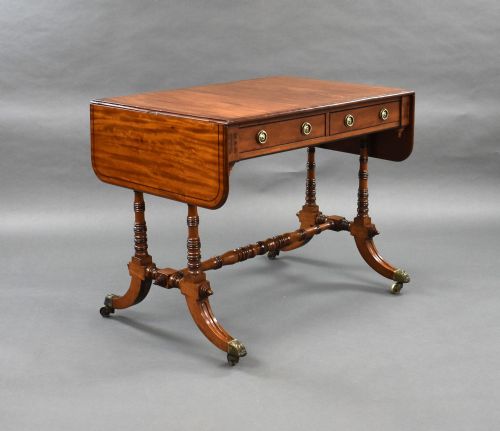
- A rectangular drop-leaf table traditionally placed in front of a sofa. These pieces usually feature two small drawers and trestle or pillar supports.
- Pembroke table
- A small occasional table with two hinged drop leaves on opposing sides. It often includes a single drawer and was designed for versatile placement.
- Tilt-top
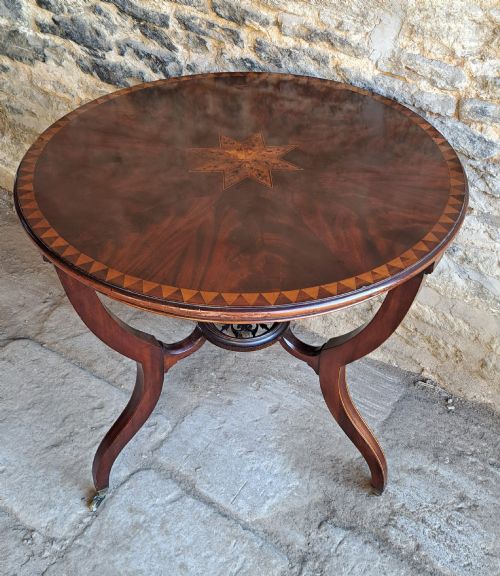
- A tabletop hinged to a central pillar, allowing the surface to fold vertically when not in use. This mechanism saved space in smaller rooms.
- Stringing
- A narrow strip of contrasting wood or light-coloured inlay used to outline panels and borders. It provides delicate visual definition to table tops.
Sabre Leg Occasional Table: Frequently Asked Questions
Where were these tables used?
Period tables found their places in drawing rooms, libraries, and parlours as writing surfaces, tea tables, or side supports for lamps and books.
Drop-leaf and tilt-top variants allowed owners to adjust the footprint of the furniture depending on the daily requirements of the room.
How do I identify a Regency table?
Regency tables typically display classical restraint, featuring dark timbers like mahogany or rosewood contrasted with brass inlay, stringing, or satinwood details.
The presence of sweeping sabre legs and clean geometric lines serves as a primary indicator of this design period.
Are drop leaves common on these?
Drop leaves appear frequently on sofa tables and Pembroke tables within this selection, offering expandable surface area when needed.
These hinged flaps are supported by swing brackets or wooden arms concealed beneath the main tabletop.