



Circular Low Table
A circular low table brings a grounded balance to a room, offering a functional surface shaped by decades of craftsmanship across different periods.
Circular Low Table
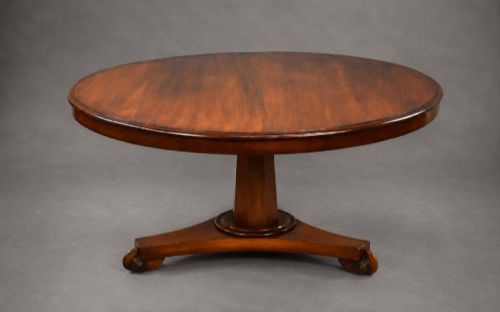
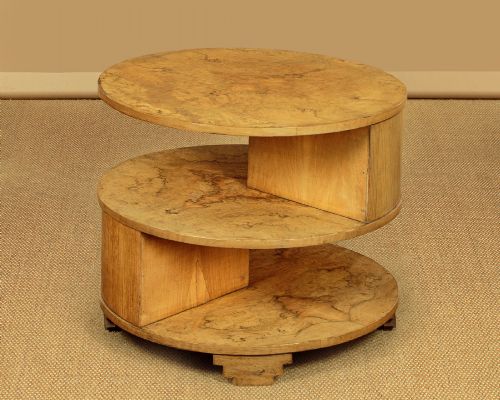
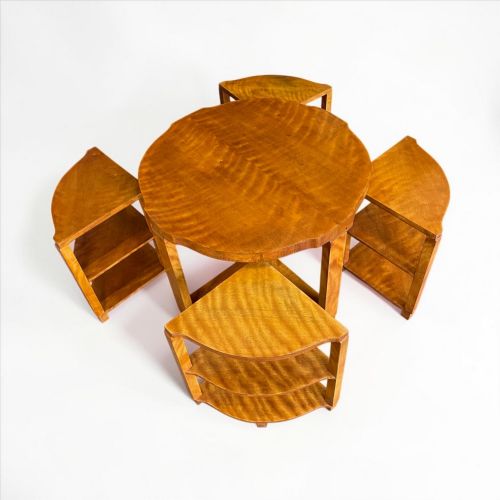
A circular low table serves multiple domestic functions, appearing frequently in forms such as coffee tables, occasional tables, and adapted wine or centre tables. When searching for a circular low table, buyers encounter examples spanning from the Georgian and Victorian eras through to Art Deco and mid-century designs.
The materials utilised range from native timbers like oak, mahogany, and walnut to exotic hardwoods and brass. Many pieces on this page reflect formal revivals, including Queen Anne, French Neoclassical, and Chinese Export styles, showing how earlier utilitarian forms were reinterpreted for low-level living.
Originating from diverse traditions, these tables include British country house pieces, continental European designs, and Anglo-Indian or Chinese craftwork. Whether solid timber or veneered in burr walnut, each piece provides a compact footprint centred around a round top.
Materials and Construction
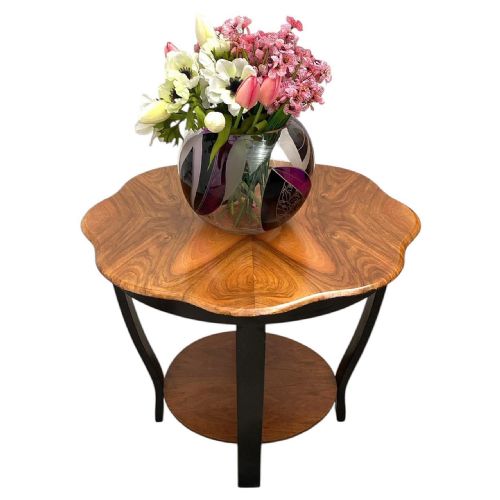
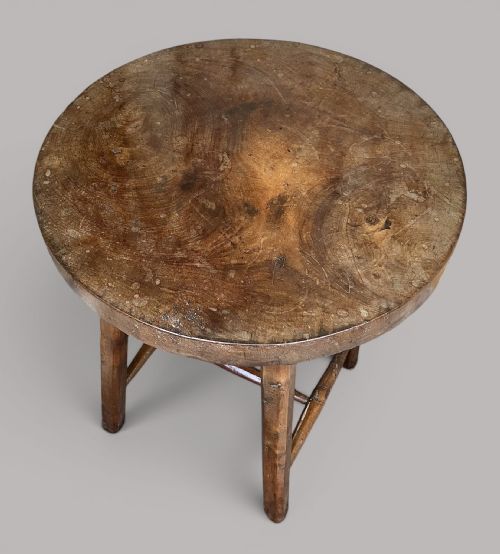
Cabinetmakers constructed these tables using a foundation of solid timbers like mahogany, oak, and walnut, often applying decorative veneers such as burr walnut, birch, or satinwood to the circular top. The grain patterns on these surfaces were carefully selected and matched to create visual depth.
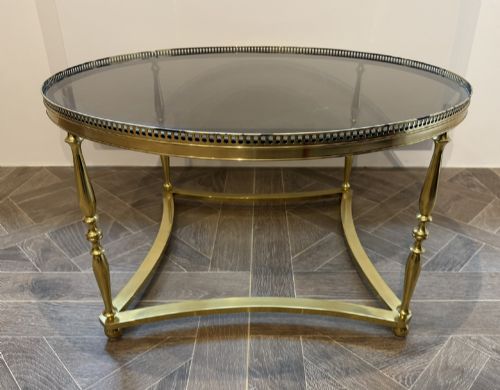
Joinery techniques varied according to period and origin, combining traditional pegged framing with turned pedestals, tripod bases, or carved aprons. Metal elements such as brass inlays or cast mounts provided structural accents, particularly on Parisian and Regency revival pieces.
Factors That Separate Quality
Quality rests in the selection of the timber and the precision of the veneer work on the circular surface. Superior examples demonstrate thoughtful grain alignment, stable construction, and well-executed carving or inlay rather than heavy-handed restoration.
Proportion and execution distinguish finer workshop output from simpler vernacular pieces. The integration of the base to the top, the subtlety of turned supports, and the crispness of carved details reveal the standard of the original maker.
Gillows of Lancaster·Waring and Gillow
The Circular Low Table Glossary
- Burr walnut
- A figured wood harvested from the wart-like growths on walnut trees, prized for its swirling, intricate grain patterns on table tops.
- Pie crust
- A decorative raised border carved into the edge of a circular table top, resembling the fluted pastry of a pie.
- Centre table
- A freestanding piece designed to be viewed from all sides, often placed in the middle of a room rather than against a wall.
- Chinoiserie
- European decorative art influenced by Chinese artistic traditions, frequently featuring lacquered surfaces and painted motifs.
- Occasional table
- A small, movable table intended for specific, intermittent use rather than central daily service.
Circular Low Table: Frequently Asked Questions
How do I style a circular low table?
A circular low table anchors a seating arrangement by contrasting with linear sofas and rectangular rugs. Placing books, a small tray, or a modest ceramic piece on the surface adds proportion without cluttering the grain of the wood.
The round format encourages conversational flow in a room, fitting naturally between multiple chairs or in front of a central settee.
How do I tell an Art Deco table apart from a Victorian one?
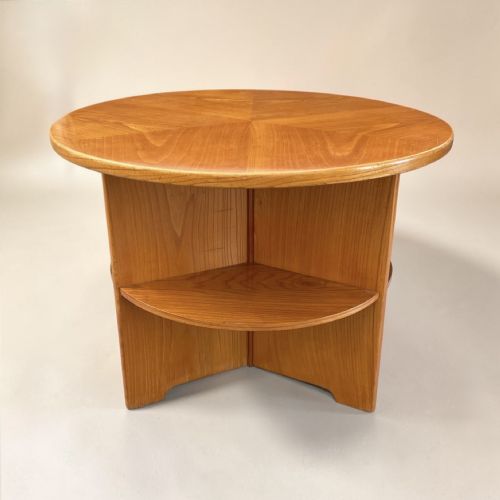
Art Deco tables, often dating around 1930, favour geometric simplicity, blonde oaks, and striking burr walnut veneers with minimal carved ornamentation. They rely on the natural figure of the wood and clean lines for their visual impact.
Victorian and earlier pieces generally display heavier carvings, darker mahogany or rosewood timbers, and traditional revival motifs like Queen Anne cabriole legs or turned pedestals.
How do I care for a walnut veneer top?
Walnut veneer requires protection from direct sunlight and excessive moisture to prevent the thin upper layer of wood from fading or lifting. Using coasters and polishing the surface with appropriate natural waxes keeps the timber nourished.
Regular dusting with a soft cloth maintains the lustre of the grain without building up heavy residue on the polished finish.