


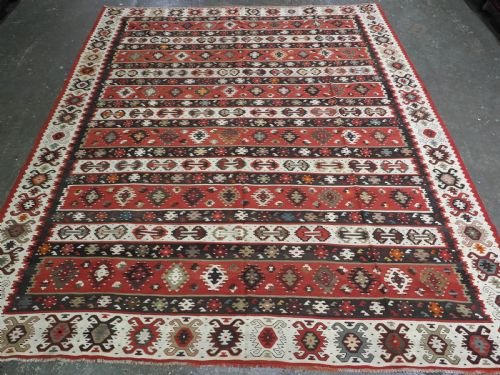
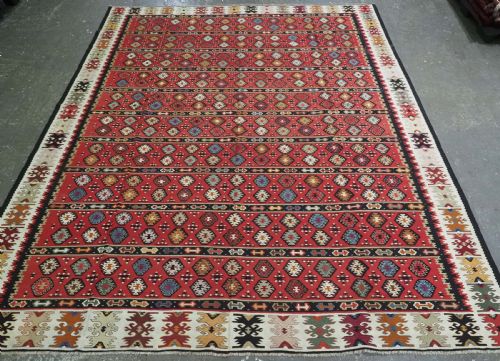


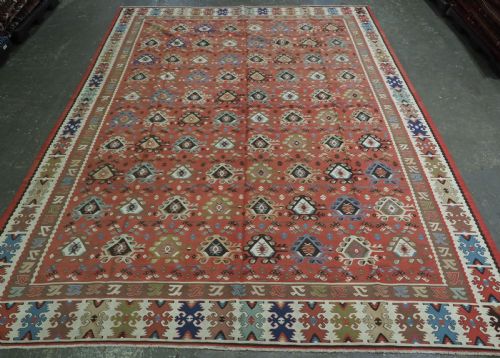


Circa 1920 Tribal Kilim
These circa 1920 tribal kilim examples bring flatweave character and geometric village patterns directly onto the floor.
Circa 1920 Tribal Kilim
A circa 1920 tribal kilim represents flatwoven textile traditions from nomadic and village communities across the Balkans, Caucasus, Persia, and Central Asia. When you search for this phrase, you encounter utility items, floor coverings, storage bags, and runners made by traditional weavers.
The selections here span specific regional types such as Pirot, Sarkoy, Baluch, and Pashtun works. You meet pieces designed with banded chevrons, repeat medallions, and classic folk motifs.
Many items are constructed in two parts and joined down the centre to achieve larger room sizes. Others survive in smaller formats like prayer rugs and storage containers.
Materials and Construction
Weavers utilised natural wool, cotton, hand-spun wool, and camel hair to build these textiles. The fibre selection dictates the weight and texture of the flatweave surface.
Slit-weave techniques allow makers to create sharp geometric patterns without pile. Ground materials like camel hair provide a durable, warm base for bold embroidery and coloured dyes.
Materials recorded in these listings include wool, cotton, hand-spun wool, and camel hair.
Assessing Quality in Flatweaves
Quality rests in the precision of the geometric design and the integrity of the weave structure. Tightly packed wool yarns create a firmer, more resilient flatweave.
Colour relationships distinguish finer examples. Soft, warm, and well-preserved natural tones elevate the visual balance of banded chevron and repeat medallion patterns.
The Circa 1920 Tribal Kilim Glossary
- Kilim
- An untufted, flatwoven textile produced by interweaving warp and weft threads. This technique yields a lightweight, reversible rug without pile.
- Mafrash
- A large rectangular storage bag or chest panel used by nomadic tribes. These pieces are often preserved and presented as flatwoven panels.
- Hand-spun wool
- Yarn spun manually rather than by industrial machinery. This method introduces subtle irregularities that give the textile a tactile depth.
- Chevron
- A V-shaped weaving pattern repeated in bands across the field. It is a traditional geometric motif found in many nomadic and village flatweaves.
Circa 1920 Tribal Kilim: Frequently Asked Questions
What is a tribal kilim?
A tribal kilim is a flatwoven textile made by nomadic or village weavers for practical domestic use. These pieces utilise slit-weave techniques to form geometric patterns without pile.
They serve as floor coverings, blankets, and storage containers. Their designs reflect the traditional motifs of specific regional groups.
How do I care for a vintage kilim?
Protect the flatweave by placing an appropriate underlay beneath it to prevent slipping and uneven wear. Regular gentle vacuuming without a beater bar removes trapped dust.
Professionals should handle deep cleaning to protect natural wool and camel hair fibres. Direct sunlight can fade natural dyes over time.
Why are some kilims woven in two parts?
Traditional looms often had width limitations determined by the portable frames used by nomadic weavers. To create larger room-size rugs, artisans wove two separate panels and joined them down the centre.
This construction method allows for symmetrical pattern matching across the finished piece. It remains a common characteristic in large antique flatweaves.
Where were these textiles made?
Production spans diverse regions including the Balkans, the Caucasus, Persia, Afghan territories, and parts of Turkey. Each area developed distinct design palettes and weaving methods.
Local traditions dictated whether a maker focused on banded chevrons, repeat medallions, or embroidered village patterns.