





Geometric Medallion Flatweave
These geometric medallion flatweave pieces are woven textiles carrying centuries of tribal and regional artistry, bringing authentic pattern and texture to any floor.
Geometric Medallion Flatweave
When you search for a geometric medallion flatweave, you are looking at non-pile woven textiles originating from Persia, the Caucasus, Anatolia, and the Balkans. These rugs and carpets span the nineteenth and early twentieth centuries, capturing traditional weaving practices across diverse regions.
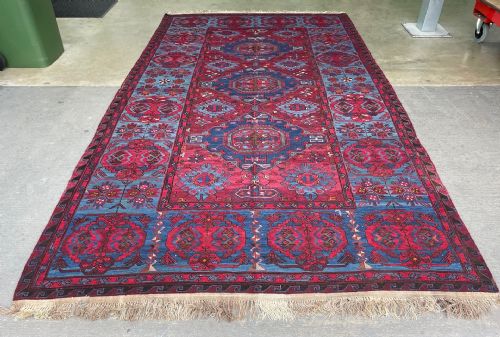
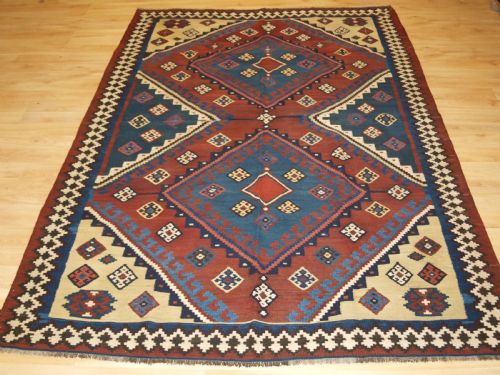
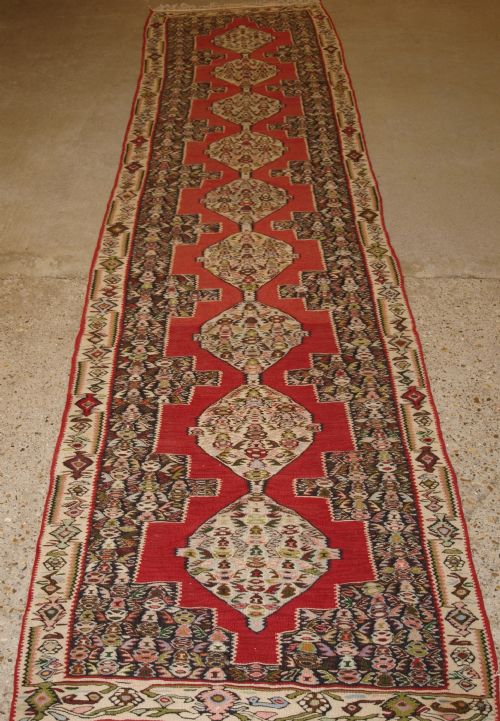
The pieces on this page encompass various regional forms, from runner rugs to large room-size carpets and kilim rugs. You will frequently encounter Caucasian soumak carpets alongside Anatolian, Persian tribal, and Balkan folk flatweaves.
Design structures rely heavily on central motifs, featuring single, triple, or repeat medallions set against contrasting grounds. These configurations reflect the distinct aesthetic heritage of specific weaving communities such as the Lesghi, Karabagh, and Qashqai.
Assessing quality and craftsmanship
The standard of a piece rests on the precision of its geometric layout and the clarity of its medallion design. Tighter weaves and crisper colour transitions distinguish superior examples from simpler village productions.
Material selection also dictates overall quality, where fine wool and scarce ground colours elevate the textile. The handling of traditional dyes creates depth and tonal variation that mark out the finer pieces in this category.
Listings feature flatweaves spanning from eighteen-seventy through the nineteen-twenties, incorporating wool, cotton, and camel hair.
The Geometric Medallion Flatweave Glossary
- Flatweave
- A rug or carpet produced without a pile by interlocking warp and weft threads together. This technique creates a flat, durable textile suitable for floor coverings and wall hangings.
- Medallion
- A central ornamental motif positioned in the middle of the field. In these textiles, it typically takes a geometric or polygonal form.
- Soumak
- A brocade-like flatweaving technique where decorative weft threads are wrapped over and under the warp threads. This method adds structural weight and distinct texture to the reverse of the textile.
- Kilim
- A tapestry-woven carpet or rug made across Turkey, the Caucasus, and Central Asia. They are prized for their flat surfaces and sharp, geometric pattern work.
- Warp
- The stationary vertical threads stretched onto a loom before weaving begins. The weft threads are passed through these foundation lines to build the textile.
Geometric Medallion Flatweave: Frequently Asked Questions
Where were these flatweaves made?
These textiles originate from various regions including the Caucasus, Anatolia, Persia, and the Balkans. Specific areas such as Daghestan, Karabagh, and Western Persia produced distinct local styles.
Weavers in these locations utilised traditional regional motifs and native materials to create their distinct flatweaves and kilims.
How do I care for a flatweave?
Vacuum your flatweave gently using a suction-only attachment without a rotating brush roll. This protects the flat surface and prevents fringe damage.
Rotate the textile periodically to ensure even wear from foot traffic and sunlight exposure. Professional cleaning is recommended when necessary.
What is the difference between a kilim and a soumak?
A kilim is a standard flatweave made by tightly interweaving weft threads across the warp to create a smooth surface. Patterns appear similar on both sides.
A soumak involves wrapping decorative weft threads over the warp, leaving loose floating threads on the reverse side. This technique adds extra thickness and durability.
How can I tell the age of a piece?
Age is indicated by the materials used, natural dye variations, and structural characteristics typical of nineteenth and early twentieth-century production. Stylistic markers tied to specific regional periods also help determine chronology.
Comparison with documented examples from historical weaving centres provides further context for dating individual pieces.