
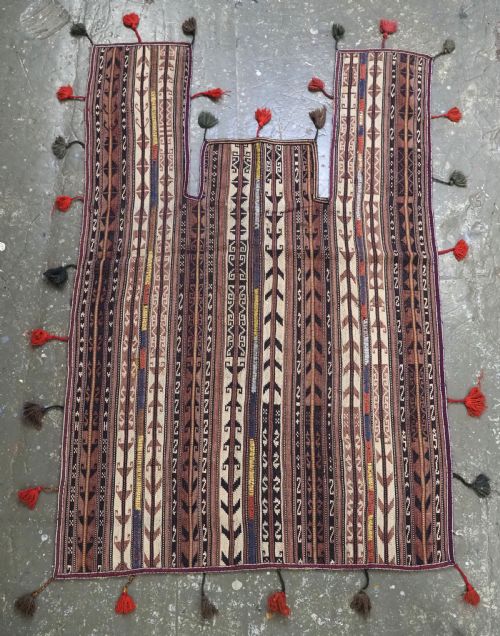
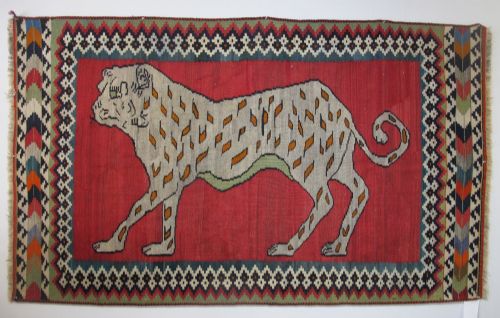


Circa 1900 Flatweave
Circa 1900 flatweave textiles bring tactile tribal history into a room through geometric bands, nomadic utility bags, and patterned rugs.
Circa 1900 Flatweave
A circa 1900 flatweave encompasses diverse nomadic and village textiles produced across Central Asia, the Caucasus, Persia, and Anatolia around the turn of the twentieth century. Buyers encounter utilitarian items such as storage bags, horse blankets, eating cloths, and tent bands alongside larger floor rugs and kilims.
The aesthetic of these pieces leans heavily on tribal traditions, featuring bold graphic designs, banded patterns, and localized regional motifs. Many examples originate from Uzbek, Turkmen, Baluch, and Caucasian weavers who created textiles without pile using interlocking weft techniques.
Items often arrive as distinct panels or constructed from multiple strips joined together to form larger covers and carpets. This construction reflects the practical needs of nomadic life, where portable looms dictated the narrow widths of woven cloth.
How they were made
Weavers constructed these flatweaves primarily using hand-spun wool and cotton, occasionally incorporating goat hair for added durability in utility bags and nomadic furnishings. Natural dyes provided the foundational palette, yielding soft, oxidized tones and deep reds that define the appearance of turn-of-the-century pieces.
The production relied on slit-tapestry weaving and banded weft-work techniques, where coloured weft threads are wrapped or interlocked tightly over the warp to form crisp geometric patterns. Surface ornamentation sometimes included supplementary embroidery, as seen in Suzani kilims and embroidered covers from Central Asian workshops.
Object forms include kilim rugs, horse blankets, mafrash panels, storage bags, eating cloths, saddlebags, and tent-pole bags.
What varies in quality
Quality in a circa 1900 flatweave rests on the tightness of the weave and the precision of the graphic design. Finer structures display greater control over the weft work, resulting in rigid, well-defined motifs and stable structural integrity across joined panels.
The integrity of the original materials and the condition of the surface also distinguish different grades of textiles. Pieces retaining long kilim ends, original backs on storage bags, and unblemished natural dye work represent the upper tier of surviving examples from this era.
The Circa 1900 Flatweave Glossary
- Kilim
- A pileless textile woven using a flatweave technique where the weft threads are pulled tight to conceal the warp. These pieces serve as floor coverings, wall hangings, and decorative covers.
- Mafrash
- A large rectangular storage bag or chest face used by nomadic tribes for bedding and household goods during migration. They are frequently disassembled and repurposed into flatweave panels or small rugs.
- Soumak
- A brocade-like weaving technique where coloured weft threads are wrapped over and around the warp threads in a continuous sequence. This method adds structural thickness and raised texture to the flat surface.
- Sofreh
- A utilitarian cloth traditionally spread on the ground for eating meals or preparing bread. These textiles often feature simple, functional banded designs.
- Torba
- A small storage bag produced by Turkmen and other nomadic groups to hang inside a tent for personal items. They typically display distinctive tribal gul motifs and banded flatweave structures.
Circa 1900 Flatweave: Frequently Asked Questions
What is a flatweave rug?
A flatweave rug is a textile produced without pile by interlocking horizontal weft threads over vertical warp threads. This construction creates a thin, lightweight fabric suitable for versatile placement.
Unlike knotted carpets, flatweaves rely entirely on the woven structure and colour patterning for their visual impact. They include traditional kilims, soumaks, and utility covers.
How were nomadic bags used?
Nomadic bags served as practical containers for transporting and storing household possessions during seasonal migrations. Pieces like mafrashes and torbas held bedding, clothing, and domestic utensils inside tents.
Many surviving examples preserve their original backs, structural bindings, or pocket faces. Over time, collectors often repurpose damaged bag panels into smaller decorative mats and wall hangings.
How do I care for antique flatweaves?
Antique flatweaves require gentle handling and minimal intervention to preserve their delicate wool and cotton fibres. Regular light vacuuming without a rotating brush helps remove embedded dust.
Keeping textiles away from direct sunlight prevents natural dyes from fading over time. Professional textile conservation cleaning is recommended for heavier accumulation of dirt.