

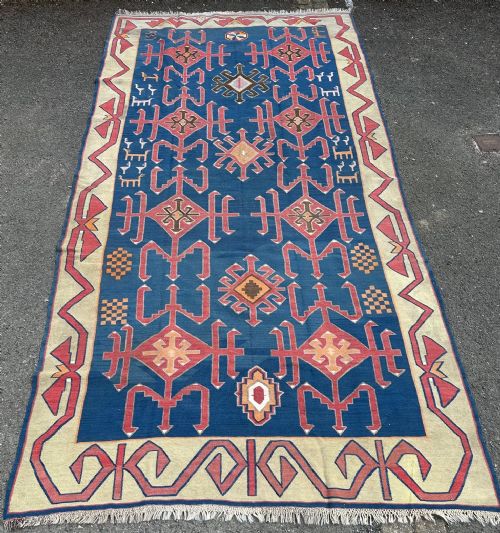


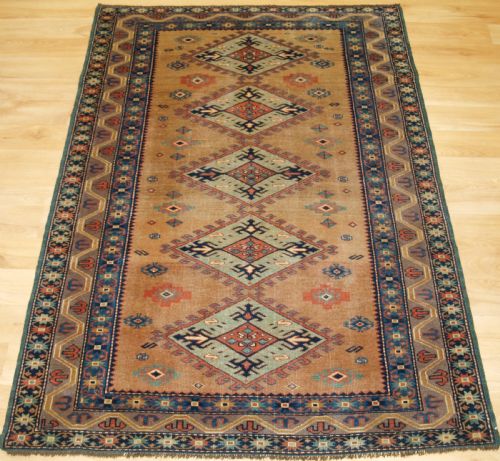


Caucasian Flat Weave Rug
These caucasian flat weave rug examples are striking tribal textiles hand-woven by nomadic makers, bringing bold geometric patterns and rich natural dyes into modern interiors.
Caucasian Flat Weave Rug
When you search for a caucasian flat weave rug, you encounter traditional tribal and nomadic floor coverings originating from the Caucasus region. These textiles include kilims, storage bags, panels, and saddlebags produced by specific regional groups such as the Shahsevan and Avar. The pieces span from the mid-nineteenth century through to the mid-twentieth century, showcasing diverse geometric designs.
The most common formats on this page are flat-woven kilims and storage bag faces featuring banded patterns or large medallions. Many examples come from regions like Daghestan, Shirvan, and Karabagh, displaying the characteristic visual vocabulary of these weaving communities. Buyers often select them for their durability and striking graphical appeal on floors or walls.
How they were made
Makers constructed these textiles predominantly using hand-spun wool and cotton foundations, employing tapestry weaving techniques without a pile. Artisans dyed the wool using natural colour sources to achieve deep, lasting shades that mellow gracefully over decades of light and wear.
Specialised techniques such as Soumak wrapping appear alongside standard flat-weaving to create raised structural details and crisp geometric outlines. These dense, deliberate weaves ensured that storage bags and utility cloths could withstand robust daily use in nomadic households.
What varies in quality
The standard of a weaving rests upon the fineness of the knotting or interlacings and the precision of the geometric layout. Superior examples exhibit tightly packed warps and wefts that maintain structural integrity without warping along the edges.
Colour variation also dictates visual success, where natural dye saturation creates harmonious shifts across the surface rather than flat monotony. The complexity of regional motifs, such as intricate medallion arrangements or detailed banding, further distinguishes finer workshop and tribal pieces.
The Caucasian Flat Weave Rug Glossary
- Kilim
- A flat-woven carpet or rug produced without a pile by tightly interweaving warp and weft strands. This technique creates a lightweight, reversible textile suitable for both floor placement and wall hanging.
- Soumak
- A brocade-like flat-weave technique where extra weft threads are wrapped around the warp yarns to produce a textured surface. It provides greater thickness and durability than standard flat-weaving.
- Mafrash
- A large rectangular storage bag used by nomadic tribes for bedding and household goods during migration. Surviving panels and complete pieces are frequently repurposed as decorative furnishings today.
- Khorjin
- A traditional paired saddlebag utilised for transport on horses or camels. Collectors often encounter single bag faces or halved sections from these functional containers.
- Natural Dyes
- Organic colouring agents derived from plants, insects and minerals prior to the introduction of synthetic aniline dyes. They yield subtle, complex tones that age with distinctive character.
Caucasian Flat Weave Rug: Frequently Asked Questions
How do I clean a flat weave rug?
Gentle surface vacuuming without a beater bar removes loose dust and grit from the wool fibres.
Professional specialist cleaning is essential for addressing deeper soil to protect the natural dyes.
Can I put these rugs on the floor?
These durable wool textiles withstand normal walking foot traffic when paired with a quality underlay.
Placing them in moderate-traffic areas prevents excessive abrasion while allowing daily enjoyment.
How do I date an antique rug?
Analysis of the wool spin, dye palette, and structural weave provides clues regarding the period of production.
Comparing regional motifs against documented examples helps narrow down the approximate decade.
Why do colours vary across the surface?
Natural dye batches fluctuate slightly during preparation, resulting in subtle tonal shifts known as abrash.
This deliberate variation adds visual depth and serves as an indicator of traditional manufacturing methods.