

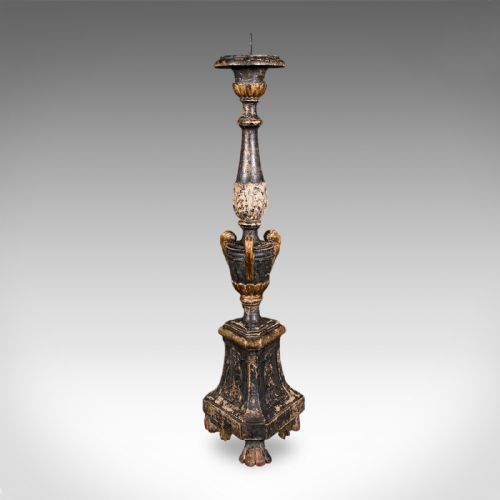


Church Candlestick Holder
A church candlestick holder brings centuries of solemn ritual into domestic spaces through heavy metalwork and carved timber.
Church Candlestick Holder
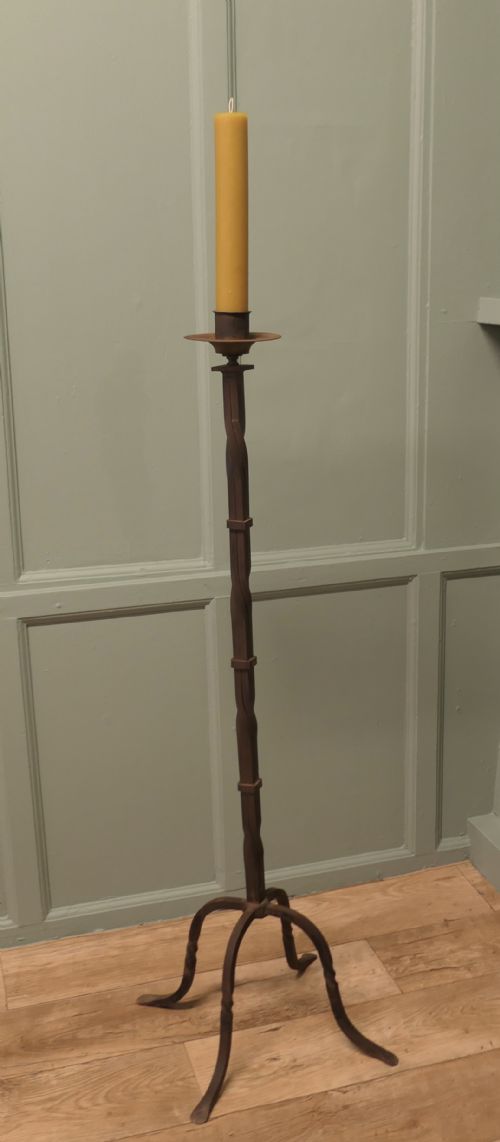
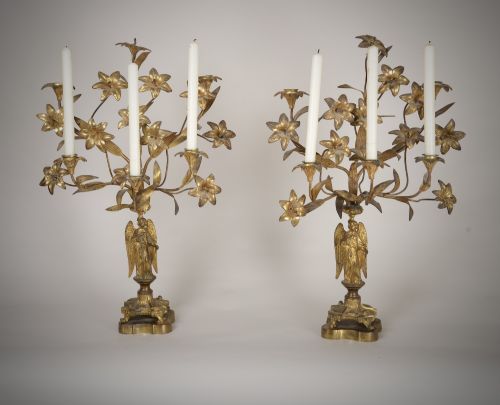
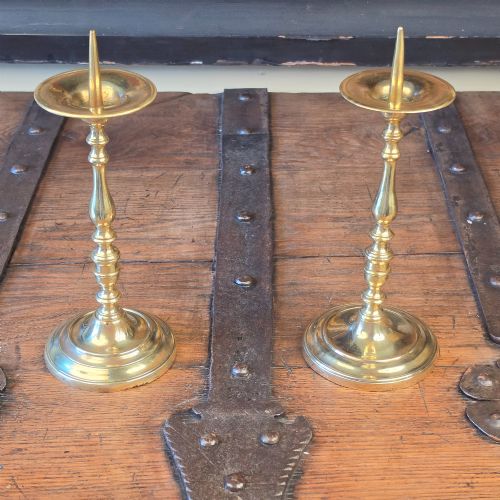
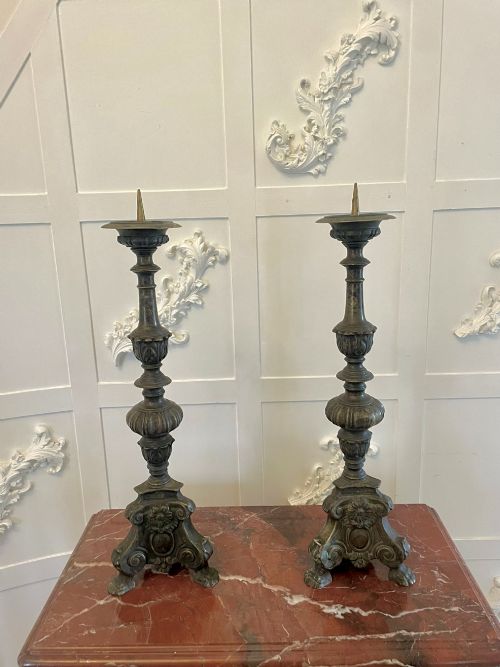
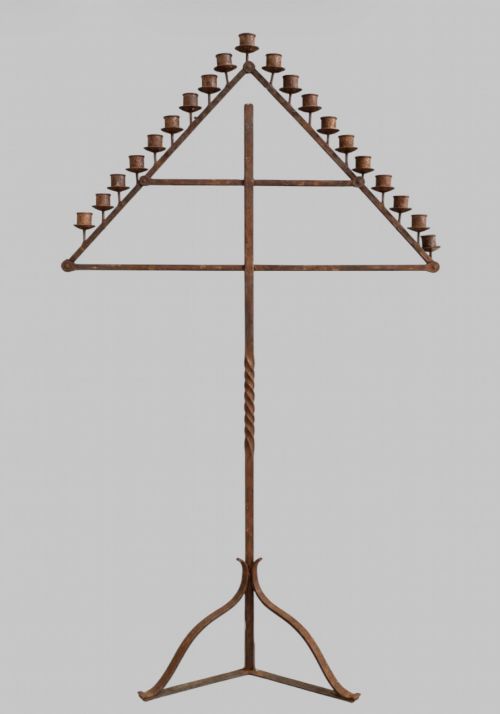
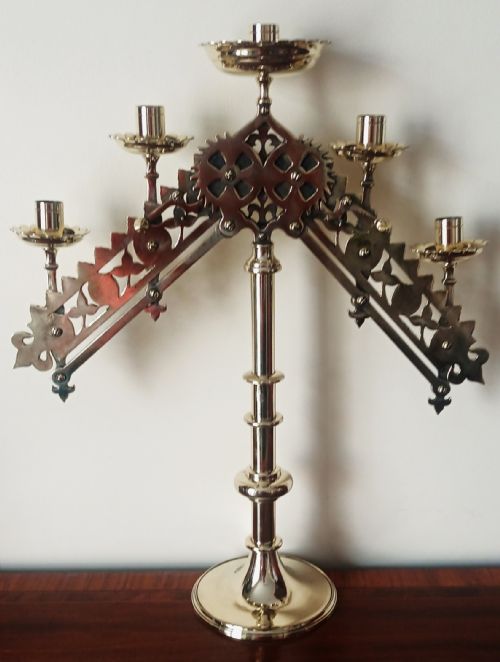
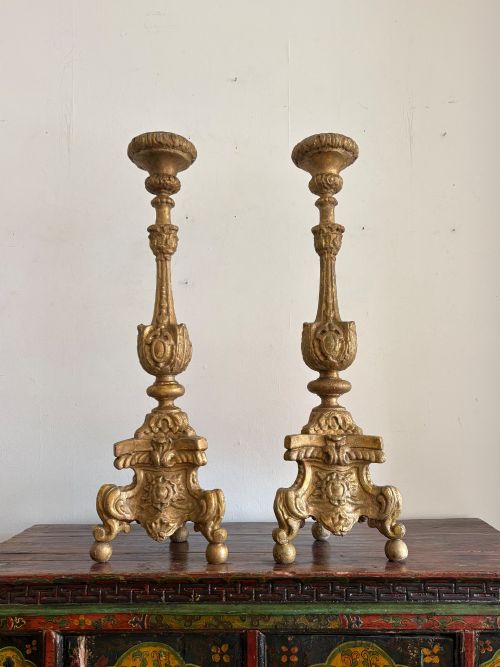
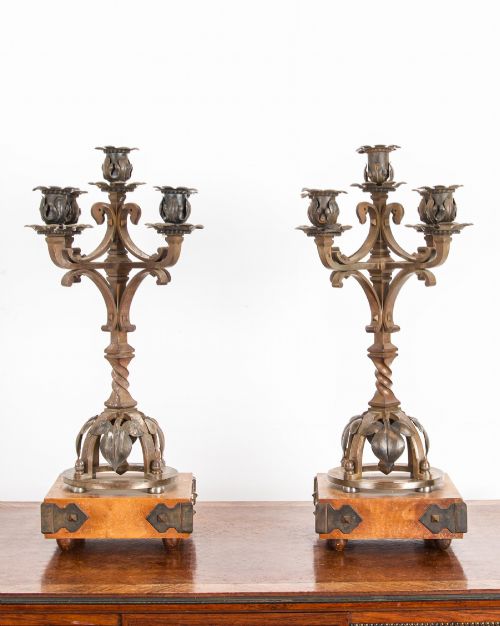
A church candlestick holder encompasses tall floor-standing columns, altar prickets and multi-branch candelabra originating from ecclesiastical settings. These pieces emerge predominantly in brass, wrought iron, and carved wood during the eighteenth and nineteenth centuries.
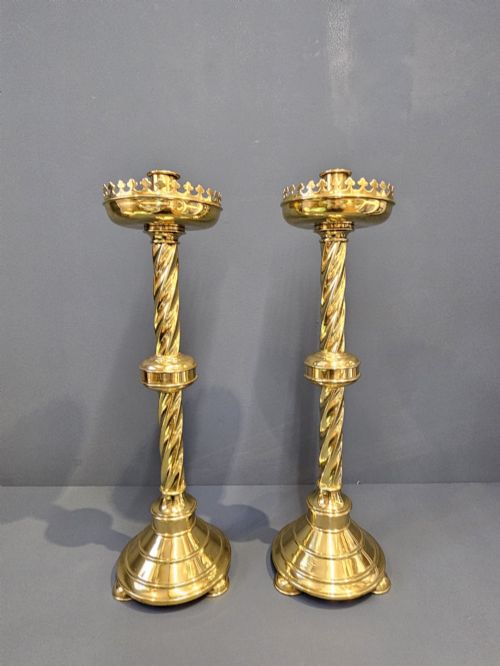
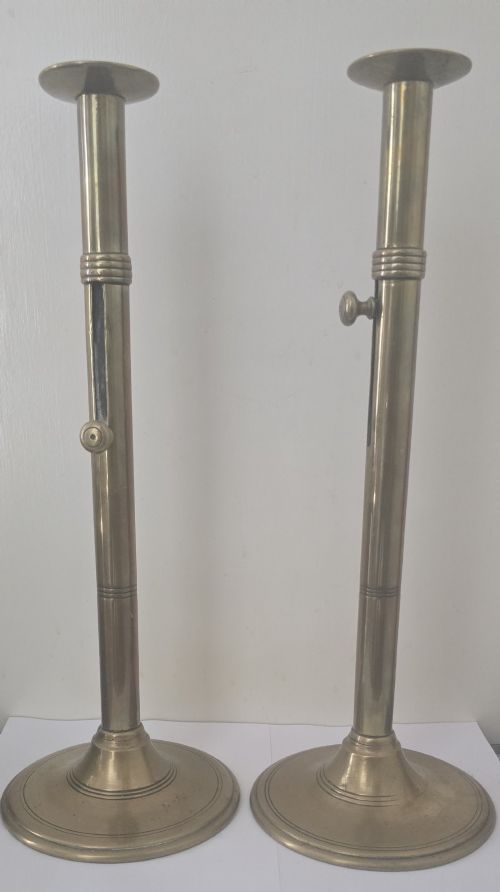
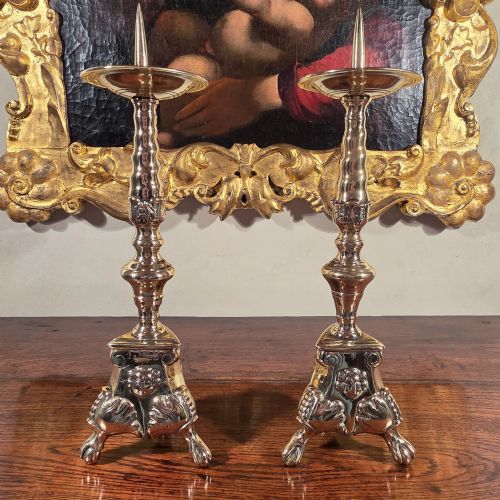
The most frequent encounter on this page is the Victorian brass pair, often styled in Gothic Revival or executed as heavy columnar standards. Buyers also meet Continental Baroque giltwood pieces and Amsterdam School metal designs from the early twentieth century.
Forms range from small tabletop candle holders to massive architectural floor standards designed to illuminate chancels and altars. Many survive as pairs or graduated sets, showing influences from Georgian, Italian, and French workshop traditions.
Materials and Construction
Brass dominates the metalwork, cast in heavy sections and frequently turned on a lathe to create smooth shafts, clustered columns, or stepped bases. Wrought iron provides structural strength for floor-standing candelabra, shaped by the blacksmith into scrolling feet and multiple drip pans.
Carved wood altarpieces utilise pine or fruitwood, layered with gesso before receiving coats of gilt, silver leaf, or polychrome paint. Artisans combine these materials with bronze fittings and articulated arms to create durable ecclesiastical furnishings.
Church Candlestick Holder Retail Price Guide 2026
Typical asking prices for church candlestick holder among the pieces listed under this phrase on Sellingantiques today, from the lower quarter to the upper quarter. They describe what is for sale here now, not the wider market.
Listings feature church candlestick holders spanning the eighteenth, nineteenth, and early twentieth centuries in brass, wrought iron, and carved wood.
Evaluating Craftsmanship and Proportion
Quality rests in the weight of the casting and the crispness of surface detail, particularly where acanthus leaves, knops, and fluted columns meet. Finer examples display deliberate proportions where the heavy base balances a tall shaft without leaning.
The integrity of the original surface finish separates standard items from superior pieces, whether through untouched patinated brass or aged giltwood with genuine craquelure. Master workshops invested care into invisible joins, substantial threading on screws, and solid drip pans.
The Church Candlestick Holder Glossary
- Pricket
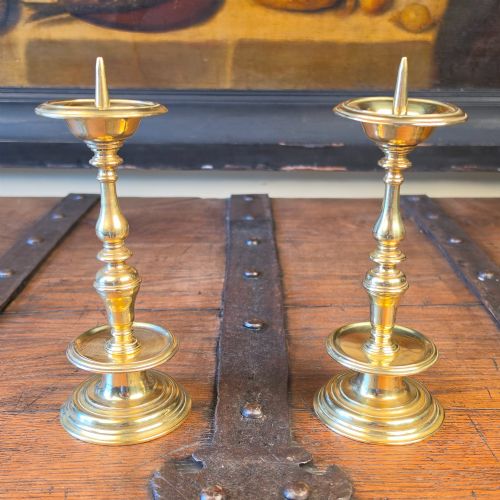
- A sharp metal spike on top of a candlestick designed to skewer and hold a pillar candle in place. This form appears frequently on ecclesiastical altars.
- Torchère
- A tall ornamental stand or candlestick designed to carry a single light source. These often feature carved wooden columns or figures.
- Gothic Revival
- An architectural and decorative style popular in the nineteenth century, drawing on medieval forms like pointed arches and quatrefoils. Pieces in this style often display heavy ecclesiastical ornament.
- Giltwood
- Timber that has been coated with a thin layer of gold leaf over a prepared gesso ground. This finish appears frequently on continental altar candlesticks.
- Amsterdam School
- An early twentieth-century architectural and design movement characterised by expressive forms and rich texture. Metalwork from this tradition often combines brass and iron in bold geometric arrangements.
Church Candlestick Holder: Frequently Asked Questions
What is a pricket candlestick?
A pricket candlestick uses an upward-pointing metal spike rather than a socket to secure the candle base. This design was standard for large church candles.
Buyers often encounter this format on antique altar pieces where wax pooled directly onto a flat drip pan surrounding the spike.
How do I distinguish between floor and table models?
Floor standing church candlestick holders typically measure well over a metre in height and feature heavy weighted bases to prevent tipping. Table models remain compact enough for domestic sideboards.
Both variants share similar decorative motifs like Corinthian capitals or turned wooden shafts.
Are these pieces made of solid brass?
Most ecclesiastical metalwork from the nineteenth century utilises heavy cast brass for stability and durability. Components are often cast in separate sections and screwed together.
Cheaper later adaptations may use thinner sheet metal over a weighted core, whereas older items possess substantial weight.
How do I clean antique brass holders?
Antique brass benefits from gentle dusting with a soft cloth rather than aggressive chemical polishing. Removing the natural dark oxidation strips the historical patina that collectors value.
If cleaning is necessary, mild soap and warm water removes surface grime without damaging the underlying metal.