



Claw Foot Candlestick Holder
These claw foot candlestick holder examples bring period weight and metalwork into a room, offering sturdy bases and classical form.
Claw Foot Candlestick Holder
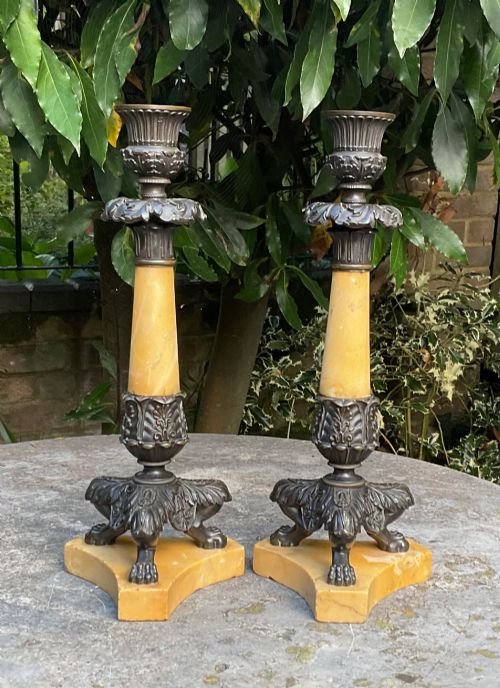
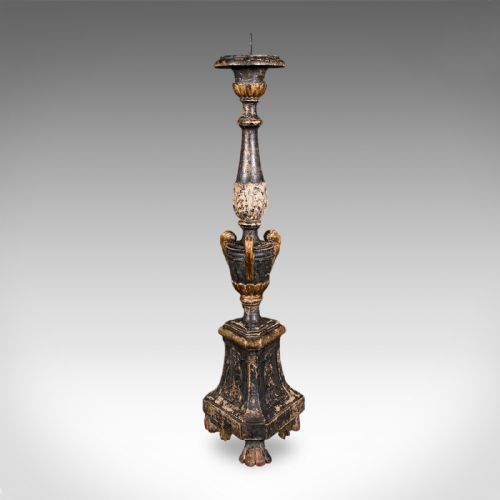
A claw foot candlestick holder brings together solid metal casting and distinctive animal-paw supports, anchoring the design to a table or mantelpiece. Buyers searching for a claw foot candlestick holder encounter forms ranging from simple domestic brass pairs to heavy bronze and marble showpieces.
The selection on this page spans several distinct eras, drawing heavily from nineteenth-century revivals as well as earlier Regency and seventeenth-century Flemish designs. Candlesticks, candelabra, and pricket holders all appear, with pairs forming the bulk of the domestic lighting options available.
Materials shift between polished or patinated brass, cast bronze, and heavy stone plinths such as sienna marble. Buyers often find that these pieces were built for functional service in church settings, grand dining rooms, or formal parlours.
Materials and construction methods
Foundry work dominates the production of these items, utilising molten brass and bronze poured into sand or lost-wax moulds to capture intricate claw details. Metal components are frequently turned on a lathe or hand-finished with chisels to sharpen the surface relief.
Marble and ebonised wood serve as contrasting bases in several pieces, fixed with internal threaded rods or pins to secure the heavy metal stems above. Patination is achieved either through age and handling or through chemical treatments applied to the bronze surfaces.
Claw Foot Candlestick Holder Retail Price Guide 2026
Typical asking prices for claw foot candlestick holder among the pieces listed under this phrase on Sellingantiques today, from the lower quarter to the upper quarter. They describe what is for sale here now, not the wider market.
Materials across these listings concentrate on cast brass and bronze, frequently paired with marble bases or ebonised wood.
Assessing quality in metalwork
The crispness of the casting defines the upper tier of these pieces, particularly in the rendering of fur or scales on the claw feet and the sharpness of acanthus leaf collars. Softer, blurred details indicate worn moulds or hurried mass production.
Weight and balance distinguish superior examples, as solid bronze and thick-gauge brass provide a reassuring heft compared to thin, lightweight pressings. The integration of contrasting materials, such as matched sienna marble plinths, elevates the ambition of the original design.
The Claw Foot Candlestick Holder Glossary
- Pricket
- A candlestick featuring an upright spike to skewer the base of a candle rather than a socket to hold it.
- Patinated
- A surface colour or tarnished sheen developed naturally over time or accelerated artificially through chemical agents.
- Candelabra
- A branched candlestick holder designed to support multiple candles from a single weighted base.
- Ebonised
- Wood treated with a dark stain or finish to imitate the dense, black appearance of genuine ebony.
- Plinth
- A heavy rectangular or square base block supporting a column, figurine, or candlestick stem.
Claw Foot Candlestick Holder: Frequently Asked Questions
How do I clean antique brass candlesticks?
Dust gently with a soft dry cloth to preserve the existing surface patination and accumulated age.
Avoid harsh chemical metal polishes that strip away historical character and dull the highlights of the casting.
What is the difference between a pricket and a socket?
A pricket uses a sharp metal spike inserted into the base of a solid wax column to keep it upright.
A socket provides a cylindrical cup that surrounds the lower portion of a standard candle.
How can I tell Regency from Victorian styles?
Regency designs lean towards classical restraint, drawing inspiration from ancient Greek, Roman, and French Empire motifs.
Victorian pieces often display heavier proportions, Gothic revival elements, or ornate surface decoration reflecting later nineteenth-century tastes.